On March 13, Tam Anh Research Institute and Tam Anh General Hospital HCMC, in collaboration with leading medical technology group in the Asia – Pacific region Device Technologies and Intuitive Surgical (USA), organized a training program on robotic laparoscopic surgery for gynecological conditions. The event welcomed nearly 200 obstetricians, gynecologists, and surgeons from across Vietnam, contributing to bringing this advanced technology closer to the country.
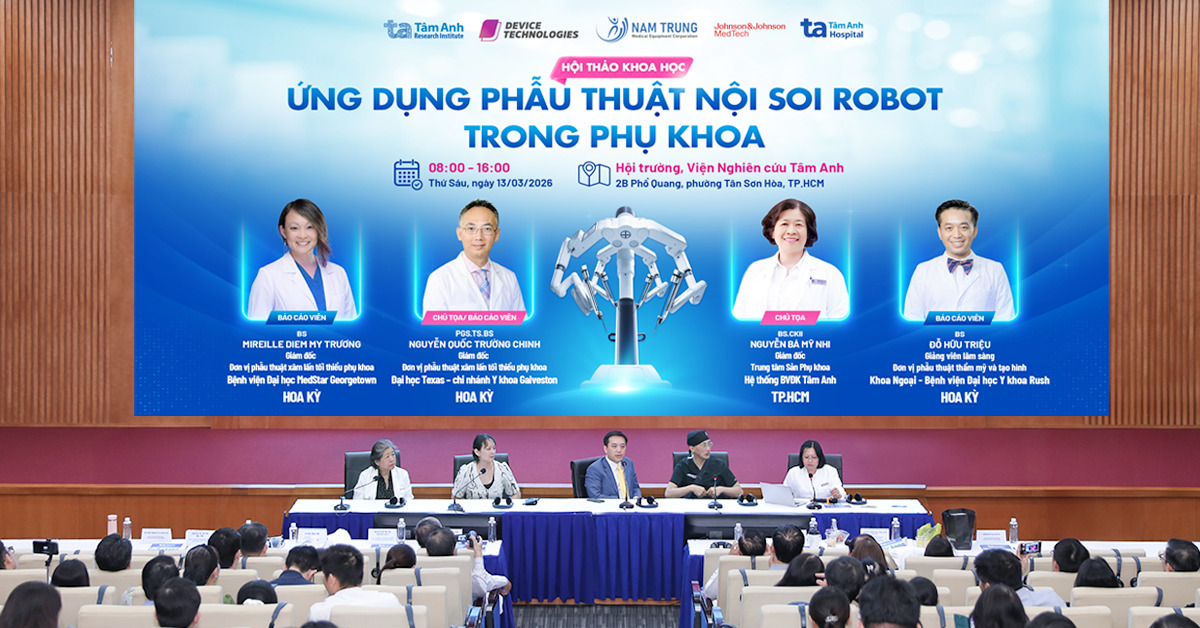
This is the first time a large-scale, well-structured intensive training program for gynecological surgery using the Da Vinci Xi robotic system has been held with the direct participation of experienced experts from both the United States and Vietnam.

Doctors from hospitals nationwide participate in training, professional exchange, and access the latest generation of robotic surgery techniques at Tam Anh General Hospital HCMC. Photo: Tam Anh Research Institute.
At the workshop, Nguyen Ba My Nhi, MD – Vice President of the Ho Chi Minh City Pelvic Floor Association, Director of the Obstetrics and Gynecology Center at Tam Anh General Hospital HCMC and the first female expert in Vietnam to receive international certification in robotic gynecological surgery – performed a live demonstration. She was joined by three leading robotic surgery experts from the U.S.: Assoc. Prof. Nguyen Quoc Truong Chinh, MD, PhD (University of Texas Medical Branch at Galveston); Mireille Diem My Truong, MD (MedStar Georgetown University Hospital); Do Huu Trieu, MD (Rush University Medical Center).
The training featured a hybrid model combining theory, professional discussion, and live observation of high-tech robotic surgery. This approach allowed Vietnamese doctors to gain practical clinical insights and enabling them to apply these techniques directly without relying on trial-and-error self-learning among Vietnamese doctors to master advanced medical technologies.
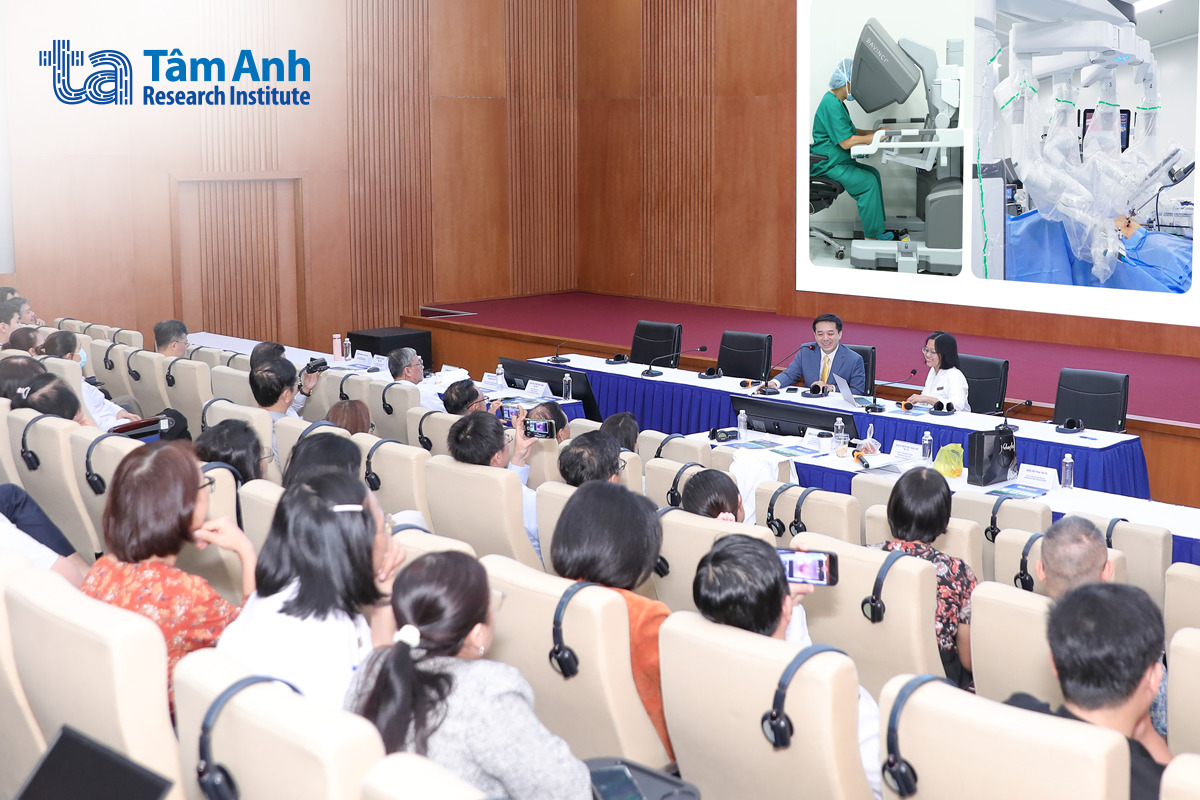
Live surgical footage is streamed from the robotic operating room to high-resolution giant screens in the auditorium, allowing trainees to clearly observe every step. Photo: Tam Anh Research Institute.
During the demonstration, a 48-year-old patient with long-standing uterine fibroids and persistent bleeding, which had failed to respond to medical treatment, underwent a robotic hysterectomy.
Instead of traditional open surgery requiring a 10 cm incision below the navel, the surgical team utilized the Da Vinci Xi robotic system to perform minimally invasive laparoscopic surgery.
With the magnified 3D camera system and robotic arms capable of 540-degree articulation, surgeons can operate with extreme precision within the narrow pelvic cavity, allowing for better tissue dissection and more effective bleeding control.
The procedure was led and demonstrated by Dr. Nguyen Ba My Nhi, enabling participating doctors to observe every detailed step, from robot setup and trocar placement to lesion access, hysterectomy techniques, and vaginal cuff closure.
Many practitioners recorded the entire process to serve as educational material for subsequent discussions with the experts.

Doctors recorded the live demonstration led by Dr. Nguyen Ba My Nhi for educational reference. Photo: Tam Anh Research Institute.
Although robotic surgery has been applied in Vietnam for nearly a decade, it has primarily been used in surgical fields such as urology, gastroenterology, and thoracic surgery. In recent years, however, this technology has begun to expand into obstetrics and gynecology, particularly in the treatment of complex pelvic pathologies.

Assoc. Prof. Hoang Long, MD, PhD (Hanoi Medical University Hospital), closely observes the live robotic surgery demonstration. Photo: Tam Anh Research Institute.
On the same day, the surgical team performed a second procedure, a total hysterectomy for a 49-year-old overseas Vietnamese patient from Canada. The patient had been diagnosed with submucosal uterine fibroids, which caused prolonged and heavy menstrual bleeding. Although she had previously received medical treatment in Canada, her condition remained uncontrolled and tended to worsen, leading her to return to Vietnam for surgery. Thanks to the robotic approach, the patient experienced minimal blood loss and post-operative pain, enabling early mobilization and allowing her to return to Canada just one week after surgery.
During the training session, Assoc. Prof. Nguyen Quoc Truong Chinh, MD, PhD – Director of the Minimally Invasive Gynecologic Surgery Unit at the University of Texas Medical Branch at Galveston (USA) shared his expertise on managing rare scenarios from the robotic console. His detailed insights into early detection and safe intervention helped participating doctors gain a deeper understanding of robotic system operations and the core principles of patient safety.

Assoc. Prof. Nguyen Quoc Truong Chinh, MD, PhD, guides a doctor on situational handling and complication prevention at the robotic console. Photo: Tam Anh Research Institute.
Robotic surgery is also expanding into the treatment of complex benign gynecological conditions that are traditionally difficult to manage. According to Mireille Diem My Truong, MD – Director of the Minimally Invasive Gynecologic Surgery Unit at MedStar Georgetown University Hospital (USA), robotic techniques offer significant advantages in cases of deep infiltrating endometriosis, large uterine fibroids, or pelvic adhesions resulting from multiple previous surgeries.

“In the U.S., we often perform multidisciplinary surgeries combining gynecology with other specialties like urology and proctology, especially in severe endometriosis cases causing extensive adhesions across multiple organs” – Dr. Mireille shared regarding her experience with complex robotic procedures. Photo: Tam Anh Research Institute.
Additionally, robotic applications in pelvic floor reconstruction are gaining attention as the number of patients with disorders such as pelvic organ prolapse or urinary incontinence rises. Do Huu Trieu, MD – Clinical Instructor and Fellow at the Division of Plastic and Reconstructive Surgery, Department of Surgery, Rush University Medical Center (USA) introduced robotic pelvic reconstruction techniques, demonstrating the potential to expand effective treatment options for this patient group.
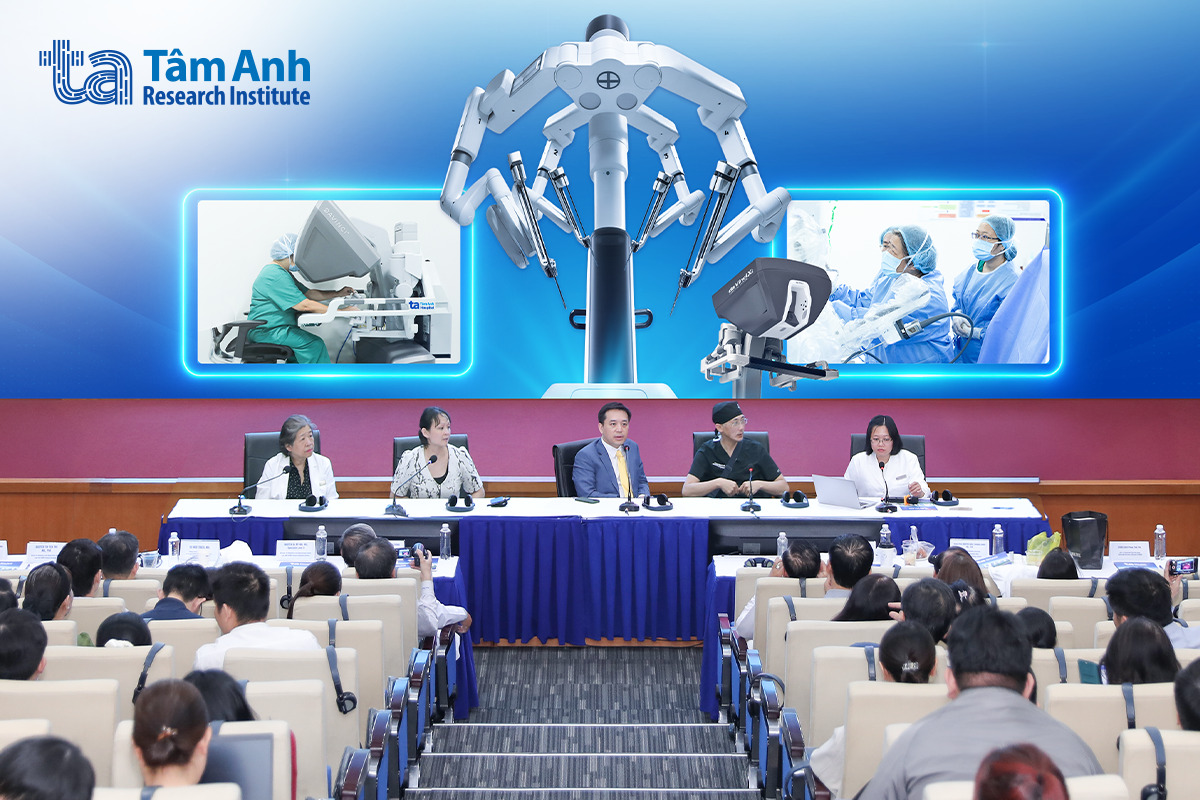
Dr. Do Huu Trieu (center) shares knowledge and experience in robotic pelvic reconstruction using the Da Vinci Xi system. Photo: Tam Anh Research Institute.
Experts noted that robotic surgery is becoming a modern, minimally invasive trend in gynecology, particularly in oncological surgery. With the high-resolution 3D cameras and robotic arms with 540-degree flexibility, surgeons can operate with extreme precision in the narrow pelvic field, thereby reducing trauma, preserving physiological functions, and improving the patient’s quality of life.
From the practical implementation of robotic surgery, the issue of systematic, international-standard training for surgeons was strongly emphasized. To master modern robotic systems, surgeons require more than just clinical experience; they must undergo intensive training and rigorous evaluation according to international standards.
Currently, the number of specialists in Vietnam holding Da Vinci Xi robotic surgery certification in Obstetrics and Gynecology is limited. Dr. Nguyen Ba My Nhi is the first female expert to receive this certification. According to Dr. My Nhi, becoming a robotic surgeon requires doctors to participate in extensive training, from theory to many hours of practice on 3D simulation models.

Dr. Le Ngoc Diep discusses robotic surgical techniques for gynecological treatment with the experts. Photo: Tam Anh Research Institute.
Participating in the training, Dr. Le Ngoc Diep (Tu Du Hospital) stated that while robotic surgery is not new globally, access in Vietnam remains limited due to high costs, few hospitals investing in the system, and limited training opportunities. “These training courses provide the local medical community with more opportunities to access and learn new techniques, step-by-step expanding the application of robotic surgery for effective patient treatment”, said Dr. Diep.

Dr. Nguyen Trung Vinh, PhD (President of the Vietnam Pelvic Floor Association), discusses the differences between traditional laparoscopy and Da Vinci Xi robotic surgery for hysterectomies. Photo: Tam Anh Research Institute.

Dr. Nguyen Van Ngai (An Giang Obstetrics and Children’s Hospital) shares insights on preserving pelvic floor function during gynecological surgery. Photo: Tam Anh Research Institute.
Experts believe that developing a team of international-standard robotic surgeons is key to expanding this technology in Vietnam. Large-scale training programs at Tam Anh Research Institute and Tam Anh General Hospital HCMC will help standardize surgical procedures while creating a professional network between domestic doctors and the world’s leading robotic surgery centers.
The program not only updates doctors on the latest technical advances but also significantly shortens the learning curve for robotic technology in clinical practice. By observing directly and engaging with experienced experts, doctors can learn how to select appropriate indications, improve operational precision, and reduce the risk of complications.
According to Assoc. Prof. Nguyen Quoc Truong Chinh, MD, PhD, the combination of modern technology, systematic training, and international cooperation will play a crucial role in driving the strong development of robotic gynecological surgery in Vietnam. This technology is expected to be widely applied to complex cases, offering patients access to advanced techniques domestically and enhancing the quality of healthcare for Vietnamese women.
Tam Anh General Hospital HCMC is a pioneer in deploying the Da Vinci Xi robotic system for Gynecological treatment alongside Urology, Gastroenterology, and Thoracic surgery. After 10 months, the hospital has successfully performed nearly 300 robotic surgeries across various specialties, including dozens in gynecology. Previously, in December 2025, Tam Anh General Hospital HCMC was recognized by Device Technologies as a pioneering center for achieving a record number of Da Vinci Xi robotic surgeries in Vietnam and was awarded the title of Center of Surgical Excellence.