
For the first time worldwide, an adjuvanted respiratory syncytial virus (RSV) vaccine developed by GSK (United Kingdom) has demonstrated high efficacy, safety and consistency in protecting people aged 60 years and older against RSV-associated lower respiratory tract disease.
Notably, the vaccine has shown the ability to generate a robust immune response even among individuals with weakened immunity and multiple underlying conditions, such as heart failure, asthma, chronic obstructive pulmonary disease (COPD), obesity and diabetes, who face a heightened risk of severe disease when infected with RSV. This represents a significant advancement in strategies to protect respiratory health in older adults.
These findings were shared by experts at the scientific seminar “Protecting Older Adults from the Burden of RSV – From Awareness to Proactive Prevention with Adjuvanted Vaccines”, organized by the Tam Anh Research Institute on November 25, 2025 in Ho Chi Minh City and Hanoi..

The seminar was jointly organized by the Tâm Anh General Hospital Group, the Tâm Anh Research Institute and GSK Vietnam, with the participation of leading medical experts in infectious diseases, respiratory medicine, geriatrics, cardiology, musculoskeletal medicine, preventive medicine and immunization.
Delivering the opening remarks, Prof. Dr. Ngo Quy Chau – President of the Vietnam Respiratory Society and Deputy Medical Director of Tâm Anh General Hospital Hanoi, emphasized that RSV is currently one of the leading causes of respiratory infections in young children, creating substantial pressure on pediatric departments in Hanoi, while also showing a marked increase in severe cases among older adults. This is because RSV spreads faster than COVID-19 and seasonal influenza, particularly in the context of multigenerational Vietnamese households, where older adults easily contract the virus from young children. According to research, a single RSV-infected individual can transmit the virus to three others in the same household or healthcare setting.
Among older adults, especially those with cardiovascular disease, hypertension, diabetes, COPD, heart failure or kidney disease, weakened immunity significantly increases the risks of pneumonia, respiratory failure, cardiovascular complications and death following RSV infection. Global data shows that RSV causes approximately 33 million acute respiratory infections, 3.1 million hospitalisations and more than 118,000 deaths worldwide each year, with mortality risk sharply elevated among individuals with cardiovascular disease, chronic respiratory disease, immunosuppression or organ transplants.
In Vietnam, over the past five years, 4.6 million RSV cases have been recorded among those aged 60 years and older, with around 200,000 hospitalisations and 18,000 in-hospital deaths, in which severe illness predominantly affects older adults with underlying conditions.
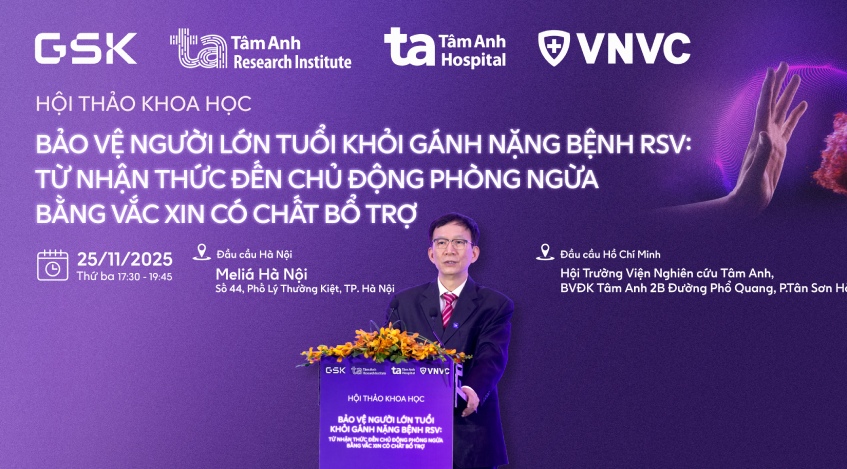
Prof. Ngo Quy Chau noted that RSV spreads rapidly through contact with respiratory secretions, and in multigenerational households, which are common in Vietnam, the virus is easily transmitted continuously, creating a “cycle of infection” within the community.
RSV in older adults and individuals with underlying conditions
Assoc. Prof. Dr. Vu Thi Thanh Huyen, Head of the Department of Endocrinology and Musculoskeletal Medicine at the National Geriatric Hospital, cited a severe case reported in the medical literature: a 76-year-old man with COPD, diabetes and coronary artery disease was hospitalized with sore throat, cough, fever, myalgia, cyanosis of the lips and extremities, and respiratory failure despite stable blood pressure. The patient was treated with broad-spectrum antibiotics but showed no improvement, deteriorated and required admission to the intensive care unit (ICU). After nearly two months of treatment, coughing and dyspnoea improved but lung damage persisted. Not long after discharge, the patient experienced an RSV recurrence, with mild fever and continued lung injury, illustrating that RSV in older adults with multiple comorbidities can be prolonged, severe and prone to relapse.
Assoc. Prof. Thanh Huyen added that RSV not only causes disease but can also trigger or exacerbate underlying conditions such as cardiovascular, respiratory and metabolic disorders. Older adults with diabetes, heart disease or COPD who contract RSV have a significantly higher risk of ICU admission than healthier peers, due to systemic inflammation and metabolic disturbances that destabilise existing diseases.
In Vietnam, one in three older adults has one to two underlying conditions, increasing the risk of complications, particularly in those with heart failure, coronary artery disease, COPD, asthma, diabetes, chronic kidney disease, or immunosuppression, as well as those living in nursing homes. International data show that 96% of hospitalized RSV patients aged 60 and above have at least one underlying condition; global statistics indicate that nearly 9 in 10 RSV-related hospitalisations involve risk factors, including 30% with COPD, 20% with asthma, 40% with chronic cardiac disease, 15% with chronic kidney disease and over 60% aged above 65 years.
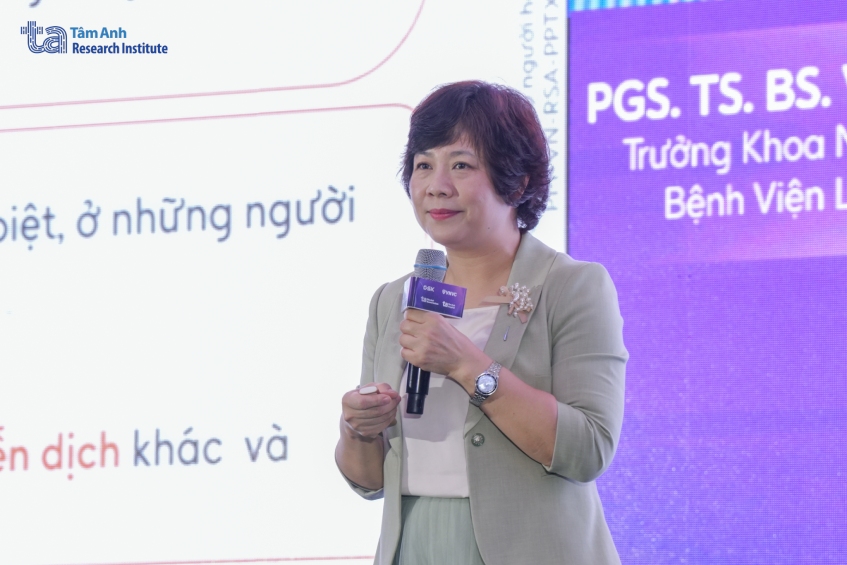
In older adults or individuals with underlying conditions, RSV can rapidly progress to pneumonia, respiratory failure, COPD exacerbations or heart failure, and may lead to death if not diagnosed and treated promptly.
Assoc. Prof. Dr. Nguyen Thi Bach Yen – Head of Cardiology Department, Tâm Anh General Hospital Hanoi, added that in older adults with underlying cardiovascular conditions, heart failure or coronary artery disease, RSV infection often progresses severely, potentially leading to heart failure, arrhythmias and elevated cardiac enzymes, thereby reducing survival rates. Studies in older adults show that the vast majority of patients (97%) have at least one underlying condition, with 55% having cardiovascular disease. Among those infected with RSV, 22% experience cardiovascular events, 14% develop heart failure, and after 12 months, only 57% remain alive. Of these adverse events, 33% occur in individuals with pre-existing heart disease and 8% represent newly developed conditions.
Data from the VIZIONS project (Vietnam Initiative on Zoonotic Infections), conducted between 2012 and 2016 on over 4,000 respiratory infections, show that RSV was the most common pathogen, accounting for 23% of cases. Among individuals aged 65 and above, the proportion was even higher and associated with prolonged hospitalisation and severe outcomes, particularly when co-infected with influenza or rhinovirus, with pneumonia being the most common complication. In addition, RSV significantly increases the risk of serious cardiovascular events, such as heart failure, ischaemic stroke, and myocardial infarction, by four to eight times during the acute infection phase, making treatment more complex and costly.
Of particular concern, natural immunity to RSV is short-lived, making recurrent infections common throughout life. After each infection, the immune response declines rapidly, leaving both adults and older adults susceptible to reinfection, with disease severity increasing with age and underlying conditions.

Assoc. Prof. Bach Yen noted that evidence from clinical practice indicates RSV imposes a disease burden comparable to influenza but with more severe outcomes, with up to 80% of patients requiring medical support.
Dr. Le Ba Ngoc – Head of General Internal Medicine, Tâm Anh General Hospital Hanoi, explained that diabetes weakens the immune system, creating favorable conditions for viruses and bacteria, including RSV, to cause infection. Individuals with diabetes who contract RSV often require treatment adjustments and have a higher likelihood of hospitalisation, particularly through emergency departments, resulting in reduced quality of life and increased healthcare costs.
Studies also show that six months after infection, older adults with diabetes who contract RSV experience a decline in daily self-care abilities, including eating and dressing. For those with diabetes and concurrent kidney disease, the risk of acquiring RSV doubles. Consequently, many recommendations advise vaccinating individuals with diabetes earlier than age 60 to reduce the risk of hospitalisation, severe complications and mortality.

Dr. Ba Ngoc emphasized that people with diabetes are more likely to develop severe RSV infection, require hospitalisation and experience reduced quality of life, with the risk doubling among those with co-existing kidney disease.
The warnings from Assoc. Prof. Thanh Huyen, Assoc. Prof. Bach Yen and Dr. Le Ba Ngoc regarding the burden of RSV in older adults and individuals with underlying conditions demonstrate that the virus poses a much greater threat than commonly perceived. The complex clinical progression underscores the urgent need to understand the nature of RSV and effective prevention strategies. In this context, Assoc. Prof. Dr. Pham Quang Thai – Deputy Head of the Department of Infectious Disease Control, National Institute of Hygiene and Epidemiology, stressed that understanding the mechanisms of RSV and recent advances in vaccine technology is the scientific foundation for establishing a protective shield for older adults, the group at greatest risk.
Advances in the Development of RSV Vaccines for Older Adults Using Advanced Adjuvant Technology to Enhance Robust Protection
Assoc. Prof. Pham Quang Thai emphasized: “The core issue in older adults is immunosenescence, which is irreversible. The feasible solution is to understand the antigen (F protein), select the appropriate antigen strategy, and incorporate an optimal adjuvant to generate sufficiently strong signalling, enabling the aging immune system to respond effectively and develop durable, specific immunity.”
Respiratory syncytial virus (RSV) spreads rapidly and causes deep respiratory damage due to its F and G proteins, which allow the virus to “fuse” from one cell to another. A major scientific breakthrough was the identification of the pre-fusion form of the F protein (preF), representing the stage in which the F protein maintains its characteristic structure, enabling effective immune recognition. After membrane fusion, the F protein changes shape, losing many critical epitopes, making antibody binding difficult and weakening the immune response. For this reason, preF has become the “gold-standard” target for RSV vaccine development, enabling strong immune activation, especially in older adults, who are highly vulnerable due to weakened immune function.
Assoc. Prof. Pham Quang Thai explained: “Post-vaccination reactions may increase slightly; however, in exchange, specific cellular immunity is activated, which forms the basis for effective protection against RSV.”
An important advancement is the combination of recombinant preF antigen with an adjuvant to amplify the immune response. Experience from the shingles vaccine (Shingrix) by GSK has shown that the AS01 adjuvant generates strong signalling at the injection site, enhancing antigen recognition and maintaining long-term immunity. This knowledge has been applied to RSV vaccines to compensate for the decline in cellular immunity in older adults and to strengthen protection for this vulnerable group.
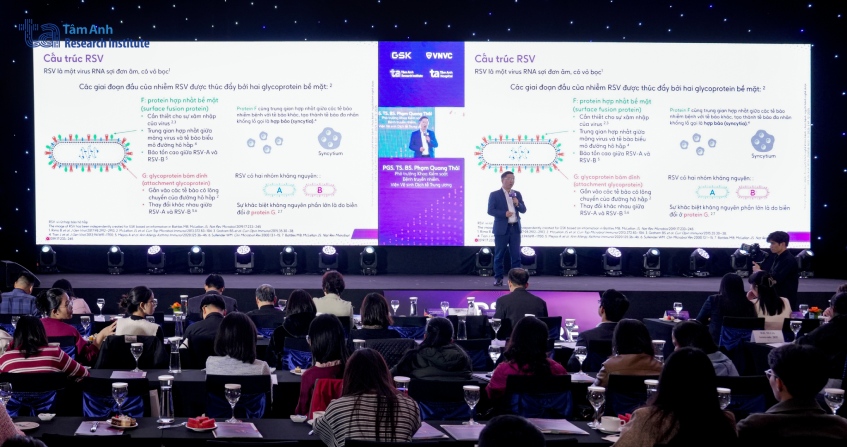
Older adults, individuals with underlying diseases, and those with additional risk factors are advised to receive a single dose of RSV vaccine according to recommendations in order to reduce the risk of hospitalisation and severe disease.
Efficacy and Immune Response of the Adjuvanted RSV Vaccine in Older Adults
By applying antigen-selection technology targeting the pre-fusion F protein and drawing upon experience with adjuvant systems that enhance antigen recognition, maintain long-term protection, and compensate for the decline in cellular immunity in older adults, GSK’s RSV vaccine, using recombinant preF combined with the AS01E adjuvant system, significantly increases antibody levels and activates T lymphocytes. This elevates the immune response of older adults to levels approaching those of younger individuals, thereby enhancing protection for vulnerable groups, particularly those aged 60 years and above, the age group at highest risk of hospitalisation and respiratory failure due to RSV.
Assoc. Prof. Dr. Do Van Dung – Vice-Chairman of the Scientific and Training Council, University of Medicine and Pharmacy at Ho Chi Minh City, cited evidence from clinical trials in people aged 60 and above, including those with underlying cardiovascular and metabolic conditions. The results showed high vaccine efficacy against both RSV-A and RSV-B, including potential future variants. Specifically, the vaccine provided 94.1% protection against severe lower respiratory tract disease, 82.6% protection against lower respiratory tract disease overall (84.6% for RSV-A and 80.9% for RSV-B), and 94.6% protection in individuals with two or more underlying conditions. For milder acute respiratory infections, the efficacy remained above 70%, with similar results across both RSV strains.
Regarding immune response, within just 30 days, neutralising antibodies against RSV-A and RSV-B increased sharply across all age groups and health conditions, demonstrating strong immune activation. Importantly, the immune response remained stable in frail, pre-frail, and healthy individuals and did not decline significantly with age, even among those aged 80 years and above, the group at highest risk. In addition, protective efficacy was maintained across three RSV seasons, markedly reducing hospitalisation and progression to severe disease.
The vaccine demonstrated a favorable safety and tolerability profile. Post-vaccination reactions were generally mild, mainly injection-site pain and transient fatigue. There were no significant differences in serious immune-related adverse events between the vaccine and placebo groups, confirming its high safety and acceptability.
To date, GSK’s RSV vaccine has been approved in 66 countries, with nearly 10 million doses distributed, particularly in the United States, Canada and Australia. Health authorities recommend a single dose for individuals aged 75 years and above, or for those aged 60–74 years with risk factors, to reduce the risk of hospitalisation and protect vulnerable groups.

Assoc. Prof. Do Van Dung emphasized that GSK’s RSV vaccine, by applying pre-fusion antigen technology and integrating an advanced adjuvant system, induces strong immunity and provides effective protection. It is a suitable option for individuals aged 60 years and above, helping reduce the risk of hospitalisation and severe respiratory complications.
Summarising the scientific workshop “Protecting Older Adults from the Burden of RSV – From Awareness to Proactive Prevention with Adjuvanted Vaccines”, Assoc. Prof. Dr. Tran Quang Binh – Medical Director, Tâm Anh General Hospital Ho Chi Minh City – emphasized that respiratory syncytial virus (RSV) is not only a concern for children but also poses a serious threat to the health of older adults, especially those with underlying conditions such as heart failure, asthma, COPD, obesity or diabetes. RSV frequently leads to severe lower respiratory tract disease, yet there is no specific antiviral treatment, and diagnosis remains challenging.
Previously, serological testing was used, but with limited effectiveness. More advanced diagnostic methods can detect the virus more quickly, although these methods are still not widely available. Therefore, proactive prevention through vaccination is considered the optimal measure to protect older adults from severe disease.
The search for an effective RSV vaccine has spanned more than 70 years. It was not until 2013 that scientists identified the structure of the F protein in its pre-fusion state, opening the opportunity to develop vaccines capable of eliciting strong immune responses. Current vaccines incorporate adjuvants, which enhance the immune reaction, particularly beneficial for individuals with underlying health conditions or a high risk of severe progression, as the severity of illness correlates with stronger immune activation.

Assoc. Prof. Tran Quang Binh emphasized that RSV easily causes severe lower respiratory tract infections but is difficult to diagnose and currently has no specific treatment. Therefore, the new generation of RSV vaccines, developed from the breakthrough discovery of the pre-fusion F protein and the application of adjuvant technology, represents the optimal preventive solution for high-risk groups.
RSV poses a serious threat to older adults, particularly those with underlying diseases. In the absence of specific treatment and with diagnostic challenges, the advent of RSV vaccines based on the preF3 protein combined with an adjuvant offers protection of up to 82.6%, and even 92.1% in individuals with underlying conditions. The vaccine also demonstrates a favorable safety profile, helping to prevent severe disease and complications effectively.
Clinical studies show that the RSV vaccine provides impressive protective efficacy, with up to 82.6% protection in adults aged over 60 and 92.1% in those with at least one underlying condition. Regarding safety, data demonstrate that adverse reactions are generally minimal, giving reassurance to older adults and caregivers. This is regarded as an important advance in RSV prevention, helping reduce disease burden and enhance public health protection.
Tam Anh Research Institute
- Ha Noi:
- 108 Hoang Nhu Tiep, Bo De Ward, Ha Noi
- Hotline: 024 3872 3872 – 024 7106 6858
- TP.HCM:
- 2B Pho Quang Street, Ward Tan Son Hoa, Ho Chi Minh City
- Hotline: 093 180 6858 – 0287 102 6789
- Fanpage: https://www.facebook.com/ViennghiencuuTamAnh.TAMRI
- Website: tamri.vn