
At the scientific seminar “Multidisciplinary Approach in the Diagnosis and Management of Neurofibromatosis Type 1,” organized by the Tam Anh Research Institute and Tam Anh General Hospital Group on April 20, 2026, experts identified Neurofibromatosis Type 1 (NF1) as a rare genetic disorder with a multisystem disorder. The disease follows a long-term progression and requires continuous management through a multidisciplinary model to optimize treatment outcomes.
Assoc. Prof. Tran Quang Binh, MD, PhD, Medical Director of Tam Anh General Hospital Group in Ho Chi Minh City, delivered the opening remarks. He emphasized the importance of early identification of rare diseases, particularly those manifesting in childhood that are easily overlooked or diagnosed late, causing patients to miss opportunities for timely intervention.
NF1, also known as Von Recklinghausen’s disease, is an autosomal dominant genetic disorder caused by a mutation in the NF1 gene on chromosome 17. This gene encodes the protein neurofibromin, which regulates cell proliferation. When mutated, growth suppression is impaired, leading to a risk of various tumors and lesions in the skin, nervous system, eyes, bones, and cardiovascular system. The global incidence is estimated at 1 in 2,000 to 3,000 live births.
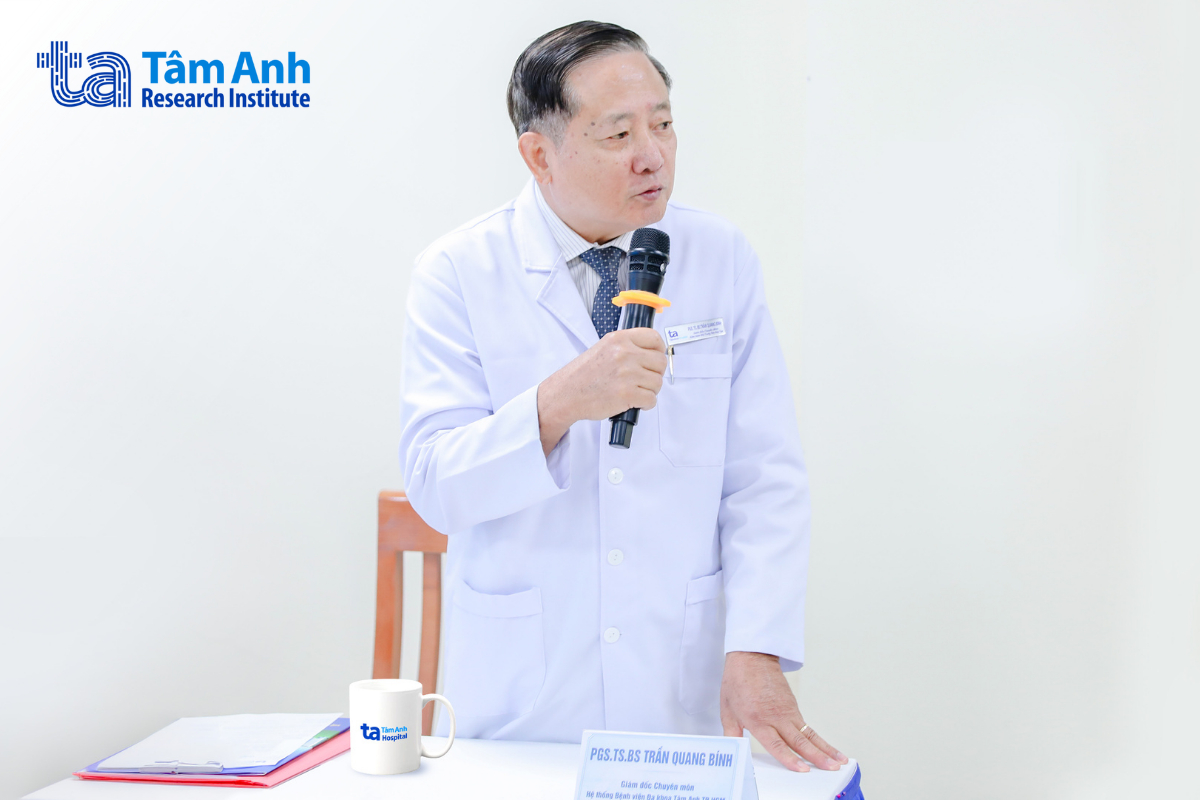
Assoc. Prof. Tran Quang Binh, MD, PhD – Medical Director of Tam Anh General Hospital Group, HCMC, speaking at the seminar.
Early Identification Changes Patient Prognosis
In a specialized report, Dr. Nguyen Kien Minh from the Department of Pediatrics at Tam Anh General Hospital HCMC, noted that NF1 clinical manifestations vary by age. In young children, common signs include cafe-au-lait spots, freckling in the armpits or groin, developmental delays, learning disabilities, or bone deformities. As patients age, they may develop cutaneous neurofibromas, optic gliomas, scoliosis, hypertension, or other neurological complications.
According to the 2021 updated international diagnostic criteria, NF1 diagnosis is primarily clinical, combined with family history and genetic testing when necessary. Dr. Kien Minh emphasized that while genetic testing supports diagnosis, differential diagnosis, and reproductive counseling, it does not replace a comprehensive clinical evaluation.
Notably, NF1 is a lifelong progressive condition with many complications emerging only over time. Therefore, patients require regular monitoring from childhood through adulthood, including ophthalmic exams, blood pressure checks, and assessments of physical development, neurology, learning abilities, tumors, and musculoskeletal abnormalities.
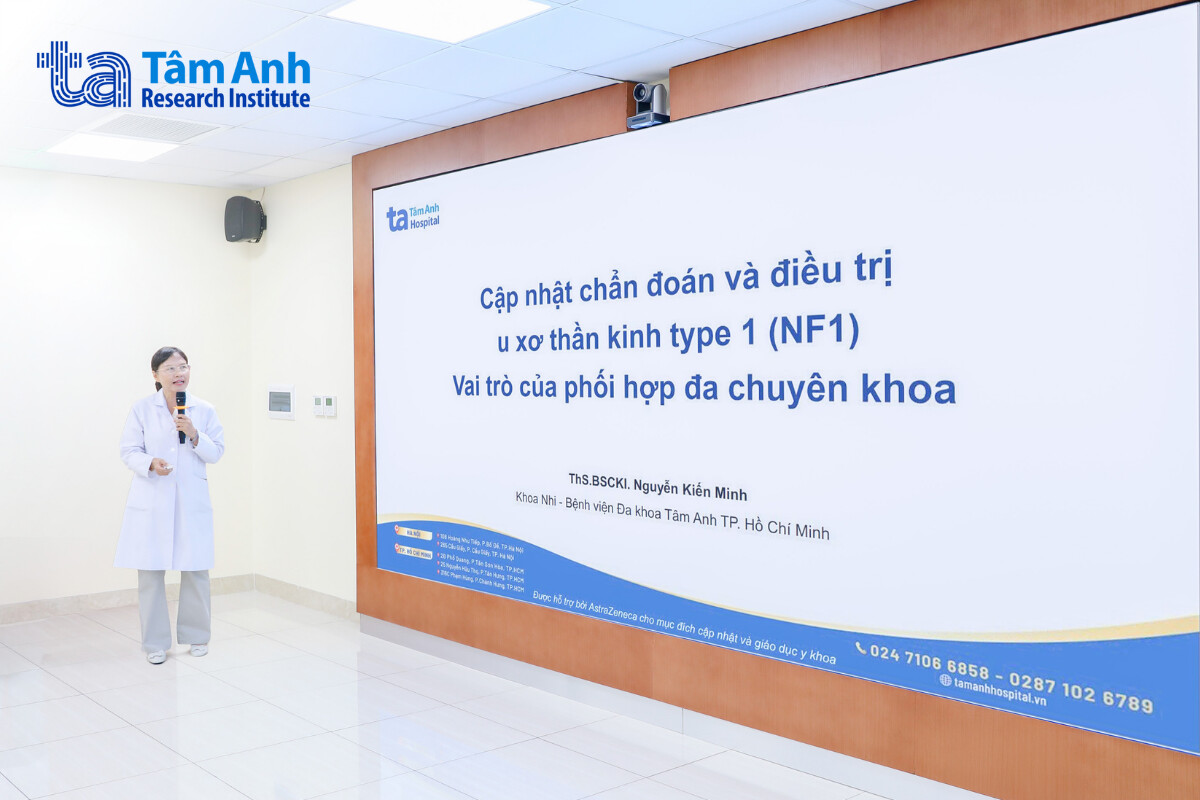
Dr. Kien Minh presenting an update on the diagnosis and treatment of Neurofibromatosis type 1.
Surgery remains central but requires individualization
Dr. Chu Tan Si, MD, MSc, Head of the Neurosurgery & Spine Department at Tam Anh General Hospital HCMC, focused on plexiform neurofibromas (PN), a significant complication occurring in 30-50% of NF1 patients. These tumors arise from multiple nerve bundles, are often congenital, and can grow rapidly during the first decade of life.
PN can occur in the head, neck, chest, limbs, spine, or pelvis. Depending on the location, they can cause chronic pain, physical deformity, impaired mobility, vision loss, or nerve compression. Approximately half of these patients have at least one large symptomatic PN requiring intervention.
Additionally, patients with NF1 face an 8-13% risk of malignant transformation into Malignant Peripheral Nerve Sheath Tumors (MPNST). Warning signs include rapidly increasing pain and tumors that grow abnormally fast, become hard, or feel fixed in place. For these reasons, regular clinical follow-ups and diagnostic imaging play a critically important role.
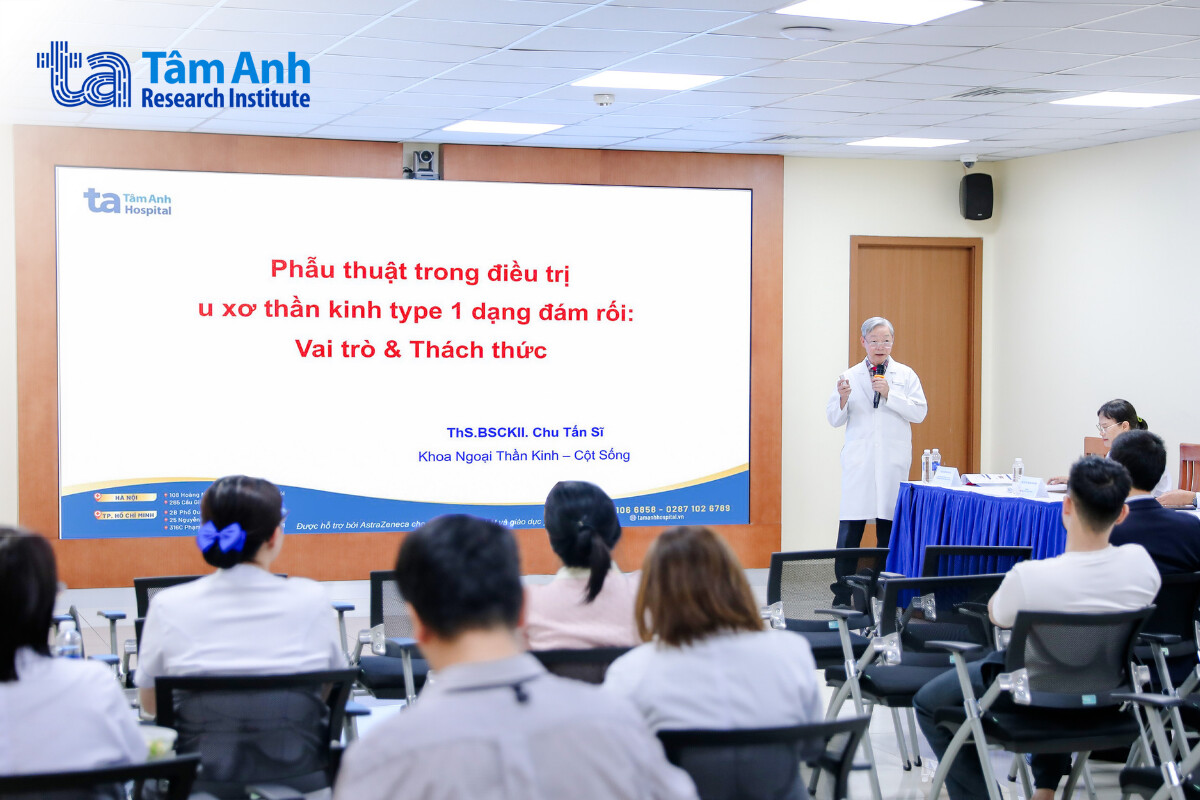
Dr. Chu Tan Si presenting on the roles and challenges of surgery in the treatment of plexiform Neurofibromatosis type 1.
According to Dr. Tan Si, surgery remains the optimal treatment for many plexiform neurofibroma (PN) cases that cause pain, physical deformity, functional impairment, or compression of vital structures. However, this is a highly challenging category of surgery because these tumors often lack clear margins, adhere along nerve fibers, and exhibit significant hypervascularity, leading to high risks of hemorrhage, nerve damage, and postoperative recurrence.
Approximately 50% of PN masses are considered difficult or impossible to resect completely if serious sequelae are to be avoided. In many instances, debulking surgery is the only option to achieve nerve decompression, pain relief, or aesthetic improvement. Some patients may require multiple surgical interventions throughout their lives.
During the seminar, Dr. Tan Si shared a clinical case involving a 24-year-old male suspected of having NF1, presenting with numerous café-au-lait spots on his skin. The patient was hospitalized due to a mass on the left side of his neck that had been gradually enlarging over several years. Recently, he began experiencing a dull ache in the left neck and shoulder area, with numbness radiating down his arm and mild weakness in the left shoulder, which started to interfere with his daily activities.
MRI results revealed a tumor measuring approximately 6.2 x 3.8 x 3.5 cm extending along the left brachial plexus, causing widening of the C4-C6 neural foramina and compressing the nerve roots. Following a multidisciplinary consultation between Neurosurgery and Orthopedics, the team decided to proceed with surgery due to the patient’s escalating pain, progressive muscle weakness, and visible neck deformity. The surgeons performed a brachial plexus release, tumor debulking, and nerve root decompression.
Since plexiform neurofibromas often spread along multiple nerve bundles and lack clear margins, achieving complete resection while preserving function is extremely challenging. Postoperatively, the patient experienced significant pain relief after one week, a total resolution of hand numbness after one month, and full recovery of muscle strength after three months, with no recorded complications. “This case demonstrates the critical role of timely surgical intervention and multidisciplinary coordination in treating complex NF1,” stated Dr. Tan Si.
Targeted therapy opens new hope
A key highlight of the program was the emergence of targeted therapies, specifically MEK inhibitors, for the treatment of inoperable NF1-PN. These drugs target the RAS/RAF/MEK/ERK signaling pathway, a growth-promoting pathway that becomes overactivated due to NF1 gene mutations.
International research data indicates that treatment with MEK inhibitors can help reduce tumor volume, slow disease progression, and improve symptoms in many patients, particularly children with plexiform neurofibromas that cannot be radically resected. Experts view this as a significant milestone in the treatment of rare diseases, paving the way for a multimodal model that integrates monitoring, surgery, and individualized medical therapy.
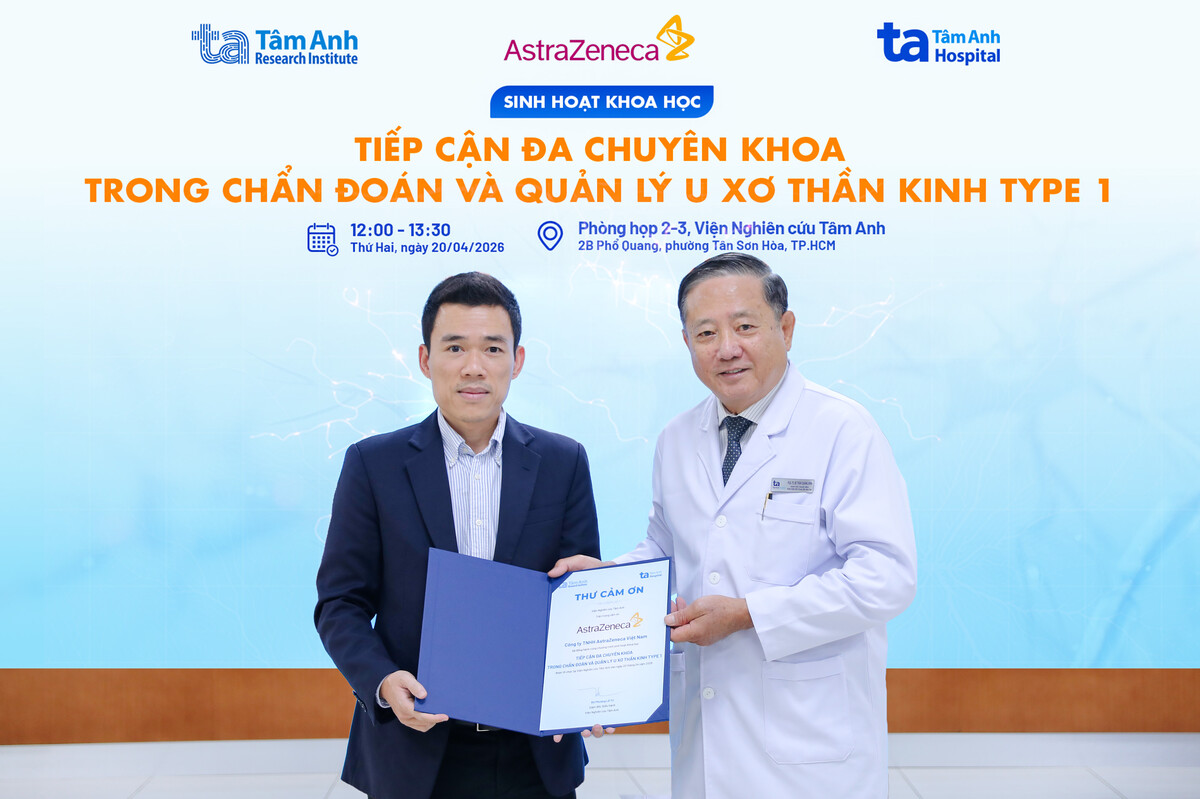
Assoc. Prof. Tran Quang Binh, MD, PhD – Medical Director of Tam Anh General Hospital Group, HCMC, presenting a letter of appreciation to the sponsor’s representative.
During the discussion, many physicians focused on the optimal timing for surgical indications, the role of routine MRI monitoring, genetic counseling for families affected by NF1, and the future accessibility of targeted therapies. The experts reached a consensus that NF1 is not the domain of any single specialty. Patients require management through a collaborative network spanning pediatrics, neurology, neurosurgery, oncology, ophthalmology, dermatology, orthopedics, diagnostic imaging, rehabilitation, and psychology. Only through a comprehensive, continuous, and individualized approach can we mitigate complications, enhance quality of life, and expand treatment opportunities for those with NF1.
This scientific seminar reaffirms the efforts of the Tam Anh Research Institute in updating advanced medical knowledge, connecting multidisciplinary experts, and promoting modern therapeutic solutions for difficult, rare, and complex pathologies.
Tam Anh Research Institute
- Ha Noi:
- 108 Hoang Nhu Tiep, Bo De Ward, Ha Noi
- Hotline: 024 3872 3872 – 024 7106 6858
- TP.HCM:
- 2B Pho Quang Street, Ward Tan Son Hoa, Ho Chi Minh City
- Hotline: 093 180 6858 – 0287 102 6789
- Fanpage: https://www.facebook.com/ViennghiencuuTamAnh.TAMRI
- Website: tamri.vn