
Obesity is more than just a matter of weight or physical appearance; it acts as a primary trigger for a complex chain of serious conditions, including cardiovascular, renal, and metabolic disorders. However, many cases of obesity are not detected early enough for timely intervention.
These insights were shared at the scientific symposium “Managing Cardio – Kidney – Metabolic risks: Early intervention and comprehensive management in obese patients,” held at the Tam Anh Research Institute on May 5.
Dr. Lam Van Hoang, Head of the Department of Endocrinology and Diabetes at Tam Anh General Hospital, Ho Chi Minh City, noted a significant shift in the approach to obesity treatment. Rather than focusing solely on weight and the number of kilograms lost, clinicians now prioritize a comprehensive assessment of cardiovascular and metabolic risks, common complications found in obese patients.

Dr. Lam Van Hoang presenting current strategies in obesity treatment.
Patients with the same body weight may have different levels of visceral fat and metabolic dysfunction, resulting in varying disease risks. Consequently, treatment must be personalized rather than following a “one-size-fits-all” formula.
Dr. Hoang emphasized that obesity is a root cause of hypertension, diabetes, and fatty liver disease. These factors interact synergistically, significantly increasing the risk of cardiovascular events if not controlled early.
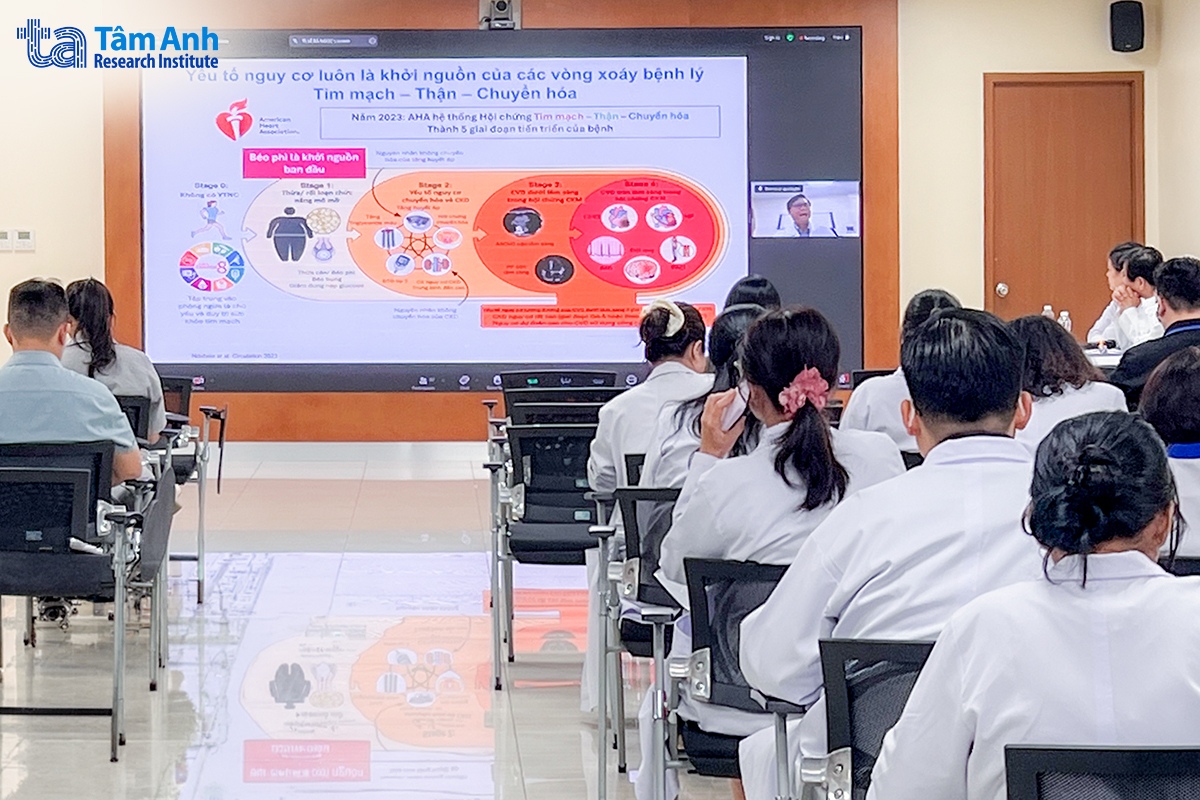
Dr. Le Ba Ngoc sharing insights during an online session on multifactorial risk management in obese patients.
Dr. Le Ba Ngoc, Head of the Department of General Internal Medicine at Tam Anh General Hospital, Hanoi, introduced the concept of Cardiovascular – Kidney – Metabolic (CKM) syndrome. Introduced by the American Heart Association (AHA) in 2023, this framework describes the intricate link between risk factors and chronic diseases.
Under this model, patients progress through stages: from simply being overweight to developing metabolic disorders, followed by atherosclerosis, and ultimately reaching severe complications such as myocardial infarction, stroke, or kidney failure.
Notably, early stages often lack clear symptoms and are frequently overlooked. Dr. Ngoc pointed out that many patients with minor metabolic issues, such as dyslipidemia or fatty liver, fail to receive timely intervention. However, the addition of just one risk factor can significantly increase mortality rates.
Therefore, screening must be proactive. Evaluation should go beyond Body Mass Index (BMI) to include comprehensive assessments of blood glucose, lipid profiles, and liver and kidney function. Utilizing risk prediction scores allows physicians to determine the optimal window for intervention before the disease progresses.
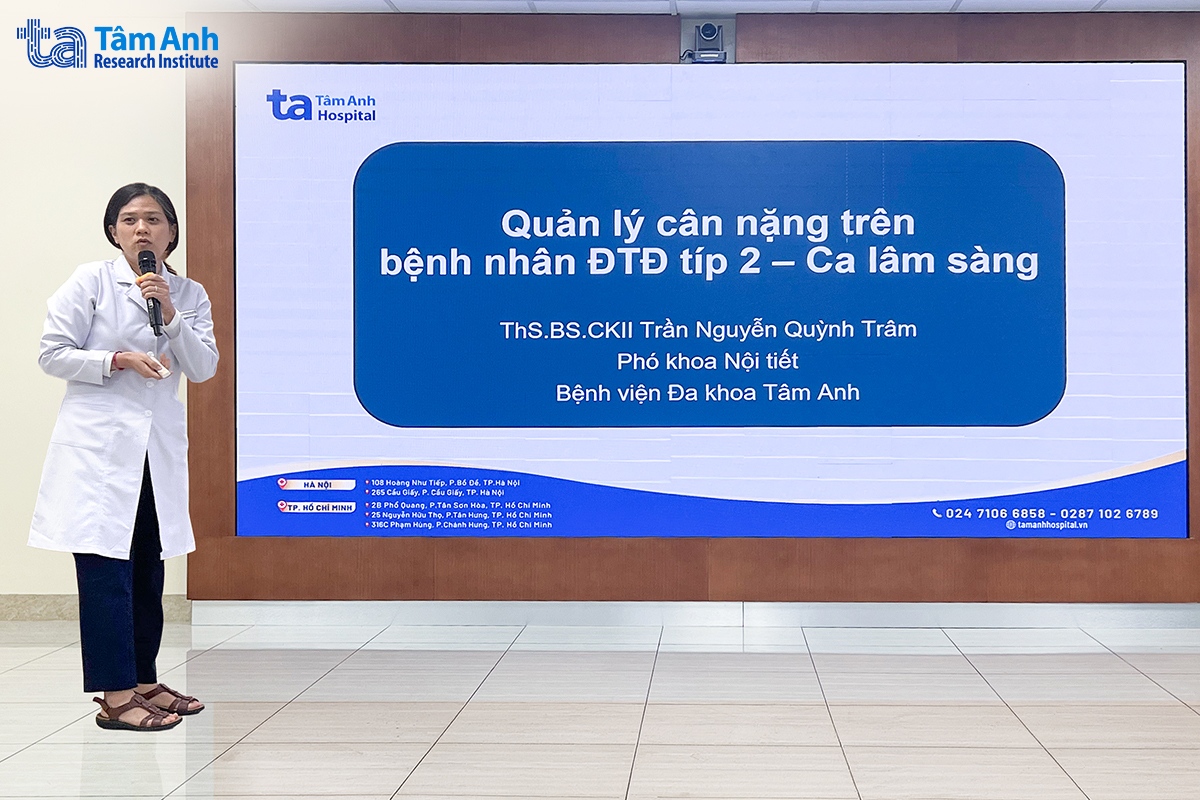
Dr. Tran Nguyen Quynh Tram discussing clinical cases involving comprehensive treatment for obesity and associated metabolic disorders.
Obesity treatment requires a tailored approach where lifestyle modification remains the foundation, potentially supplemented by medication or other therapies based on risk levels and comorbidities.
Dr. Tran Nguyen Quynh Tram, Deputy Head of the Department of Endocrinology and Diabetes at Tam Anh General Hospital, Ho Chi Minh City, presented clinical cases demonstrating the effectiveness of this approach.
A 34-year-old female patient presenting with menstrual irregularities was diagnosed with obesity, pre-diabetes, dyslipidemia, Grade III fatty liver, and Polycystic Ovary Syndrome (PCOS). Following a combination of lifestyle changes and medication, she lost nearly 20% of her body weight, normalized her metabolic markers, and saw significant improvement in her liver condition.
A 26-year-old male seeking obesity treatment was found to have Type 2 diabetes, dyslipidemia, Grade III fatty liver, and gallstones. After four months of treatment, he achieved a 12% weight reduction, stable blood glucose levels, and improved liver function.
According to Dr. Tram, these cases highlight that CKM syndrome can emerge very early, even in young adults. However, many of these disorders can be managed or even reversed if detected and treated promptly.
Experts emphasize that obesity is a chronic disease requiring long-term monitoring. Early screening, accurate risk assessment, and personalized treatment plans are essential, not only for weight reduction but for preventing future cardiovascular, renal, and metabolic complications.
Tam Anh Research Institute
- Ha Noi:
- 108 Hoang Nhu Tiep, Bo De Ward, Ha Noi
- Hotline: 024 3872 3872 – 024 7106 6858
- TP.HCM:
- 2B Pho Quang Street, Ward Tan Son Hoa, Ho Chi Minh City
- Hotline: 093 180 6858 – 0287 102 6789
- Fanpage: https://www.facebook.com/ViennghiencuuTamAnh.TAMRI
- Website: tamri.vn