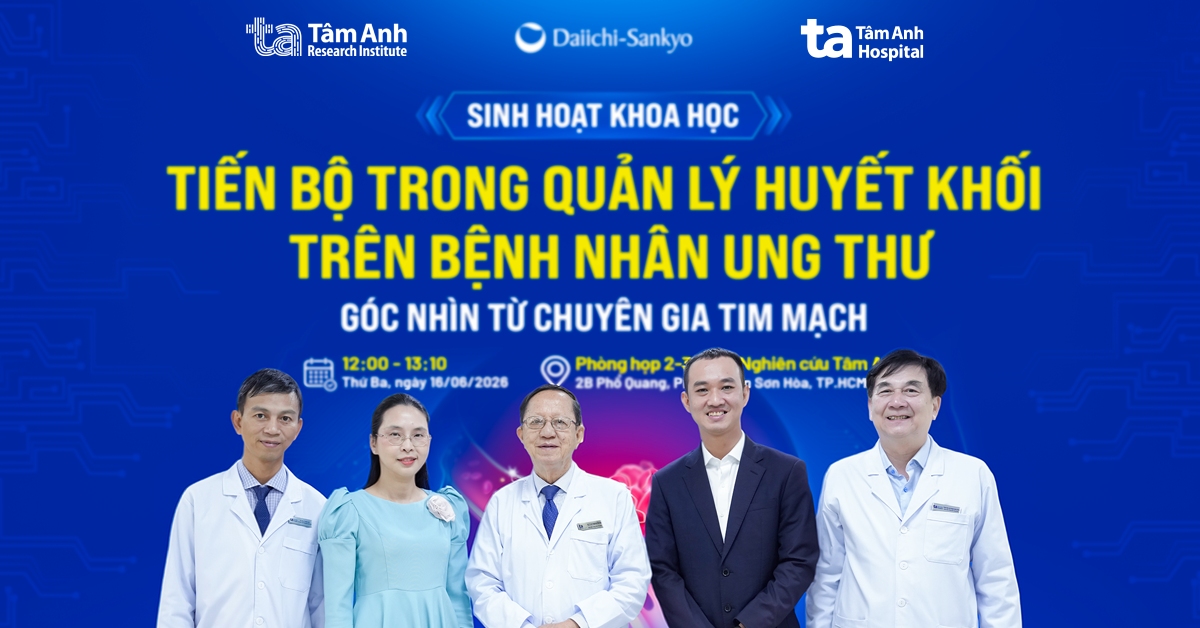

Cardiovascular-Kidney-Metabolic (CKM) syndrome is a complex pathological cycle. Rather than managing each condition separately, a comprehensive treatment strategy initiated during the “golden window” can help reduce the risk of heart failure, chronic kidney disease, and atherosclerotic cardiovascular events.

Prof. Vo Thanh Nhan, MD, PhD (second from left), together with fellow speakers at the scientific seminar.
This message was shared by Prof. Vo Thanh Nhan, MD, PhD, Director of the Interventional Cardiology Center, Tam Anh General Hospital Group in Ho Chi Minh City, along with fellow speakers during the scientific seminar “Managing Cardiovascular – Kidney – Metabolic (CKM) Risk: A Comprehensive Approach and Long-Term Follow-Up.” The program was held on June 8, 2026, at the Tam Anh Research Institute and attracted a large number of physicians specializing in cardiology, nephrology, internal medicine, endocrinology, and diabetes care from across the Tam Anh General Hospital Group in Ho Chi Minh City.
Cardiovascular – Kidney – Metabolic (CKM) syndrome has become a global healthcare challenge. It encompasses a complex interplay among metabolic disorders such as obesity and diabetes, kidney disease, and cardiovascular disease. The condition affects multiple organ systems, increases mortality risk, and significantly impairs patients’ quality of life.
According to Prof. Vo Thanh Nhan, Stage 2 CKM is considered the “golden window” for medical intervention. At this stage, patients present only with metabolic risk factors such as prediabetes, dyslipidemia, and obesity, without any evidence of target organ damage or established cardiovascular or kidney disease. Appropriate and timely medical treatment at this point provides a valuable opportunity to reverse or substantially slow disease progression.
However, not all patients are identified and treated early. Most seek medical attention only after the disease has progressed to Stage 3 or Stage 4 CKM syndrome, when cardiac and renal damage have become clinically evident and require more intensive and complex treatment strategies.

Dr. Tran Thi Thanh Truc, Head of the Internal Medicine Department, delivers her presentation at the scientific seminar.
Tran Thi Thanh Truc, MD, Head of the Internal Medicine Department at Tam Anh General Hospital Group in Ho Chi Minh City, noted that many young patients currently present with multiple risk factors, including diabetes, overweight, obesity, dyslipidemia, and fatty liver disease, despite having no obvious cardiovascular symptoms.
One such case involved a 26-year-old woman who gained five kilograms within two months and had a history of polycystic ovary syndrome. She sought care at Tam Anh General Hospital in Ho Chi Minh City and was diagnosed with type 2 diabetes, class II obesity, dyslipidemia, and grade 2 fatty liver disease. The challenge was whether to initiate comprehensive management of the cardiovascular – kidney – metabolic axis at an early stage or address each condition separately as the disease progressed.
According to the latest recommendations from the American Diabetes Association (ADA), glycemic control (HbA1c below 7%) is only one of the four pillars of comprehensive diabetes management. Therefore, focusing solely on reducing HbA1c below 7% is not sufficient. The optimal goal is to reduce future cardiovascular and renal risk by simultaneously controlling blood glucose, body weight, blood pressure, and lipid abnormalities, while selecting medications that provide cardiovascular and renal benefits.
Dr. Truc cited several studies demonstrating that combination therapy initiated as early as Stage 2 CKM can reduce cardiovascular events, slow the progression of kidney disease, and improve survival outcomes.
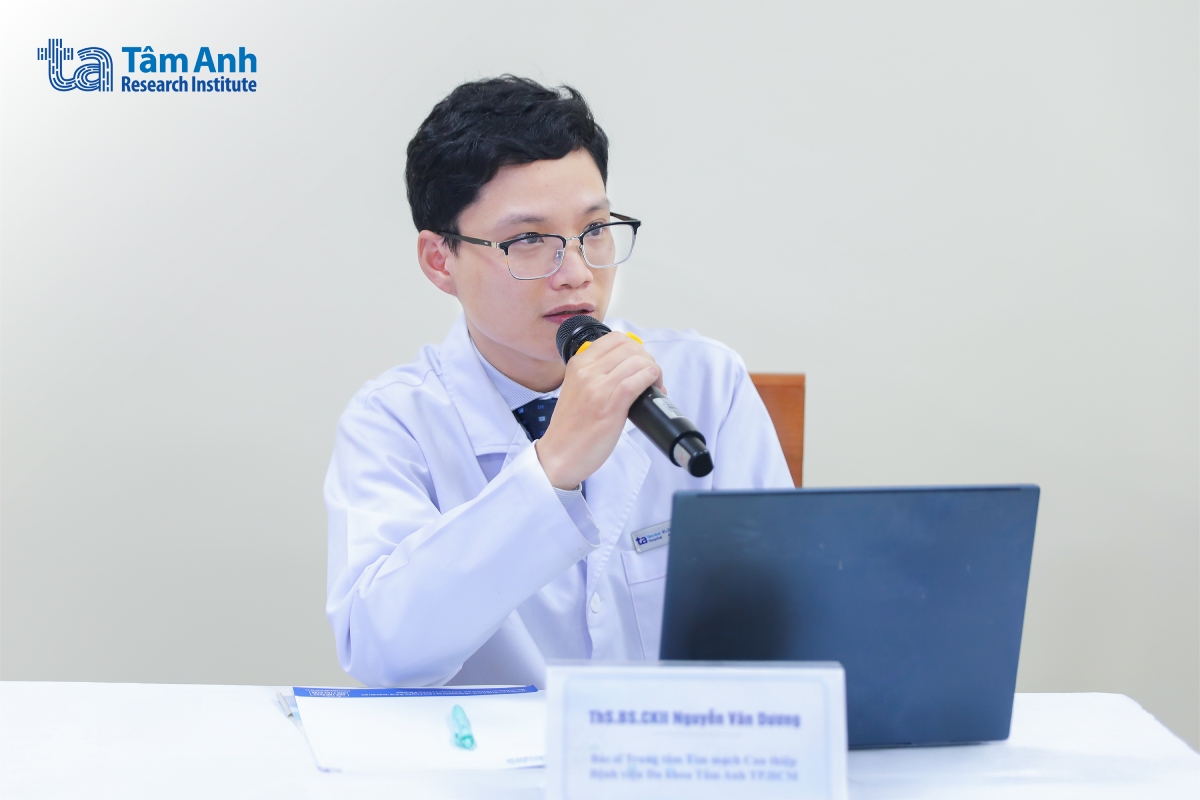
Dr. Nguyen Van Duong from the Interventional Cardiology Center, engages in professional discussions with participating physicians during the program.
According to Nguyen Van Duong, MD, from the Interventional Cardiology Center at Tam Anh General Hospital Group in Ho Chi Minh City, comprehensive treatment becomes significantly more challenging once CKM syndrome progresses to Stage 3 or Stage 4 and target organ damage becomes clinically apparent.
A representative case involved a 78-year-old woman who presented to Tam Anh General Hospital in Ho Chi Minh City with chest pain, shortness of breath, and limb edema. She had a history of hypertension and type 2 diabetes. The patient was diagnosed with a very high-risk acute myocardial infarction, acute heart failure, stage 3 chronic kidney disease, and Stage 3 – 4 CKM syndrome. After stabilization of her acute heart failure, coronary angiography revealed severe stenosis extending from the left main coronary artery to the left anterior descending artery and circumflex artery, severe stenosis of the first diagonal branch (D1), and near-total occlusion of the right coronary artery at its origin.
The Interventional Cardiology team performed stent implantation in the left anterior descending artery and right coronary artery and carried out drug-coated balloon angioplasty of the D1 branch and circumflex artery. Complete coronary revascularization was achieved. The patient’s condition stabilized, and she was discharged after one week of follow-up.
Dr. Duong explained that this case illustrates the interconnected nature of cardiovascular – kidney – metabolic disease. Diabetes and hypertension can silently damage the kidneys over time. In turn, declining kidney function worsens cardiovascular injury, leading to acute coronary events and heart failure. Heart failure then further accelerates the deterioration of kidney function.
Treating each disease individually cannot break this pathological cycle. Effective management requires interventions that simultaneously target the cardiovascular, renal, and metabolic systems. For patients recovering from acute coronary syndrome, stent implantation is only the beginning. The cumulative risk of recurrent complications increases over time, particularly in the sixth year after stent placement, when the risk is nearly twice as high as during the first year. Therefore, optimizing medical therapy is essential to maintain LDL cholesterol below 1.4 mmol/L, lower lipid levels, reduce vascular inflammation, prevent disease recurrence, and improve long-term prognosis.

Nguyen Thi Minh Duc, MD, PhD, Head of the Department of Neurology and Head of the Stroke Unit, shares her clinical expertise during the scientific seminar.
The scientific seminar “Managing Cardiovascular – Kidney – Metabolic (CKM) Risk: A Comprehensive Approach and Long-Term Follow-Up” attracted strong interest from physicians and healthcare professionals attending in person. The program is part of an ongoing series of scientific activities organized by the Tam Anh Research Institute to update medical knowledge and enhance professional expertise. These evidence-based medical updates are standardized and integrated into clinical practice throughout the Tam Anh General Hospital Group in Ho Chi Minh City.
Tam Anh Research Institute
- Ha Noi:
- 108 Hoang Nhu Tiep, Bo De Ward, Ha Noi
- Hotline: 024 3872 3872 – 024 7106 6858
- TP.HCM:
- 2B Pho Quang Street, Ward Tan Son Hoa, Ho Chi Minh City
- Hotline: 093 180 6858 – 0287 102 6789
- Fanpage: https://www.facebook.com/ViennghiencuuTamAnh.TAMRI
- Website: tamri.vn