A cesarean section (C-section) can significantly affect an infant’s gut microbiota. With the rising rate of C-sections, it’s crucial to have the appropriate nutritional solutions to help these infants build immunity and support brain development.

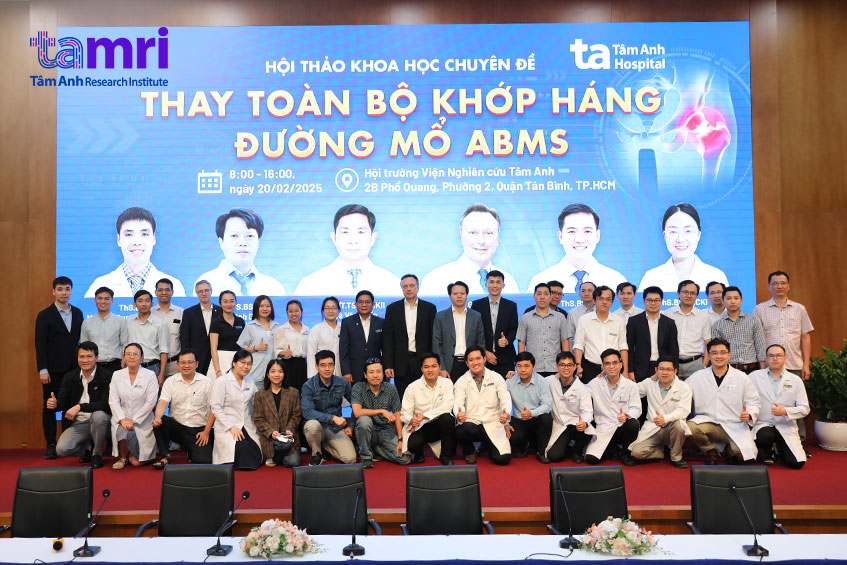
A large number of doctors and medical staff registered for the conference.
Insights were shared at the “Science and Strategies for Nutritional Intervention in Cesarean-born Infants” conference, held on February 16 at the Tam Anh Research Institute (TAMRI). The event was jointly organized by the Department of Obstetrics and Gynecology at Tam Anh General Hospital in Ho Chi Minh City and TAMRI, bringing together more than 50 experts in obstetrics, pediatrics, neonatology, gastroenterology, and nutrition to exchange knowledge and discuss the challenges faced by C-section infants as well as early nutritional solutions to improve both their short-term and long-term health.
At the conference, Dr. Nguyen Ba My Nhi, Second-degree Specialist, and Director of the Obstetrics and Gynecology Center at Tam Anh General Hospital, Ho Chi Minh City, presented the report “Nutritional Intervention Strategies for Cesarean-born Infants”. Dr. Nhi provided the latest updates on the benefits of breastfeeding, raised concerns about the rising rate of cesarean deliveries in Vietnam and worldwide, and proposed nutritional intervention solutions for C-section infants.

Dr. Nguyen Ba My Nhi, Second-degree Specialist, presented the report “Nutritional Intervention Strategies for Cesarean-born Infants”.
Dr. Nhi stated that breast milk contains a high concentration of nutrients and bioactive compounds that play a role in stimulation processes, including intestinal development, immune system maturation, and microbiome establishment.
In 2022, the American Academy of Pediatrics recommended exclusive breastfeeding for the first 6 months, continued breastfeeding through 12 months, and further breastfeeding up to 2 years of age. Currently, no food can replace breast milk, as it provides a unique ecosystem and gut-based immune protection that supports optimal child development. More than 200 identified oligosaccharide structures found in breast milk have been shown to directly influence immune cells and help prevent pathogen invasion, reducing the risk of infections.
In addition, breast milk contains bacteria and bacterial compounds that support a healthy digestive and immune system from the very beginning; fatty acids and important structures that aid brain development; nucleotides, vitamins, minerals, essential micronutrients, fats, immune cells, and proteins that are essential for growth and development.
According to Dr. Nhi, an infant’s gut microbiota is influenced by many factors during pregnancy and birth, including antibiotic use, gestational age, delivery method, and environmental exposure. Among these, the method of delivery significantly impacts the baby’s gut microbiota and intestinal function. In a natural birth, beneficial bacteria from the mother’s vaginal come into direct contact with the baby. In contrast, a cesarean-born infant is only exposed to bacteria from the skin.
Besides, although exclusive breastfeeding is encouraged, the physical stress of a cesarean section can impact the mother’s lactation, such as a prolonged post-operative recovery, the risk of blood loss during surgery, and a longer recovery time compared to natural birth. A mother who delivers by C-section is unable to breastfeed in the first few hours after birth, which can disrupt her lactation and may lead to a delay in milk production for the first few days postnatal.
Children born by C-section have a higher risk of infection, especially respiratory infections, and are more susceptible to being hospitalized early compared to those born naturally. Incomplete development of the gut microbiota can lead to imbalances in the gut-brain axis, lungs, and skin. As a result, cesarean birth raises the risk of metabolic disorders.
It is forecast that by 2030, the global C-section rate will continue to rise, with the world average exceeding 40% and Asian countries possibly surpassing 60%.
“With the rising trend of cesarean births in Vietnam and worldwide, an immediate intervention strategy is essential to safeguard children’s health. We need supportive solutions to mitigate the disadvantages faced by C-section infants,” Dr. Nhi emphasized.
A child’s gut microbiota develops immediately after birth and plays a crucial role in overall health, especially for newborns. In particular, cesarean-born infants, are more susceptible to microbial imbalances, which can negatively impact their health. At the conference, experts analyzed this issue and emphasized the need for solutions to restore the gut microbiota in infants born by C-section.
According to Dr. Nhi, there are currently 2 approaches used worldwide: non-nutritional intervention and nutritional intervention. In the non-nutritional approach, scientists introduce vaginal bacteria to C-section infants, allowing them to be exposed to microbes similar to those encountered during natural birth. However, this method is not recommended or widely supported due to the risk of transmitting harmful bacteria.
In the nutritional intervention approach, scientists have used prebiotic supplements for infants who are not exclusively breastfed. Early synbiotic supplementation helps restore the colonization of Bifidobacterium in C-section infants. Studies show that synbiotics can restore Bifidobacterium within 3 days in cesarean-born infants.
Therefore, in cases where breast milk is unavailable, formula milk with ingredients similar to breast milk can be a solution to help restore gut microbiota and support the gut-immune-brain axis.
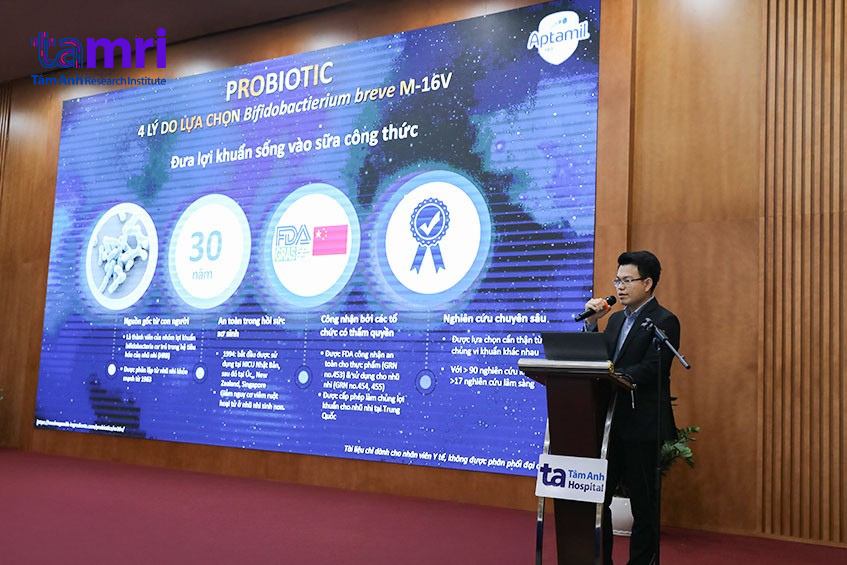
Pharmacist Do Tran Giang Son presented the nutritional intervention method of adding live probiotics to formula milk for C-section infants who lack breast milk.
According to Dr. Nhi, regularly updating medical recommendations for the care of C-section infants and implementing nutritional interventions from birth help support healthy development and reduce the risk of diseases. This strategy requires the attention of obstetricians, pediatricians, and the community as a whole.

Dr. To Nhi A, Psychologist, shared insights with doctors and medical staff.
Also at the conference, Dr. To Nhi A, Psychologist, presented the solution “Understanding Psychology for Effective Work” dedicated to medical professionals.

Presenters and speakers were presented with flowers at the event by the organizing team.
Tam Anh Research Institute
Tam Anh Research Institute