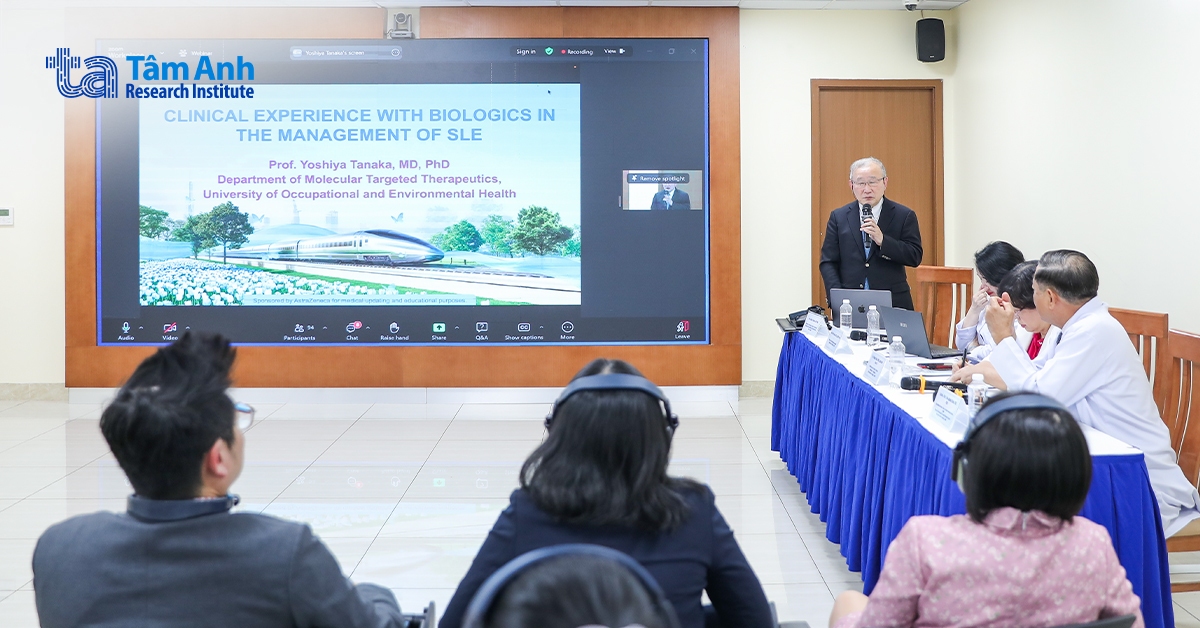

That was the key message unanimously emphasized by leading experts at the scientific seminar Cardiovascular-Kidney-Metabolic (CKM) risk management: The earlier the start, the better the prognosis held on March 26, 2026 at Tam Anh Research Institute. The seminar was accompanied by AstraZeneca Vietnam.
Specialists shared perspectives and engaged in in-depth discussions on risk management and early intervention in energy metabolic disorders, aiming to reverse the progression of chronic non-communicable diseases, improve patient outcomes, and reduce the overall healthcare burden on society.
Opening the seminar, Assoc. Prof. Tran Quang Binh, MD, PhD – Medical Director of Tam Anh General Hospital Group HCMC raised questions surrounding energy metabolism processes that increase the risk of cardiovascular disease, hypertension, diabetes, and related conditions. Although not a new issue, it is becoming increasingly prevalent under the impact of modern lifestyles.
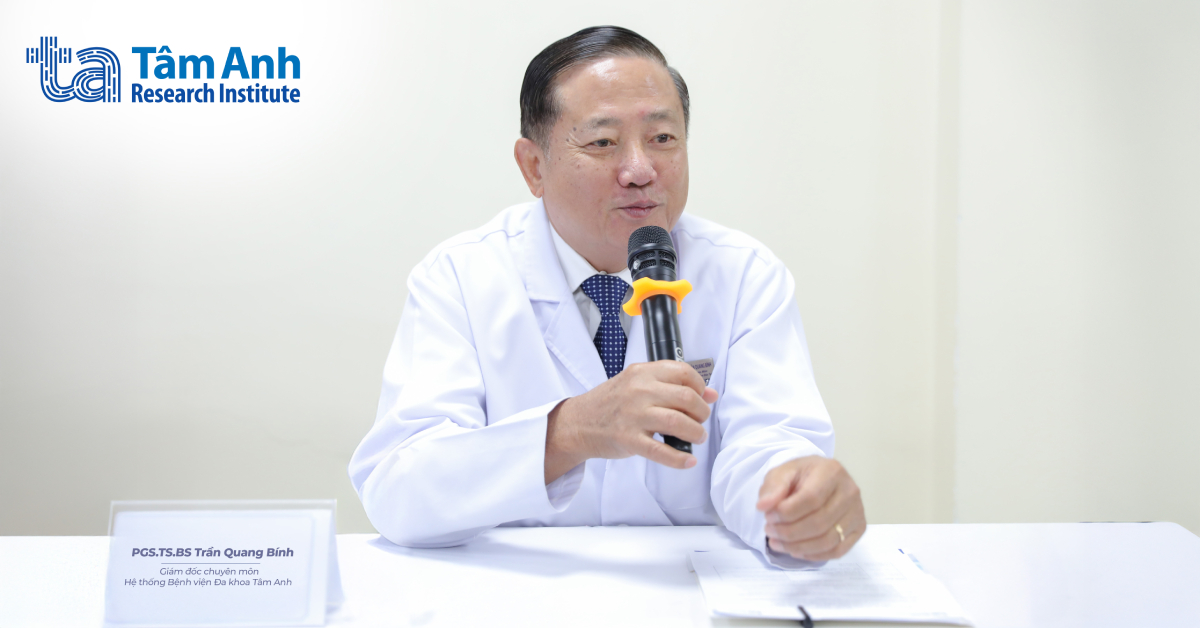
Assoc. Prof. Tran Quang Binh, MD, PhD delivered the opening remarks at the scientific seminar Cardiovascular-Kidney-Metabolic (CKM) risk management: The earlier the start, the better the prognosis.
In her featured presentation The hidden iceberg of CKM syndrome: Opportunities for early intervention, Dr. Tran Thi Thanh Truc – Specialist level II, Head of the General Internal Medicine department, Tam Anh General Hospital Group HCMC noted that CKM is like an invisible iceberg, becoming a major medical challenge as both morbidity and mortality rates are rising rapidly, particularly in Vietnam. A large proportion of patients in the early stages remain asymptomatic while already carrying a significant risk of irreversible disease progression.
The latest clinical evidence suggests that early and aggressive intervention not only helps control metabolic markers but also provides long-term cardio-renal protection, delays severe clinical events, and significantly improves patient survival rates.
Dr. Tran Thi Thanh Truc also pointed out that many patients only seek medical attention after health issues have already manifested. Therefore, the priority is to effectively manage risk factors to predict and prevent metabolic disorders at an early stage, thereby enhancing treatment success when conditions such as cardiovascular disease, diabetes, chronic kidney disease, and related conditions emerge.
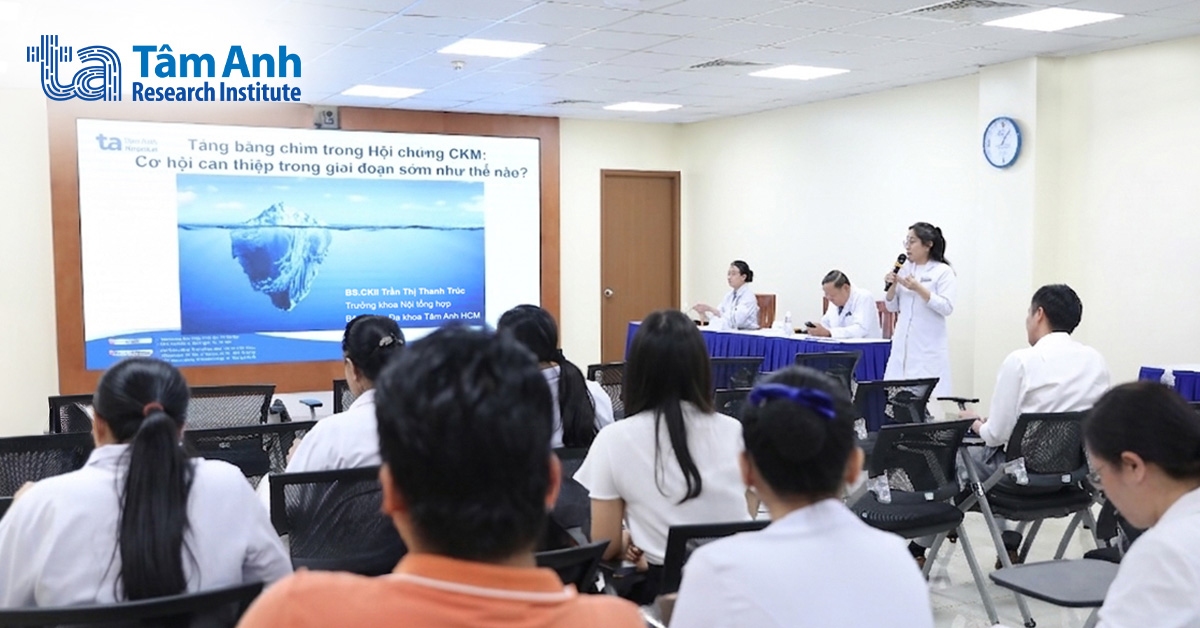
Dr. Tran Thi Thanh Truc’s presentation emphasized the importance of early intervention and managing metabolic risks from the earliest stages of life.
Citing data from the World Health Organization STEPS survey, Dr. Tran Thi Thanh Truc noted that by 2021, Vietnam’s healthcare system faced an alarming burden: over 28.6 million people – 44.1% of the population – suffered from dyslipidemia, 17 million from hypertension, and approximately 4.6 million from diabetes.
She emphasized that these chronic conditions often undergo a long silent phase, a golden window for medical intervention. Once classic late-stage symptoms appear, mortality risks spike while recovery potential drops to a minimum. Early, proactive intervention delivers superior long-term benefits compared to late-stage treatment.
To optimize treatment, the American Heart Association established a five-stage CKM classification system for personalized screening. This begins at stage 0: no risk factors, focused on lifestyle prevention then progresses to stage 1: overweight, obesity, or adipose tissue dysfunction. Stage 2 sees the emergence of metabolic factors like type 2 diabetes, hypertension, and chronic kidney disease. If left unchecked, patients may reach stage 3 with subclinical cardiovascular disease and finally hit stage 4, where severe clinical events such as heart failure, stroke, coronary artery disease, or peripheral artery disease manifest.
Due to this complex progression, Dr. Tran Thi Thanh Truc stressed the necessity of early and comprehensive screening protocols. For individuals under 21, BMI and blood pressure assessments should be performed annually from childhood, with lipid and glucose screenings for at-risk children aged 9 to 11. For adults aged 21 and older, the process becomes more rigorous, including annual waist circumference measurements, metabolic syndrome screenings, and monitoring liver fibrosis via the FIB-4 index and kidney damage through annual Urine Albumin-to-Creatinine ratio (UACR) tests. Dr. Tran Thi Thanh Truc concluded that strict adherence to this early intervention roadmap is vital for both individual health and reducing the societal disease burden.
In conclusion, Dr. Tran Thi Thanh Truc emphasized that strict adherence to early screening and intervention protocols is not only a solution for individual health protection but also a key strategy for reducing the overall disease burden on society.
Additionally, Dr. Nguyen Thanh Huyen Van – Specialist level I, Center for Endoscopy and Gastrointestinal endoscopic surgery, Tam Anh General Hospital Group HCMC presented a clinical case demonstrating the effectiveness of Managing fatty liver disease in patients with type 2 diabetes: A clinical case from gastroenterology perspective.
Specifically, Dr. Nguyen Thanh Huyen Van noted that type 2 diabetes (T2D) management has entered a new era, shifting from a focus solely on blood glucose levels to addressing Metabolic Dysfunction-Associated Steatotic Liver Disease (MASLD). Current epidemiological data reveals an emerging silent pandemic, with approximately 65% of the 436 million people with T2D worldwide co-diagnosed with MASLD, a rate that has surged from 55.9% in previous years to nearly 69% recently.
These are not merely statistics, they serve as a significant warning for healthcare systems. In patients with T2D, liver damage is often more severe, with 66% progressing to metabolic dysfunction-associated steatohepatitis (MASH) and 15% facing advanced liver fibrosis. If not identified early, these conditions can lead to irreversible complications, including cirrhosis and hepatocellular carcinoma.

Dr. Nguyen Thanh Huyen Van explains the underlying mechanisms and clinical risks associated with the co-occurrence of MASLD and T2D.
Dr. Nguyen Thanh Huyen Van emphasizes that modern management strategies must focus on identifying the golden window in stages 1 and 2. At this point, structural damage is fully reversible through the intensive management of obesity and ectopic fat accumulation.
A clear clinical example is the case of N.V.A., a 53-year-old female patient admitted with poorly controlled blood glucose, grade 3 fatty liver, and early renal microvascular complications. Following the latest 2025 clinical updates, a multi-target treatment plan was implemented, combining a Mediterranean diet: rich in plant-based foods, healthy fats such as olive oil, and seafood while limiting red meat and processed foods, with intensive pharmacological therapy applied simultaneously.
After three months, the results were remarkable. The patient achieved over 5% weight loss, her HbA1c and ALT liver enzymes returned to target levels, and there was a significant reduction in proteinuria.
From this case, Dr. Nguyen Thanh Huyen Van concluded that prioritizing treatments with additional cardiovascular and hepatic benefits, combined with regular FIB-4 screening for liver fibrosis, is key. This approach shifts the focus from symptomatic treatment to addressing the underlying pathophysiology, ultimately preventing permanent complications and enhancing the patient’s quality of life.
For any inquiries, please contact:
- Department of Education and Training – Tam Anh Research Institute, Tam Anh General Hospital Group
- 2B Pho Quang, Tan Son Hoa ward, HCMC
- Phone: (028) 7102 6789 – Ext: 1662
- Hotline: 0968 166 645
- Email: daotao.hcmc@tamri.vn
Tam Anh Research Institute
- Ha Noi:
- 108 Hoang Nhu Tiep, Bo De Ward, Ha Noi
- Hotline: 024 3872 3872 – 024 7106 6858
- TP.HCM:
- 2B Pho Quang Street, Ward Tan Son Hoa, Ho Chi Minh City
- Hotline: 093 180 6858 – 0287 102 6789
- Fanpage: https://www.facebook.com/ViennghiencuuTamAnh.TAMRI
- Website: tamri.vn