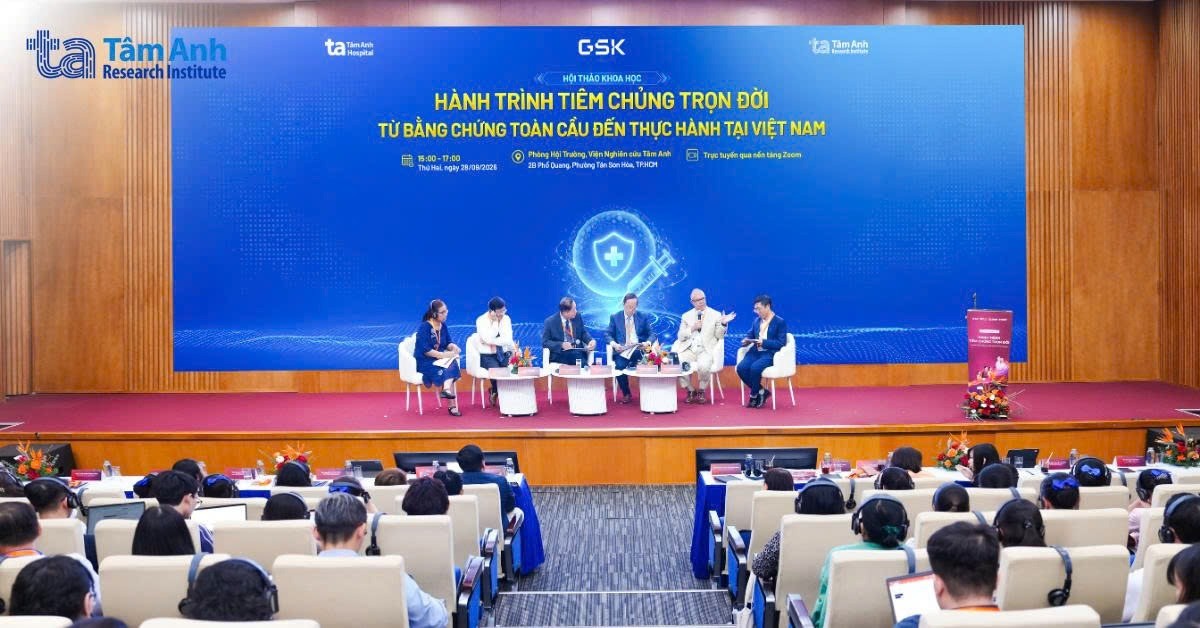
At the scientific seminar Treatment strategies for resectable early-stage non-small cell lung cancer: The role of multidisciplinary coordination held on March 28, experts from Tam Anh Research Institute and Tam Anh General Hospital Group highlighted the comprehensive blueprint of multidisciplinary and multimodal coordination. This approach integrates surgery, chemotherapy, radiotherapy, targeted therapy, and immunotherapy to improve survival outcomes and maintain a high quality of life for patients.

Experts from Tam Anh Research Institute and Tam Anh General Hospital Group posed for a commemorative photo at the event
Lung cancer remains the leading cancer-related mortality cause in Vietnam. It is categorized into two main types: small cell lung cancer (SCLC), accounting for 15 – 20%, and non-small cell lung cancer (NSCLC), which comprises 80 – 85% of cases.
According to Dr. Nguyen Anh Dung, MD, PhD, Head of the Thoracic Surgery Department, Tam Anh General Hospital Group, approximately 25% of NSCLC patients are diagnosed at a resectable stage. Surgery remains the gold standard of treatment for early-stage NSCLC.
Statistics show that the 5-year survival rate decreases as the cancer stage advances. Specifically, the survival rate for stage 1 is 68 – 92%, stage 2 is 53 – 60%, stage 3 is 13 – 36%, and stage 4 drops significantly to 0 – 10%.
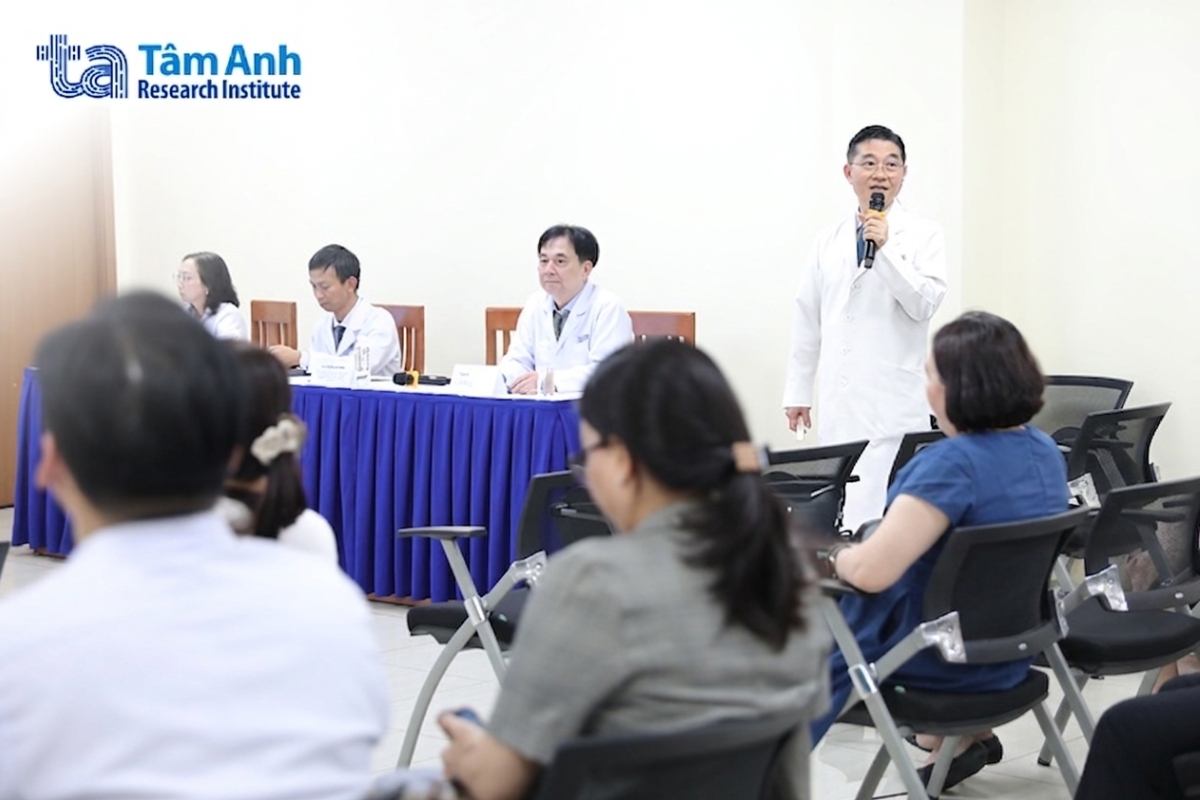
Dr. Nguyen Anh Dung notes that approximately 25% of NSCLC patients are diagnosed at a resectable stage.
Multidisciplinary coordination (MDT) plays a crucial role in managing lung cancer and improving outcomes. An MDT typically includes specialists from radiology, pulmonology, cardiothoracic surgery, medical oncology, pathology, radiotherapy, palliative care, and specialized nursing staff. Through MDT consultations, doctors develop personalized treatment plans based on pathological characteristics, clinical evidence, medical guidelines, and advanced therapeutic techniques, ensuring effective treatment while safeguarding the patient’s quality of life.
Dr. Le Tan Dat, MD, PhD, Deputy Director of the Oncology Center, Tam Anh General Hospital Group presented Optimizing treatment and enhancing survival outcomes for resectable NSCLC: The role of targeted and immunotherapy at the seminar.
He noted that decisions regarding neoadjuvant (pre-operative) or adjuvant (post-operative) therapy, as well as surgery, depend heavily on the disease stage and lymph node metastasis characteristics.
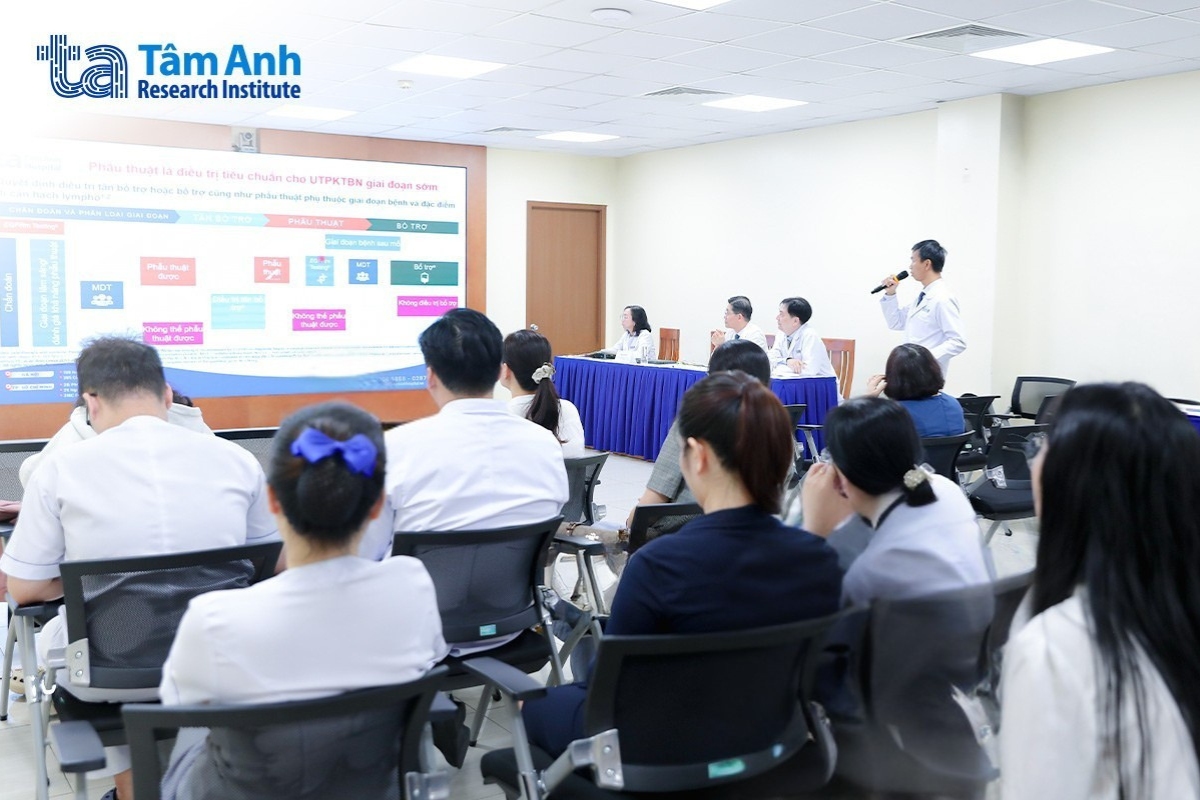
Dr. Le Tan Dat states that perioperative care has become the new standard of treatment for resectable NSCLC.
Currently, perioperative care, which is comprehensive medical care provided before, during, and after surgery is becoming the new standard for resectable NSCLC. The introduction of immunotherapy and targeted therapy in pre- and post-operative regimens has significantly improved long-term clinical outcomes. Major studies indicate that combining neoadjuvant therapy, surgery, and subsequent adjuvant therapy enhances quality-adjusted survival time.
Despite these advancements, diagnosing and treating lung cancer remains a challenge. For instance, NSCLC patients with EGFR mutations still face a 41% distant recurrence rate, which adjuvant chemotherapy alone fails to reduce.
Recent studies continue to refine and improve treatment outcomes. The AEGEAN study showed that perioperative immunotherapy with Durvalumab significantly improved event-free survival (EFS), pathological complete response (pCR), and major pathological response (MPR). The 3-year EFS rate reached 60% in the Durvalumab group compared to 48% in the placebo group. The pCR rates were 17.2% compared to 4.3% in the placebo group, while MPR rates reached 34% versus 14%, respectively.
Meanwhile, the ADAURA study demonstrated that targeted therapy with Osimertinib for patients with EGFR+ mutations (stages IB-IIIA) increased survival to 65.8 months compared to 21.9 months with a placebo. It reduced the risk of death by 51% (OS) and the risk of central nervous system recurrence or death by 76% (DFS).
Dr. Bui Thi Thanh Truc, Head of Oncologic Imaging Unit, Center for Diagnostic Imaging and Interventional Radiology, Tam Anh General Hospital Group also shared insights on The role of diagnostic imaging in the diagnosis and treatment of non-small cell lung cancer.
Dr. Bui Thi Thanh Truc emphasized that diagnostic imaging plays a central role throughout the entire disease management process, spanning from screening and definitive diagnosis to initial staging and post-treatment reassessment.

Dr. Bui Thi Thanh Truc emphasizes that diagnostic imaging plays a central role throughout the NSCLC management process.
In terms of screening, low-dose CT (LDCT) scans facilitate early detection in high-risk groups, a method proven to reduce lung cancer mortality and widely recommended. Additionally, the implementation of the ACR Lung-RADS classification system helps standardize reporting, minimize false positives, and optimize follow-up strategies.
For definitive diagnosis and initial staging, contrast-enhanced chest CT, PET-CT, and MRI serve as complementary tools to accurately assess the IASLC TNM staging.
During post-treatment restaging, diagnostic imaging is vital for determining treatment response according to RECIST/iRECIST criteria, detecting early recurrence or progression, and distinguishing residual lesions from post-treatment changes. Regular imaging follow-ups contribute to optimizing subsequent treatment strategies and improving long-term prognosis.
Experts noted that multimodal treatment strategies and multidisciplinary coordination in both diagnosis and treatment help optimize the timing of interventions and the selection of the most appropriate regimens for each patient.
The scientific seminar Treatment strategies for resectable early-stage non-small cell lung cancer: The role of multidisciplinary coordination provided updates on the latest knowledge and advancements in treatment, contributing to enhanced efficacy and improved prognosis and quality of life for patients.
Tam Anh Research Institute
- Ha Noi:
- 108 Hoang Nhu Tiep, Bo De Ward, Ha Noi
- Hotline: 024 3872 3872 – 024 7106 6858
- TP.HCM:
- 2B Pho Quang Street, Ward Tan Son Hoa, Ho Chi Minh City
- Hotline: 093 180 6858 – 0287 102 6789
- Fanpage: https://www.facebook.com/ViennghiencuuTamAnh.TAMRI
- Website: tamri.vn