Diabetic patients are three times more likely to contract pneumococcal infections compared to healthy individuals. Pneumococcus is a leading cause of pneumonia, bloodstream infections, and mortality, especially among the elderly and those with underlying medical conditions.

These insights were shared at the scientific seminar “The Role of Prevention in Managing Pneumococcal Infections in Diabetic Patients”, held on the afternoon of August 9 at Tam Anh General Hospital in Ho Chi Minh City. The event was co-organized by the Tam Anh Research Institute (TAMRI), Tam Anh General Hospital Group, and Pfizer Vietnam Company Ltd.

Scientific Seminar titled “The Role of Prevention in Managing Pneumococcal Infections in Diabetic Patients” features the participation of experts including Dr. Lam Van Hoang, Assoc. Prof. Dr. Tran Quang Binh, and Dr. Bach Thi Chinh (from left to right). Photo: Tam Anh General Hospital.
Assoc. Prof Tran Quang Binh, MD, PhD – Chief Medical Officer of Tam Anh General Hospital, emphasized that pneumococcal co-infections can worsen viral respiratory diseases such as influenza and RSV. For diabetic patients in particular, vaccination remains a top priority, but it is essential to follow appropriate vaccine indications for each patient.
Dr. Lam Van Hoang, Head of the Endocrinology and Diabetes Department at Tam Anh General Hospital in Ho Chi Minh City, highlighted that globally, 537 million people are currently living with diabetes, a figure projected to rise to 643 million by 2030. In Vietnam, as per the data for 2021, over 5 million people have diabetes, but only half have been diagnosed and treated.
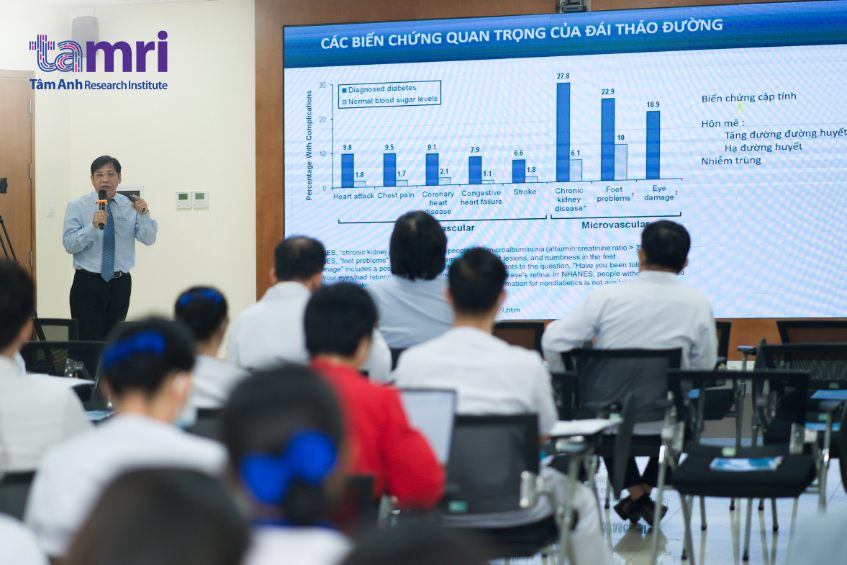
Dr. Lam Van Hoang, Head of the Endocrinology & Diabetes Department, discusses the current state and complications of diabetes. Photo: Tam Anh General Hospital.
Diabetes is a chronic disease with many dangerous complications, such as hyperglycemic coma, infections, and pneumonia, which carry a very high risk of mortality. Elevated blood sugar levels increase the risk of infection in diabetic patients, causing immune system dysfunction and weakening their defense mechanisms against microorganisms. Among these, pneumonia is particularly prevalent in diabetic patients.
Studies indicate that among every three diabetic patients hospitalized for an infection, one has pneumonia. Alarmingly, diabetic patients have a three-fold higher risk of pneumococcal pneumonia compared to the general population.
Pneumococcus is a leading cause of pneumonia, sepsis, and death, especially in the elderly and those with underlying conditions. The incubation period is typically 1-3 days, with a sudden onset of symptoms including high fever, chills, chest pain, productive cough with pus, shortness of breath, rapid breathing, hypoxemia, rapid heartbeat, and fatigue.
Several factors make diabetic patients more vulnerable to pneumococcus, such as weakened immunity, metabolic disorders, lung microvascular damage, and the presence of comorbidities. If not diagnosed and treated promptly, mortality rates can reach as high as 50%.
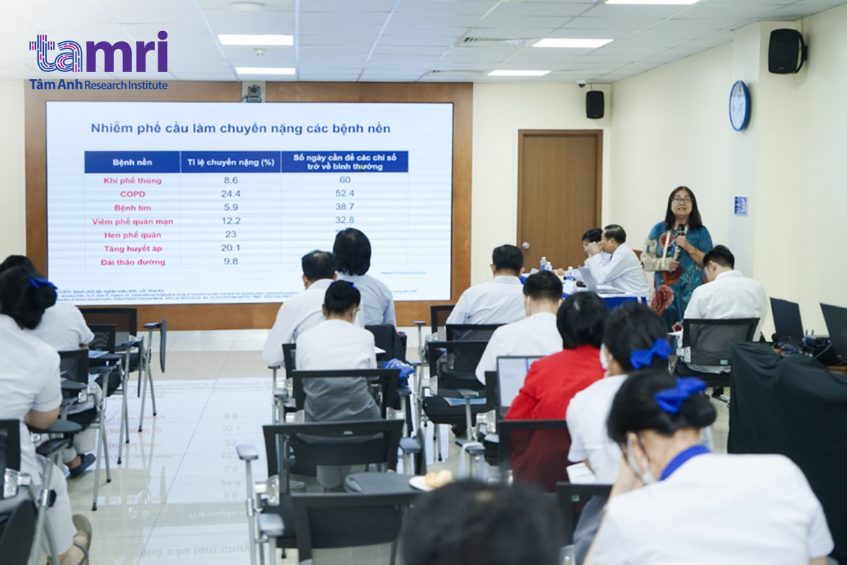
Dr. Bach Thi Chinh, Medical Director of VNVC, explains the role of pneumococcal vaccines in preventive care. Photo: Tam Anh General Hospital.
Speaking of the risk of pneumococcal pneumonia in people with underlying conditions, Dr. Bach Thi Chinh, Medical Director of the VNVC Vaccination Center System, stated that people aged 50 and older with two comorbidities have a five-fold higher risk of pneumococcal pneumonia than healthy individuals. This risk increases to 12.8 times for those with three or more comorbidities. Pneumococcal infections can worsen existing underlying conditions such as emphysema, COPD, heart disease, chronic bronchitis, hypertension, and diabetes.
The effectiveness of pneumococcal vaccination has been validated by the RCT CAPiTA study on adults aged 65 and older, where 42.3% of whom had at least one comorbidity. The pneumococcal vaccine was shown to help reduce community-acquired pneumonia and hospitalizations.
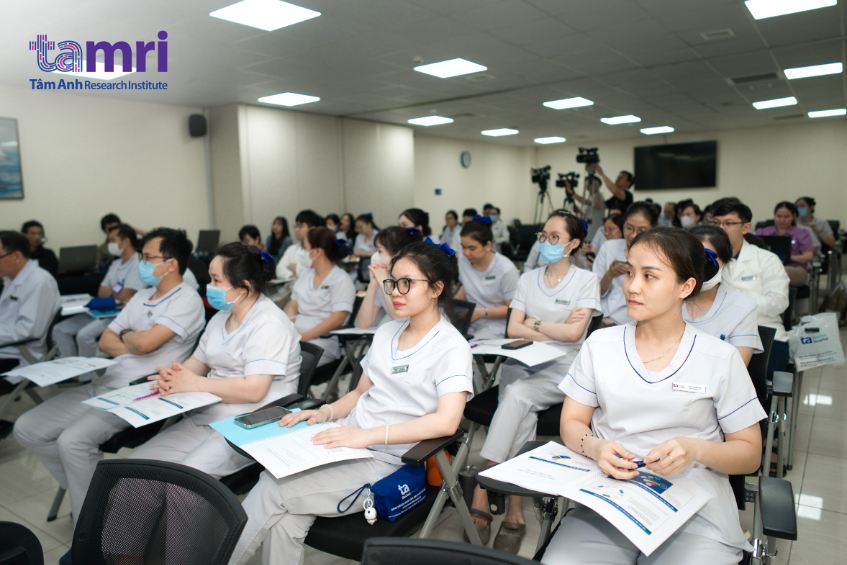
The seminar draws a large number of healthcare professionals and medical staff. Photo: Tam Anh General Hospital.
Vietnam’s Ministry of Health also recommends the PCV20 conjugate vaccine for individuals aged 18 and older to provide active immunity against invasive disease and pneumonia caused by pneumococcus. Vaccination is especially recommended for people 50 years and older regardless of risk factors, and for those 18 and older with immunocompromised conditions or chronic diseases such as heart, liver, diabetes, and lung diseases, as well as smokers and alcohol abusers.
Dr. Chinh emphasized that pneumococcal vaccination is essential for supporting the treatment of diabetes patients. The conjugate pneumococcal vaccine has proven to create lasting and effective immunity in adults and diabetic individuals, as shown by clinical trials and real-world data. “A single dose of a conjugate vaccine like PCV20 can create an immune response to the pneumococcal serotypes it contains in adults,” said Dr. Chinh.
Assoc. Prof. Dr. Tran Quang Binh affirmed the crucial role of pneumococcal vaccine for individuals with underlying medical conditions, particularly diabetes, cardiovascular disease, and immunodeficiencies. In the context of increasing antimicrobial resistance, vaccination represents the optimal strategy for reducing severe outcomes in patients today.
Tam Anh Research Institute

15/03/2025
View more