
Obesity is becoming a global pandemic, with projections suggesting that the world will have approximately 1 billion obese people by 2030. Significantly, 67% to 70% of deaths caused by cardiovascular disease are linked to obesity. Reducing body weight by at least 10% has been shown to decrease the risk of mortality from acute myocardial infarction, stroke, or hospitalization due to angina by 21%.
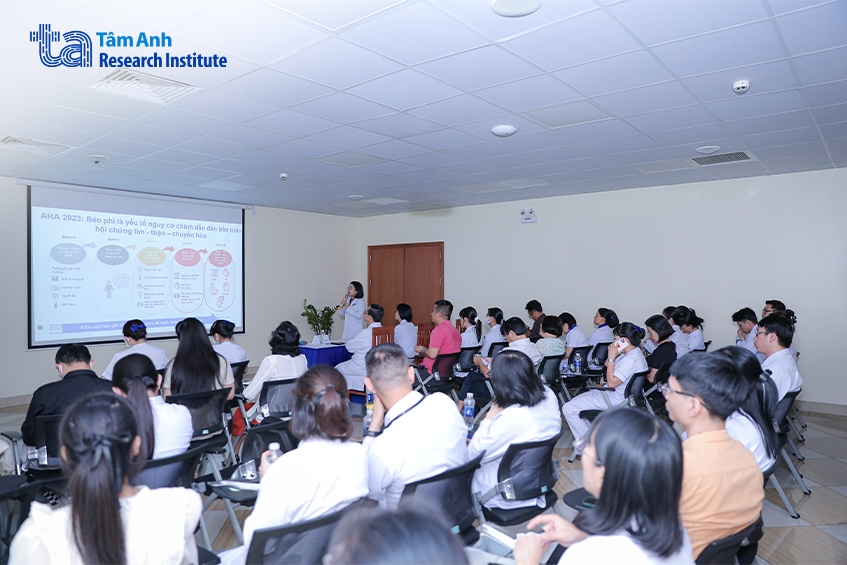
Experts shared this information during the scientific seminar titled “Obesity and Cardiovascular Diseases,” held at Tam Anh General Hospital in Ho Chi Minh City on the afternoon of December 23.

The “Obesity and Cardiovascular Diseases” seminar is the fifth session in the “Multimodal Treatment of Obesity” scientific seminar series.
Huynh Thanh Kieu, MD, MSc, Head of the Cardiovascular Department 1 and Head of the Heart Failure Unit at the Cardiovascular Center, Tam Anh General Hospital, stated that the global obesity rate has doubled over the past 40 years. A high Body Mass Index (BMI) causes approximately 4 million deaths annually. Between 67% and 70% of cardiovascular deaths are associated with obesity, with atherosclerotic cardiovascular disease being the leading cause. Dr. Kieu emphasized that over 60% of cardiovascular patients are overweight or obese, noting that obesity essntially “kills” primarily through heart-related pathologies.

Dr. Huynh Thanh Kieu analyzes factors linking obesity and cardiovascular diseases.
Obesity triggers numerous complications related to cardiometabolic health, such as coronary artery disease, type 2 diabetes, insulin resistance, dyslipidemia, hypertension, stroke, and vascular dysfunction. Ectopic fat tissues stored in abnormal locations—such as around blood vessels, the heart, muscles, and bones—impact the body both locally and systemically through inflammatory responses. For instance, fat in the pericardium and around the heart can lead to atherosclerosis and fibrosis, resulting in arrhythmias or heart failure.
Obese individuals also face a hypercoagulable state, which facilitates the formation of blood clots, leading to risks of deep vein thrombosis, pulmonary embolism, and aortic valve stenosis due to increased atherosclerosis. Obesity elevates the risk of coronary artery disease, stroke, and peripheral artery disease. Research indicates that these risks increase linearly with BMI and waist circumference.
Obesity is an independent risk factor for atherosclerotic cardiovascular disease, even after excluding factors such as age, gender, and smoking. Visceral obesity increases cardiovascular risk by reducing insulin-mediated vasodilation, increasing renal sodium reabsorption, activating the sympathetic nervous system, and increasing vasoconstriction caused by free fatty acids.
Weight loss has been proven to reduce long-term cardiovascular mortality. A reduction of at least 10% in body weight decreases the risk of cardiovascular death, acute myocardial infarction, stroke, or hospitalization for angina by 21%. Dr. Kieu noted that in cardiovascular treatment, obesity must be recognized as an underlying chronic disease to allow for early intervention and long-term management, rather than waiting until complications occur.
Dr. Do Truc Anh stating that effective obesity management helps prevent cardiometabolic syndromes.
According to Do Truc Anh, MD, MSc, from the Endocrinology – Diabetes Department, early control of overweight and obesity is a strategic approach to preventing cardiometabolic syndromes. Proven interventions for cardiovascular health in obese individuals include lifestyle changes (nutrition and exercise), pharmacological treatments, and surgical procedures for those with severe obesity who meet the criteria for surgery.
Weight loss medication works through various mechanisms affecting the central nervous system, among which GLP-1 receptor agonists (GLP-1 RA) have demonstrated superior efficacy. GLP-1 RA acts on multiple organs, including the pancreas, brain, liver, heart, and kidneys, helping to control blood sugar, increase satiety, slow gastric emptying, improve insulin sensitivity, and enhance myocardial protection and heart function.
Studies show that using GLP-1 RA in obese patients with diabetes reduces the risk of cardiovascular death by 22%, major cardiovascular events by 13%, all-cause mortality by 15%, and kidney disease by 22%. In obese patients without diabetes, GLP-1 RA helps reduce the risk of major cardiovascular complications by 20%, all-cause mortality by 19%, the risk of developing kidney disease by 22%, and the risk of developing diabetes by 73%.

PhD. Lam Van Hoang, Head of the Endocrinology – Diabetes Department at Tam Anh General Hospital, discussing the positive impacts of obesity treatment on cardiovascular health with speakers and colleagues
Research consistently demonstrates that obesity leads to severe health consequences, particularly affecting the heart, rather than being a simple matter of weight. The use of GLP-1 receptor agonists in weight loss treatment provides genuine cardiovascular benefits for both diabetic and non-diabetic groups.
Tam Anh Research Institute
- Ha Noi:
- 108 Hoang Nhu Tiep, Bo De Ward, Ha Noi
- Hotline: 024 3872 3872 – 024 7106 6858
- TP.HCM:
- 2B Pho Quang Street, Ward Tan Son Hoa, Ho Chi Minh City
- Hotline: 093 180 6858 – 0287 102 6789
- Fanpage: https://www.facebook.com/ViennghiencuuTamAnh.TAMRI
- Website: tamri.vn