The gut microbiome consists of live microorganisms (bacteria or yeast), and in appropriate cases, supplementing with the correct specific strains and adequate doses can help prevent or treat digestive disorders such as antibiotic-associated diarrhea, pseudomembranous colitis, and reduce the side effects of H. pylori eradication regimens.
These insights were shared by experts at the scientific session “Selecting probiotics for digestive diseases in children and adults,” held on January 10, 2026, at the Tam Anh Research Institute, part of the Tam Anh General Hospital Group. The event featured presentations from physicians at the Hepatitis and Fatty Liver Center, Gastroenterology Department, and Pediatrics Department of Tam Anh General Hospital Ho Chi Minh City.

Sponsor representatives present flowers to the speakers.
After the opening remarks, Assoc. Prof. Dr. Vu Huy Tru, Head of Pediatrics, delivered a presentation on “Probiotics in Pediatrics.” He highlighted key points such as the majority of the body’s immune cells residing in the digestive tract, and how gut microbiome imbalances affect health. In children, probiotics not only support digestion but also play a crucial role in their immature immune system: stimulating natural antibody production, regulating metabolism, strengthening the epithelial barrier, increasing mucus production, protecting the mucosa, and reducing intestinal permeability.
He pointed out the challenge many parents face in timing probiotic doses two hours after antibiotics. However, certain yeast-based probiotics can be taken simultaneously with antibiotics while maintaining efficacy, simplifying treatment and potentially shortening diarrhea duration by about 24 hours.
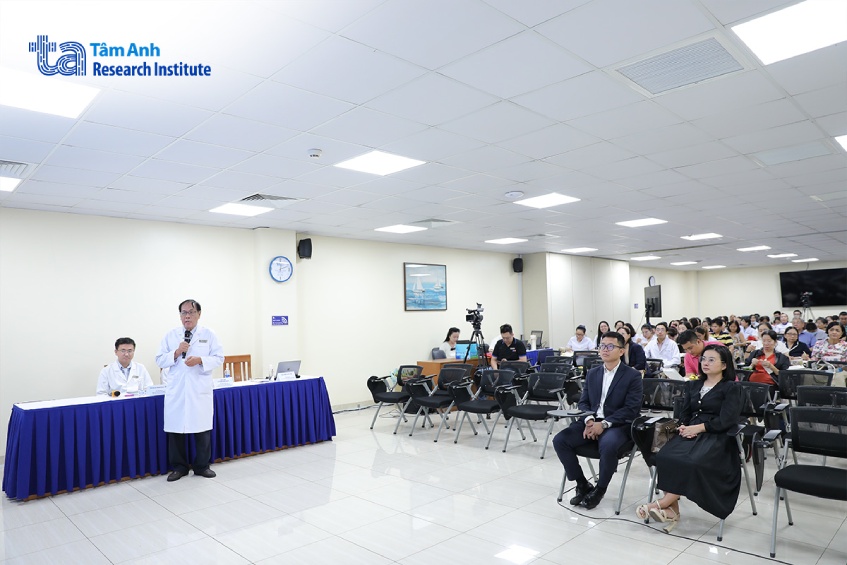
Assoc. Prof. Dr. Vu Huy Tru noted that some yeast probiotics can be taken with antibiotics without compromising efficacy.
Next, Dr. Le Thanh Quynh Ngan, MD, MSc, Head of Gastroenterology Department and Hepatitis and Fatty Liver Center, presented on “Probiotics in adult digestive diseases,” emphasizing their potential role in preventing and treating digestive conditions in adults.
Probiotics are vital for restoring the gut microbiome (where bacterial genes outnumber human genes by 360:1) when used in the right strain and dose. They help prevent and treat gut dysbiosis-related disorders, including antibiotic-associated diarrhea, pseudomembranous colitis, and side effects of H. pylori eradication therapy.
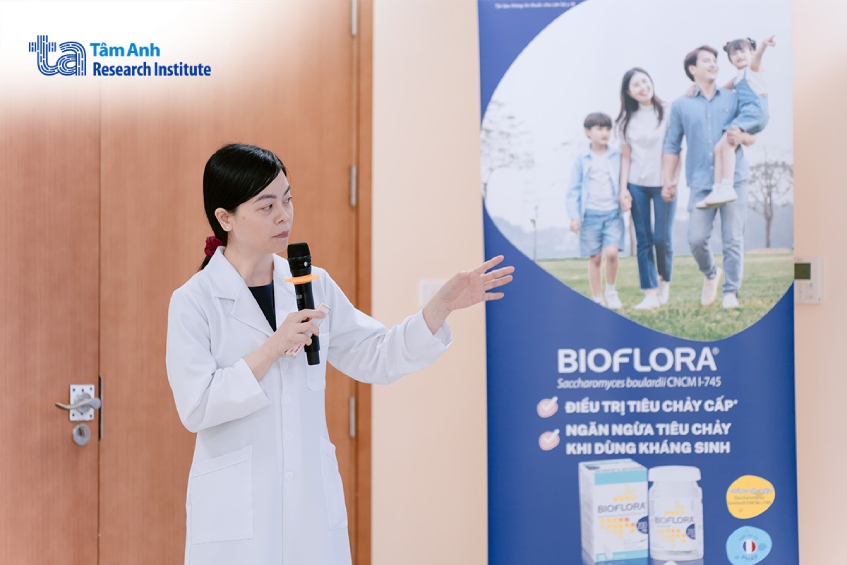
Dr. Le Thanh Quynh Ngan highlighted the potential role of probiotics in preventing or treating digestive diseases in adults.
Dr. Ngan explained that probiotics can manipulate the gut microbial community and inhibit pathogens by stimulating host production of β-defensin and IgA. They reinforce the intestinal barrier by maintaining tight junctions and producing mucin. Probiotics also modulate immunity through cytokine secretion that influences proliferation and differentiation of immune cells (such as T cells) or epithelial cells.
In her presentation “Probiotics in H. pylori eradication regimens,” Dr. Doan Hoang Long, MD, MSc from the Gastroenterology Department and Endoscopy and Digestive Endoscopic Surgery Center reported that combining appropriate probiotics, particularly Saccharomyces boulardii CNCM I-745, reduced diarrhea incidence from 20.9% to 5.9% during high-dose antibiotic therapy. This strain also helps limit H. pylori adhesion to the gastric mucosa, reducing side effects and improving treatment success rates.

Dr. Doan Hoang Long noted that combining appropriate probiotics significantly reduces diarrhea rates during high-dose antibiotic therapy.
Dr. Long recommended effective probiotic usage: take with meals since higher stomach pH is beneficial and reduces destruction; administer Lactobacilli 2–4 hours apart from antibiotics to avoid inhibition; Saccharomyces boulardii CNCM I-745 can be taken with antibiotics as it is a yeast unaffected by common antibiotics; and prescribe probiotics for 1–3 weeks longer than the antibiotic course.
He also advised selecting probiotics based on clinical indications, focusing on doses and strains proven in clinical trials, as no single probiotic suits all digestive disorders. Probiotics should be considered adjunctive rather than replacement therapy. Avoid them in severely ill patients or those with profound immunosuppression. Following Dr. Long’s presentation, the physicians engaged in lively discussion on the topics presented.

The scientific session attracted widespread interest from doctors, specialists, and healthcare staff.
The scientific session “Selecting probiotics for digestive diseases in children and adults” drew large attendance both in person and online via Zoom from doctors, specialists, and healthcare staff. The event is part of the regular scientific activities at the Tam Anh Research Institute – Tam Anh General Hospital Group, aimed at updating knowledge and enhancing professional quality. These medical updates have been standardized and directly applied in examinations and treatments at Tam Anh General Hospital Ho Chi Minh City.
Tam Anh Research Institute
- Ha Noi:
- 108 Hoang Nhu Tiep, Bo De Ward, Ha Noi
- Hotline: 024 3872 3872 – 024 7106 6858
- TP.HCM:
- 2B Pho Quang Street, Ward Tan Son Hoa, Ho Chi Minh City
- Hotline: 093 180 6858 – 0287 102 6789
- Fanpage: https://www.facebook.com/ViennghiencuuTamAnh.TAMRI
- Website: tamri.vn