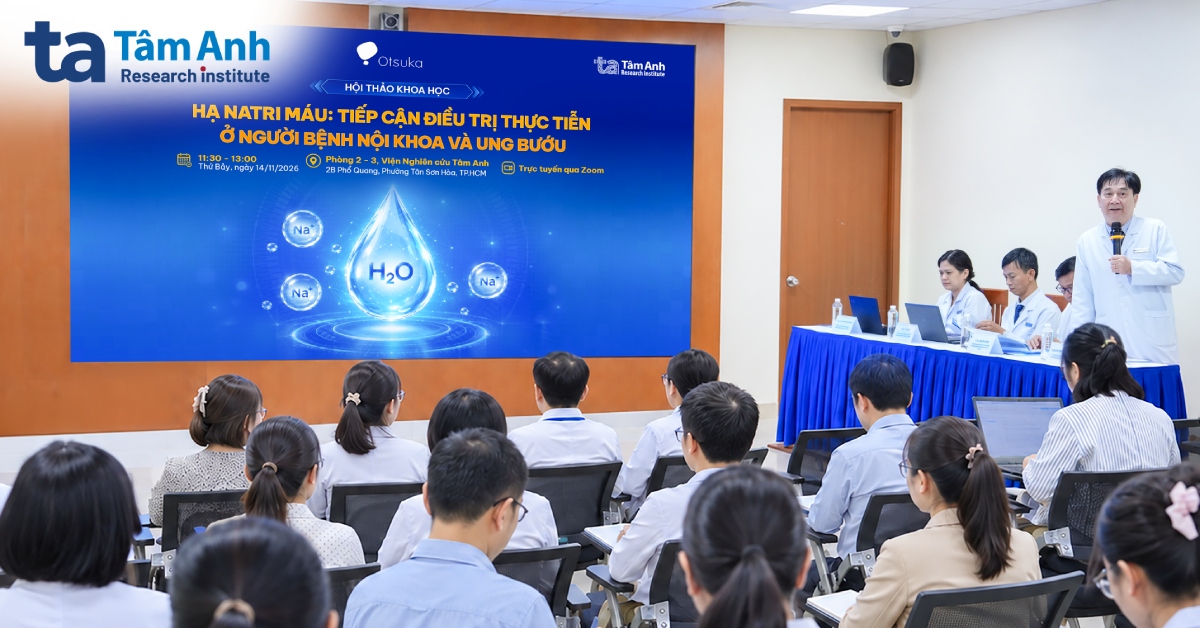
A wide range of important updates in epidemiology, infectious diseases, and vaccination were presented by leading experts and experienced physicians at the scientific seminar titled Enhancing prevention of common infectious diseases after the Lunar New Year: Influenza and Dengue fever, held on March 19, 2026, at Tam Anh Research Institute. The event was jointly organized by Tam Anh Research Institute, Tam Anh General Hospital Group, and Takeda Vietnam.
After the Lunar New Year, Vietnam enters a high-risk period for infectious diseases due to seasonal transition and increased population mobility. Among these, Dengue fever is a leading threat, with the potential for rapid progression, shock, multi-organ failure, and death across all age groups. The disease can occur year-round, no longer showing clear seasonality, while no specific treatment is currently available. Experts emphasize that vaccination combined with mosquito control is the most effective proactive preventive solution at present.

The scientific seminar Enhancing prevention of common infectious diseases after the Lunar New Year: Influenza and Dengue fever at Tam Anh Research Institute attracted strong interest and broad participation from attendees. Photo: Tam Anh Research Institute.
Dual risks increasing infectious diseases during seasonal transition
MSc., MD. Luong Chan Quang, Head of the Department of Disease Control and Prevention at Pasteur Institute in Ho Chi Minh City, stated that seasonal transition periods are associated with increased incidence of infectious diseases, mainly driven by two groups of factors: (1) environmental-climatic factors: fluctuations in temperature and humidity, irregular sunshine and rainfall, and changes in air quality that weaken the immune system; (2) behavioral-social factors: increased travel, trade, tourism, crowd gatherings, and complacency in disease prevention, all of which facilitate disease transmission.
“Seasonal transition is a period between seasons, accompanied by significant environmental and weather fluctuations. While each season is typically associated with characteristic diseases, the transition period is when diseases tend to overlap, shifting from one to another, leading to complex and unpredictable clinical progression,” Dr. Luong Chan Quang added.
Together, these factors drive a marked increase in multiple disease groups. Respiratory diseases such as influenza, pneumonia, and acute respiratory infections caused by respiratory syncytial virus (RSV) often surge as weather changes reduce the defensive capacity of the respiratory mucosa. Gastrointestinal conditions, including intestinal disorders, diarrhea, and gastritis caused by viruses or bacteria, increase due to unstable weather and higher risk of food contamination. Additionally, mosquito-borne diseases such as Dengue fever and Japanese encephalitis also rise when temperature and humidity favor mosquito breeding.
Notably, Dengue fever has become a primary concern, particularly during the current period of unseasonal rainfall. The disease can progress dangerously if not detected and treated promptly, with mortality rates reaching up to 20%; even with intervention, severe cases still have a mortality rate of approximately 2 – 5%. Currently, Dengue ranks second in incidence after influenza; however, unlike influenza, its mortality rate is significantly higher, making prevention and monitoring critically important.
More importantly, Dengue fever is endemic year-round, and anyone can be infected. The occurrence of even a single case indicates that local mosquitoes may already carry the virus and can initiate a transmission chain within the community. When mosquitoes bite an infected individual, they acquire the Dengue virus and subsequently transmit it to others through subsequent bites.
“Particularly concerning is that more than 80% of infected individuals show no clinical symptoms,” Dr. Luong Chan Quang emphasized.
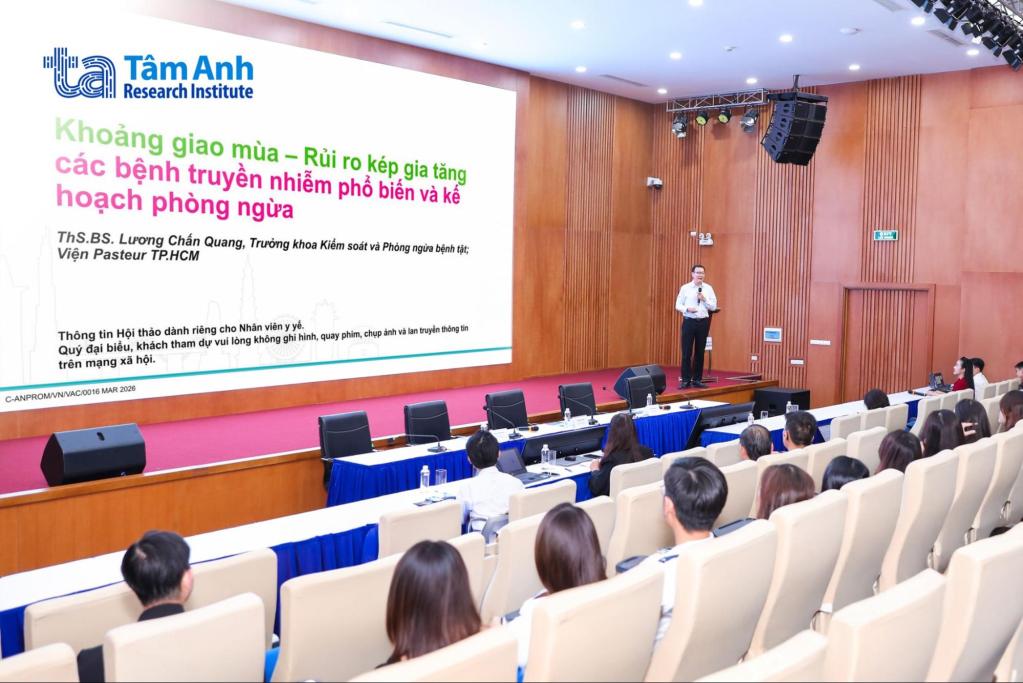
MSc., MD. Luong Chan Quang pointed out that after the Lunar New Year, the risk of “overlapping epidemics” increases due to seasonal transition, high humidity, and crowd movement, leading to a sharp rise and rapid spread of respiratory, gastrointestinal, and Dengue infections if preventive measures are neglected. Photo: Tam Anh Research Institute.
Risk of reinfection, severe complications, and economic burden of Dengue fever
In reality, an individual can contract Dengue fever up to four times, as the Dengue virus has four distinct serotypes. After infection with one serotype, the body develops long-term immunity to that specific type but only temporary protection against others, lasting from a few months to 1 – 2 years. Notably, secondary infection carries a higher risk of severe progression than the initial episode.
Studies show that the risk of symptomatic secondary Dengue infection increases by 9.4 times, while the risk of severe Dengue may increase up to 23.7 times in the absence of appropriate preventive strategies.
Importantly, Dengue fever is a dangerous disease with unpredictable progression, which may lead patients to underestimate its severity. At the seminar, PhD., MD. Nguyen Minh Tuan, Head of the Dengue Department at Children’s Hospital 1, stated that many severe cases occur because patients mistakenly believe the disease is improving when fever subsides slightly, thereby missing the critical phase, resulting in serious complications.
Numerous unfortunate cases have been documented. For example, an 8-year-old child experienced persistent high fever responsive to antipyretics, without cough or runny nose. By days 4 – 5, the child still had fever accompanied by repeated vomiting, abdominal pain, and lethargy. Upon hospital admission, the disease had progressed to a severe stage, and the child subsequently died due to Dengue shock, with cardiopulmonary arrest occurring prior to admission.
Not only children are affected, in recent years, the proportion of adult Dengue cases has also increased significantly, placing substantial pressure on the healthcare system. A notable case involved a 44-year-old patient in Ho Chi Minh City who required more than 10 days of intensive care due to severe complications such as shock, plasma leakage, gastrointestinal bleeding, and liver-kidney damage. The patient required mechanical ventilation and continuous renal replacement therapy, with treatment costs estimated at up to VND 500 million.
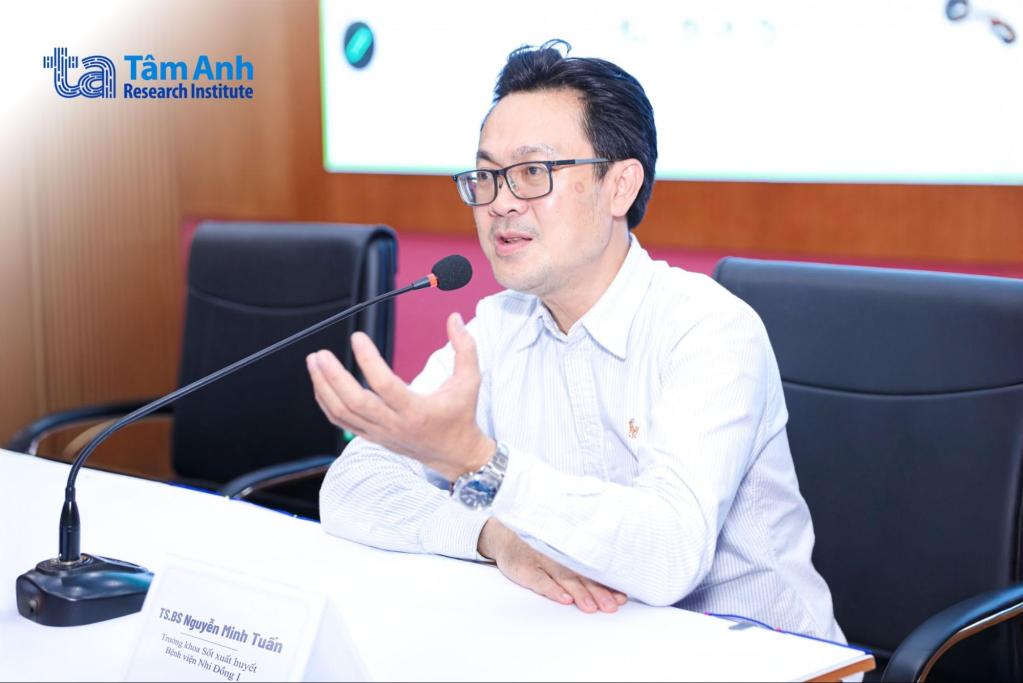
PhD., MD. Nguyen Minh Tuan highlighted that Dengue fever can affect anyone, but it is entirely preventable if we act early and appropriately. Photo: Tam Anh Research Institute.
Dr. Nguyen Minh Tuan further noted that children still account for a large proportion of cases and are at higher risk of shock due to fragile vasculature, increased vascular permeability, and immature homeostatic and cardiovascular compensatory systems, resulting in lower tolerance thresholds. It is estimated that among every 4 – 5 pediatric hospitalizations for Dengue, one case may progress to shock, posing a life-threatening risk. Conversely, adults are less likely to develop shock but are more prone to severe bleeding due to thrombocytopenia, coagulation disorders, and underlying comorbidities.
Severe Dengue can cause multi-organ damage, affecting the nervous system (encephalitis, seizures), cardiovascular system (plasma leakage, hypotension, shock), respiratory system (pulmonary edema, respiratory failure), liver and kidneys (functional impairment), gastrointestinal system (vomiting, bleeding), and hematologic system (thrombocytopenia, coagulopathy).
Excessive immune responses and secondary infections further exacerbate disease severity. Some patients may appear clinically stable while already experiencing plasma leakage internally; without close monitoring of blood pressure and clinical indicators, the optimal window for intervention can easily be missed, Dr. Nguyen Minh Tuan stressed.
There is currently no specific treatment for Dengue. For severe cases, treatment costs can range from VND 120 million to 720 million, imposing a substantial burden on both patients and the healthcare system.
From reactive response to proactive prevention through vaccination
In the context of increasing and unpredictable Dengue trends, disease control strategies are gradually shifting from reactive response to proactive protection through vaccination. Rather than waiting for outbreaks to occur, early vaccination is considered a sustainable solution to reduce infection risk, limit severe cases, and progressively control the disease at the community level.
Dr. Bach Thi Chinh, Medical Director of the VNVC Vaccination System, stated that Dengue vaccines have now been approved in Vietnam for individuals aged 4 years and older, without the need for pre-vaccination screening. The vaccine has demonstrated high efficacy and safety through large-scale clinical trials and real-world data across multiple countries, with over 21 million doses administered and approvals granted in 41 countries.
In Vietnam, 11 leading organization, including the Military Medical Department – Ministry of National Defense, national institutes and hospitals, professional societies, scientific associations, academic institutions, labor unions have officially recommended Dengue vaccination.
Beyond vaccination, experts emphasize the need for an integrated approach to Dengue prevention. Combining vector control with vaccination has been identified as one of five key consensus strategies to enhance the effectiveness of mosquito-borne disease prevention.
“Vaccination should not be delayed until outbreaks intensify, as vaccines require time to complete the full schedule and induce immunity. In particular, the Dengue vaccine requires two doses administered at least three months apart, making early vaccination essential for optimal protection,” Dr. Bach Thi Chinh noted.

Dr. Bach Thi Chinh further noted that Dengue prevention cannot rely solely on mosquito control or bed nets. Vaccination must be integrated as a scientifically proven, safe, and effective solution. Photo: Tam Anh Research Institute.
According to recommendations, the Dengue vaccine can be co-administered with other inactivated, subunit, or mRNA vaccines without reducing immune response, which is particularly useful in the context of co-circulating infectious diseases during seasonal transitions.
Notably, influenza and Dengue are both common and potentially severe infectious diseases with available vaccines. Co-administration of influenza and Dengue vaccines at different injection site, or administration at any interval, is considered safe and effective, contributing to a dual shield for comprehensive health protection. Real-world data from Argentina also indicate that influenza vaccine is the most commonly co-administered vaccine alongside Dengue vaccine in dual prevention strategies.
When receiving multiple vaccines simultaneously, individuals may experience mild systemic reactions such as fatigue, muscle pain, or flu-like symptoms. However, these are typically mild, self-limiting within 1 – 3 days, and no serious adverse events have been reported, Dr. Bach Thi Chinh stated.
For any inquiries, please contact:Department of Education and Training – Tam Anh Research Institute, Tam Anh General Hospital Group
2B Pho Quang, Tan Son Hoa ward, HCMC
Phone: (028) 7102 6789 – Ext: 1662
Hotline: 0968 166 645
Email: daotao.hcmc@tamri.vn
Tam Anh Research Institute
- Ha Noi:
- 108 Hoang Nhu Tiep, Bo De Ward, Ha Noi
- Hotline: 024 3872 3872 – 024 7106 6858
- TP.HCM:
- 2B Pho Quang Street, Ward Tan Son Hoa, Ho Chi Minh City
- Hotline: 093 180 6858 – 0287 102 6789
- Fanpage: https://www.facebook.com/ViennghiencuuTamAnh.TAMRI
- Website: tamri.vn