After five months of rollout, thousands of pregnant women have received the RSV vaccine to help protect their babies from respiratory syncytial virus (RSV) infection during the first months of life at the Tam Anh General Hospital Group and the VNVC Vaccination Center System.
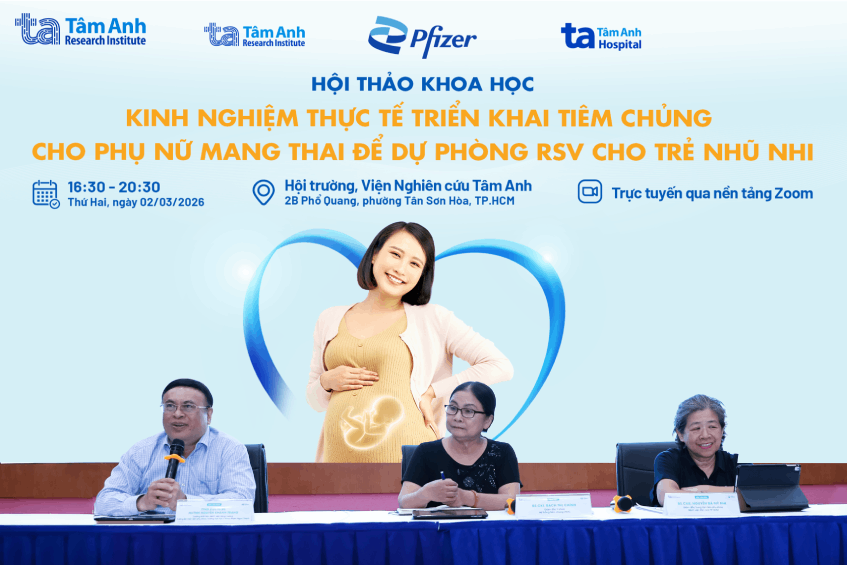
This information was shared by Dr. Nguyen Ba My Nhi, Director of the Obstetrics and Gynecology Center at Tam Anh General Hospital in Ho Chi Minh City, during the scientific workshop titled “Real-World Experience in Maternal RSV Vaccination for Infant Prevention,” organized by the Tam Anh Research Institute in collaboration with Pfizer Vietnam on March 2, 2026.
Maternal Vaccination Protects Newborns from the First Days of Life
According to Dr. Nguyen Ba My Nhi, the implementation of maternal RSV vaccination has shown promising results. Infants under six months of age are particularly vulnerable to severe RSV infections. Vaccination during pregnancy enables the transfer of protective antibodies from the mother to the baby through the placenta, providing protection from birth.
The Phase 3 MATISSE clinical trial, involving 7,420 pregnant women across 18 countries, the largest study evaluating the RSVpreF vaccine, demonstrated a high level of safety. The most common reactions, including injection-site pain, headache, and muscle aches, were generally mild to moderate and resolved within a few days. The study also showed that the vaccine reduced the risk of severe RSV-associated lower respiratory tract disease by more than 80% during the first three months of life and nearly 70% during the first six months.
Post-implementation surveillance in the United States and the United Kingdom further reported 70–79% effectiveness in preventing RSV-related hospitalization in infants under six months of age. Meanwhile, Argentina’s national maternal immunization program achieved over 70% protection against severe disease in infants during their first six months of life.
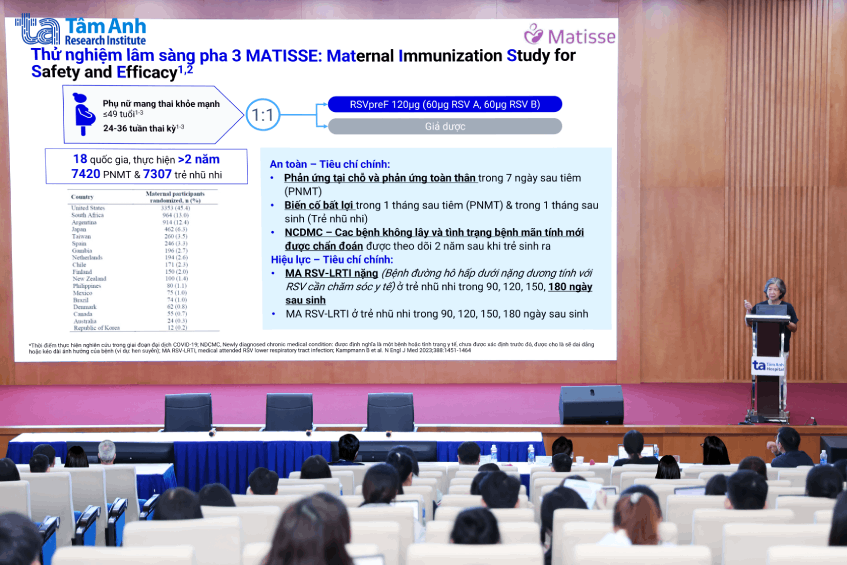
Dr. Nguyen Ba My Nhi shares findings from an RSVpreF monitoring study conducted across 18 countries, confirming the vaccine’s high safety profile.
Additional monitoring studies across multiple countries have confirmed the favorable safety profile of the RSVpreF vaccine. Data from the United States and other countries also show that maternal vaccination does not increase the risk of preterm birth or low birth weight, and newborn health outcomes are comparable to those of infants whose mothers were not vaccinated.
Post-vaccination surveillance in France similarly reported no safety signals of concern related to RSVpreF vaccination during pregnancy.
The Phase 3 MORISOT multicenter double-blind, placebo-controlled trial also demonstrated that pregnant women living with HIV can generate a strong immune response after receiving the RSVpreF vaccine. High levels of protective antibodies were successfully transferred to their infants, helping provide early protection against RSV infection.
Reported post-vaccination reactions were generally mild to moderate and similar to those observed in placebo groups. The most common symptoms included injection-site pain (about 27%) and muscle pain (around 25%), typically resolving within one to two days.
According to recommendations from the U.S. Centers for Disease Control and Prevention (CDC) and the American College of Obstetricians and Gynecologists (ACOG), the RSVpreF vaccine should be administered at least 14 days before delivery to allow sufficient time for antibody transfer to the fetus. The vaccine can also be safely administered together with other maternal vaccines such as Tdap or the seasonal influenza vaccine.

Dr. Huynh Nguyen Khanh Trang discusses the safe use of RSV vaccination during pregnancy.
Assoc. Prof. Dr. Huynh Nguyen Khanh Trang, Head of the Obstetrics Department at Hung Vuong Hospital and Chair of Obstetrics at Pham Ngoc Thach University of Medicine, emphasized that vaccines have been used safely during pregnancy for decades. These include tetanus vaccines introduced in 1926, inactivated influenza vaccines in 1936, pertussis vaccines in 1996, COVID-19 vaccines in 2020, and RSV vaccines beginning in 2022.
The RSVpreF vaccine (Abrysvo), developed by Pfizer in the United States, protects against respiratory syncytial virus, one of the leading causes of bronchiolitis, severe pneumonia, and hospitalization in infants under six months of age.
In Vietnam, the vaccine is currently available for pregnant women and adults aged 60 and older at VNVC Vaccination Centers and Tam Anh General Hospitals. For pregnant women, doctors recommend vaccination between 24 and 36 weeks of pregnancy, with the 28–32 week window considered optimal, after completing second-trimester screening and fetal morphology ultrasound. To ensure effective protection for the newborn, the vaccine should be administered at least two weeks before delivery, allowing enough time for antibodies to develop and pass through the placenta.
According to Dr. Bach Thi Chinh, Medical Director of the VNVC Vaccination Center System, maternal RSV vaccination plays an important role in reducing the risk of hospitalization and respiratory complications in newborns. “Timely and proactive vaccination provides a scientific, safe, and practical solution to protect infants during their most vulnerable early months of life,” Dr. Chinh emphasized.
Addressing Barriers to Maternal RSV Vaccination
Despite its proven benefits in protecting infants from severe respiratory diseases, maternal RSV vaccination still faces certain barriers, particularly concerns about cost and vaccine safety during pregnancy.

A pregnant woman receives the RSV vaccine to protect her infant at Tam Anh General Hospital.
Dr. Nguyen Ba My Nhi noted that although the RSV vaccine is more expensive than many routine vaccines, most pregnant women have proactively chosen to receive it.
“After five months of implementation, cost is no longer the primary barrier. Many families today have one or two children and are increasingly willing to invest in comprehensive protection for both mothers and babies,” she explained.
Another common concern involves pregnant women with underlying health conditions or high-risk pregnancies. According to Dr. My Nhi, women with conditions such as gestational diabetes, asthma, hypertension, obesity, or those who have undergone cervical cerclage may still receive the vaccine if their pregnancy remains stable during prenatal examinations.
However, Assoc. Prof. Dr. Huynh Nguyen Khanh Trang advised that high-risk pregnancies should undergo careful risk assessment before vaccination to ensure optimal safety for both mother and baby. Cases involving active systemic lupus erythematosus (SLE) or patients receiving high-dose immunosuppressive therapy may require individualized medical evaluation.
Obstetric experts recommend prioritizing vaccination between 28 and 32 weeks of pregnancy after completing second-trimester screening. For the best protection, vaccination should be administered at least two weeks before delivery to allow sufficient time for antibody production and transfer to the fetus.
Tam Anh Research Institute
- Ha Noi:
- 108 Hoang Nhu Tiep, Bo De Ward, Ha Noi
- Hotline: 024 3872 3872 – 024 7106 6858
- TP.HCM:
- 2B Pho Quang Street, Ward Tan Son Hoa, Ho Chi Minh City
- Hotline: 093 180 6858 – 0287 102 6789
- Fanpage: https://www.facebook.com/ViennghiencuuTamAnh.TAMRI
- Website: tamri.vn