
Updating current guidelines and personalizing treatment: From theory to practice was a scientific seminar jointly organized by the Tam Anh Research Institute, the Trauma and Orthopedics Center, the Ear-Nose-Throat (ENT) Center, and the Gastrointestinal Endoscopy and Laparoscopic Surgery Center, held on March 19, 2026.
Opening the program, Assoc. Prof. Tran Quang Binh, M.D., Ph.D., Medical Director of Tam Anh General Hospital Group HCMC, stated that the event aimed to update the latest diagnostic and treatment guidelines for common conditions across three related specialties – gastroesophageal reflux disease (GERD), osteoporosis, and ENT infections, to optimize patient outcomes.
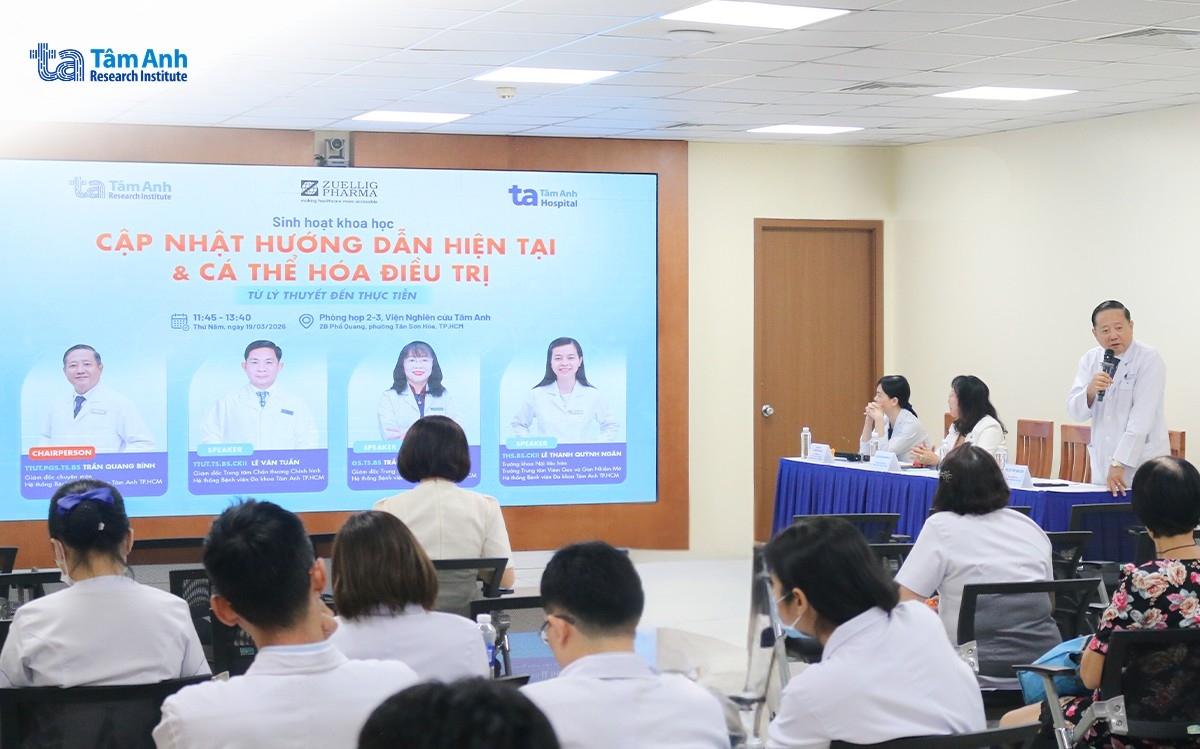
Assoc. Prof. Tran Quang Binh, MD, PhD – Medical Director of Tam Anh General Hospital Group HCMC, chairing the scientific seminar
Closing the gap in osteoporosis treatment
The seminar began with a presentation by Dr. Le Van Tuan, M.D., Ph.D., Director of the Trauma and Orthopedics Center at Tam Anh General Hospital Group HCMC, on Long-term osteoporosis management: Balancing efficacy and adherence.
Dr. Le Van Tuan cited statistics showing that 200 million women worldwide suffer from osteoporosis. Only 1 in 5 cases is diagnosed, only 1 in 3 receives treatment, and fewer than 50% of patients persist with treatment for more than 6 months. According to the International Osteoporosis Foundation, 1 in 3 women and 1 in 5 men over the age of 50 suffer from osteoporosis. In Vietnam, fractures due to osteoporosis among those over 50 have risen steadily since 2009 and are projected to continue increasing through 2050, leading to soaring medical costs. Furthermore, 10% of patients experience a secondary fracture within one year of their initial injury.
While the diagnostic standard is based on T-scores (DEXA scans of the lumbar spine and/or femoral neck), osteoporosis can still be diagnosed in patients over 50 who experience a fracture after minor trauma, provided pathological fractures are ruled out. Treatment involves managing the fracture, treating the underlying osteoporosis, patient education, and personalized rehabilitation.
Clinical data reveals a significant lack of adherence: 70% of patients stop medication within a year, with half of those quitting in the first 6 months. Approximately 50 – 60% stop because they “feel better,” while only 5 – 10% discontinue based on medical advice.

Dr. Le Van Tuan, MD, PhD – Director of the Trauma and Orthopedics Center, Tam Anh General Hospital Group HCMC, sharing insights on the multi-dimensional balance in osteoporosis treatment
Dr. Le Van Tuan explained that the high-touch model, featuring a quarterly injection schedule, represents a golden balance. This interval is long enough to offer greater convenience than daily, weekly, or monthly oral medications, yet frequent enough to ensure regular follow-ups, creatinine monitoring, and reinforced medical counseling. Furthermore, this schedule aligns seamlessly with follow-up visits for other chronic comorbidities common in elderly patients, such as diabetes, cardiovascular disease, kidney disease, and dyslipidemia.
He also introduced the Fracture Liaison Service (FLS) for managing patients with osteoporotic fractures. This is a closed-loop model requiring close coordination across multiple specialties, including Orthopedics, Rheumatology, Rehabilitation, Physiotherapy, Endocrinology, Geriatrics, Radiology, and Pharmacy, as well as customer service. A team of one-on-one coordinators directly supports patients by sending appointment reminders, providing professional guidance, and ensuring long-term adherence to treatment protocols. The goal is to help patients prevent secondary fractures, bridge the gap in osteoporosis treatment, and reduce the future risk of the disease.
“This model helps reduce future hip fractures by 25%. For every 1,000 patients enrolled in the FLS program, 18 fractures can be prevented,” Dr. Le Van Tuan stated.
Evaluating the efficacy and side effects of anti-inflammatory drugs in ENT
Inflammation is the body’s biological response to inflammatory triggers, such as microorganisms, chemical or physical agents, or internal factors (including tissue necrosis and autoimmune diseases), typically presenting with symptoms of swelling, heat, redness, and pain.
This process is the body’s self-defense mechanism aimed at eliminating harmful agents and facilitating the healing of injuries. However, prolonged inflammation can lead to chronic inflammation, where the inflammatory response persists even after the primary triggers have been removed. The pathological cycle of inflammation involves the initial response, followed by edema, obstruction, and congestion, which then triggers further inflammation.
These insights were shared by Prof. Tran Phan Chung Thuy, MD, PhD, Director of the ENT Center at Tam Anh General Hospital Group HCMC, during her presentation titled Decoding anti-inflammatory choices in ENT: A personalized approach to edema treatment.
Common ENT conditions include acute and chronic rhinosinusitis, pharyngitis, acute tonsillitis, acute and chronic laryngitis, and acute and chronic otitis media. In treating inflammation, anti-inflammatory drugs play a vital role in preserving the beneficial effects of the inflammatory response, combating edema, and supporting the efficacy of antibiotics. However, their use must be strictly indicated, age-appropriate, and managed to minimize side effects.
Anti-inflammatory medications include glucocorticoids (steroids), non-steroidal anti-inflammatory drugs (NSAIDs), and enzyme-based anti-inflammatories. Among these, corticosteroids provide powerful and rapid anti-inflammatory effects. They act systemically by suppressing the body’s inflammatory response, inhibiting tissue growth factors, and suppressing the healing process. Long-term use or high doses carry significant risks, including edema, Cushing’s syndrome, peptic ulcers, immune system impairment, increased risk of infection, and osteoporosis.
“Clinical records show many patients seek medical care after prolonged corticosteroid use has already caused Cushing’s syndrome and adrenal insufficiency,” Professor Thuy noted.
NSAIDs help reduce the synthesis of inflammatory mediators, providing pain relief, fever reduction, and anti-inflammatory benefits, while also reducing platelet aggregation. However, NSAIDs can cause adverse effects on the gastrointestinal and renal systems, leading to gastric ulcers, gastrointestinal bleeding, and abdominal pain.
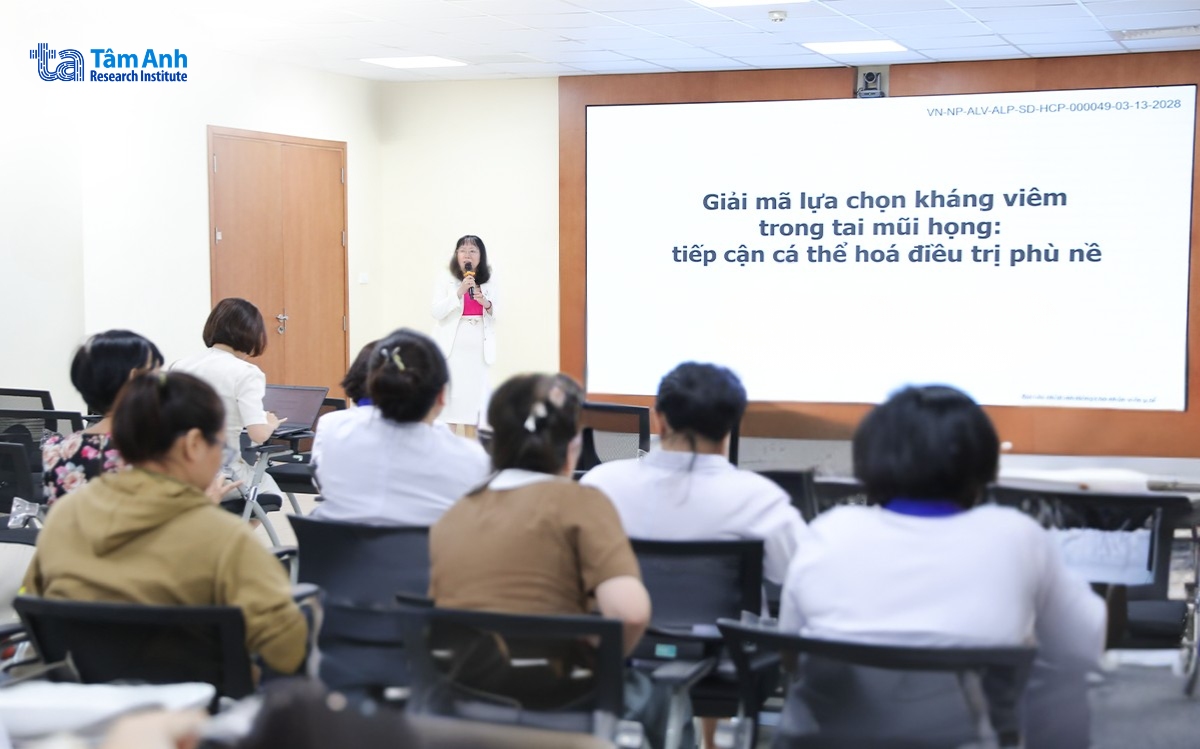
Attendees listen to the presentation by Prof. Tran Phan Chung Thuy, MD, PhD, Director of the ENT Center, Tam Anh General Hospital Group HCMC
Regarding enzyme-based anti-inflammatories, protease enzymes act directly on micro-clots and fibrin formation, promoting fibrinolysis to clear blocked blood vessels. This process restores circulation and accelerates tissue repair. These medications also enhance fluid drainage, reduce swelling and pain, decrease pro-inflammatory interleukins, and normalize the cytokine homeostatic environment, thereby supporting the healing process. While there is a risk of allergic reactions, diarrhea, abdominal pain, or nausea, “clinical observations show that patients rarely experience these side effects,” Professor Thuy noted.
In conclusion, Professor Thuy emphasized that anti-inflammatory drugs are effective in resolving symptoms caused by tissue damage, providing pain relief, and supporting wound healing. However, a careful balance between efficacy and potential side effects must always be considered.
Updates in the Diagnosis and Treatment of GERD
Challenges in refractory GERD: Optimizing PPIs and key considerations in treatment was the topic presented by Dr. Le Thanh Quynh Ngan, MD, Specialist level II – Head of Gastroenterology and Head of the Hepatitis and Fatty Liver Center, Tam Anh General Hospital Group HCMC.
Gastroesophageal reflux disease (GERD) is a condition where stomach contents flow back into the esophagus, causing uncomfortable symptoms and/or complications, which can manifest both esophageally and extra-esophageally. Extra-esophageal symptoms are often linked to ENT conditions, such as recurrent pharyngitis, sinusitis, and otitis media. “Laryngopharyngeal symptoms may be related to GERD, but caution is necessary when they occur in the absence of typical esophageal symptoms,” Dr. Le Thanh Quynh Ngan explained.
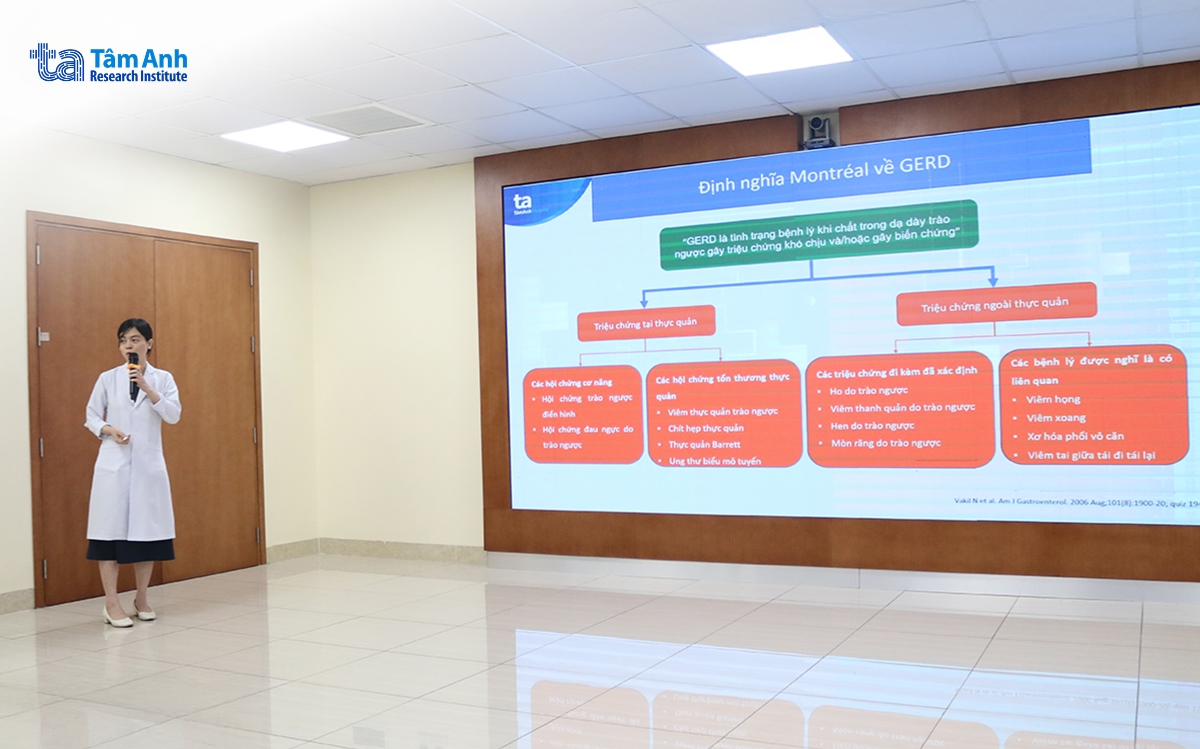
Dr. Le Thanh Quynh Ngan, MD, Specialist level II – Head of Gastroenterology and Head of the Hepatitis and Fatty Liver Center, Tam Anh General Hospital Group HCMC, presenting at the seminar
For a definitive diagnosis, there must be clear evidence of reflux-induced injury via endoscopy and/or abnormal reflux monitoring results, accompanied by consistent symptoms.
Diagnostic methods for GERD, such as the GERD-Q questionnaire, PPI tests, endoscopy, pH-impedance monitoring, wireless pH monitoring, and esophageal mucosal impedance, are now routinely performed at Tam Anh General Hospital Group HCMC. Notably, Tam Anh General Hospital Group HCMC was the first to implement wireless pH monitoring in Ho Chi Minh City, a method that continues to be a cornerstone in the diagnosis of the disease.
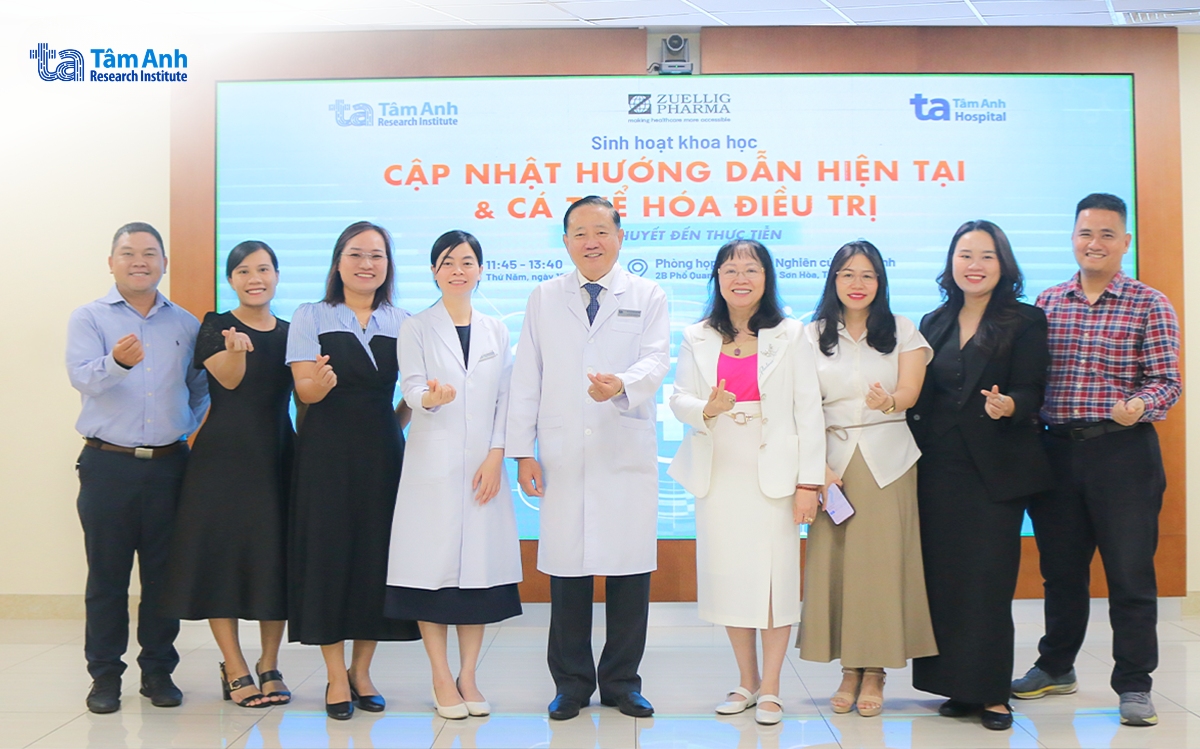
Experts and keynote speakers in a commemorative group photo following the event
For the 40% of patients who do not respond to standard proton pump inhibitors (PPIs), Dr. Quynh Ngan noted that Tam Anh General Hospital Group HCMC utilizes 24-hour esophageal pH-impedance monitoring and high-resolution manometry (HRM) to pinpoint the root cause. Once accurately diagnosed, doctors develop a personalized treatment regimen, prioritizing medications with a high area under the curve (AUC). This approach ensures stable and continuous acid control, rapidly eliminating reflux symptoms both day and night, allowing patients to enjoy their meals and achieve an improved sleep quality.
Tam Anh Research Institute
- Ha Noi:
- 108 Hoang Nhu Tiep, Bo De Ward, Ha Noi
- Hotline: 024 3872 3872 – 024 7106 6858
- TP.HCM:
- 2B Pho Quang Street, Ward Tan Son Hoa, Ho Chi Minh City
- Hotline: 093 180 6858 – 0287 102 6789
- Fanpage: https://www.facebook.com/ViennghiencuuTamAnh.TAMRI
- Website: tamri.vn