Non-small cell lung cancer (NSCLC) accounts for 80 – 85% of all lung cancer cases, with EGFR mutations occurring in up to 40 – 50% of patients in Asian countries, including Vietnam. New strategies, including combining the bispecific antibody amivantamab with chemotherapy, are offering additional treatment options for patients after developing resistance to third-generation EGFR-TKIs.
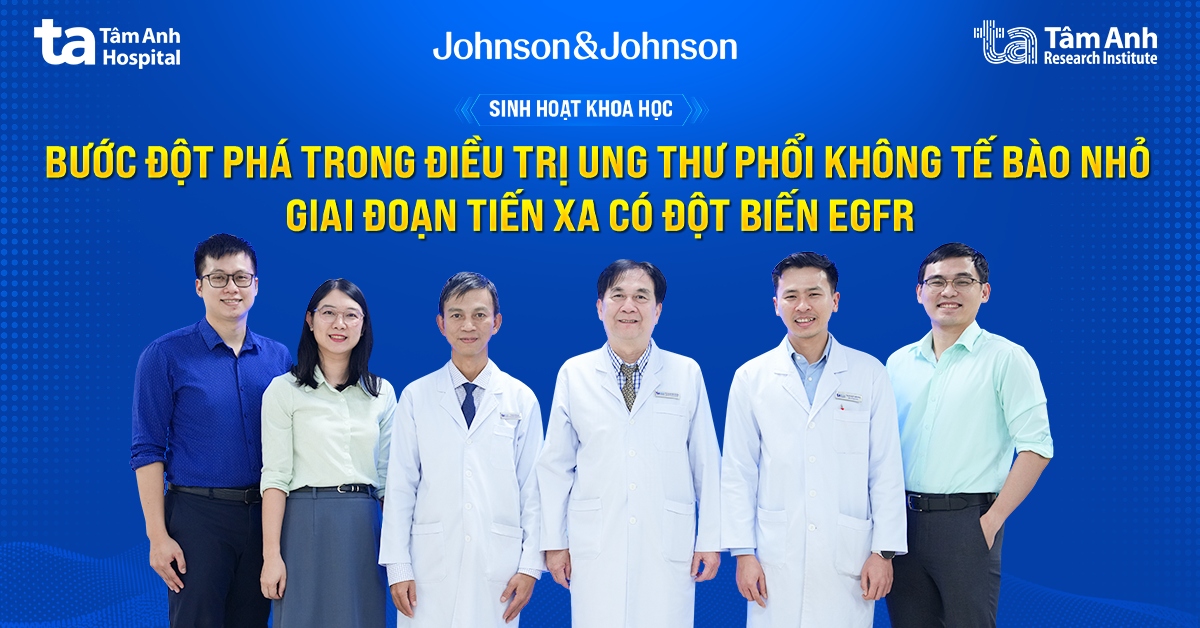
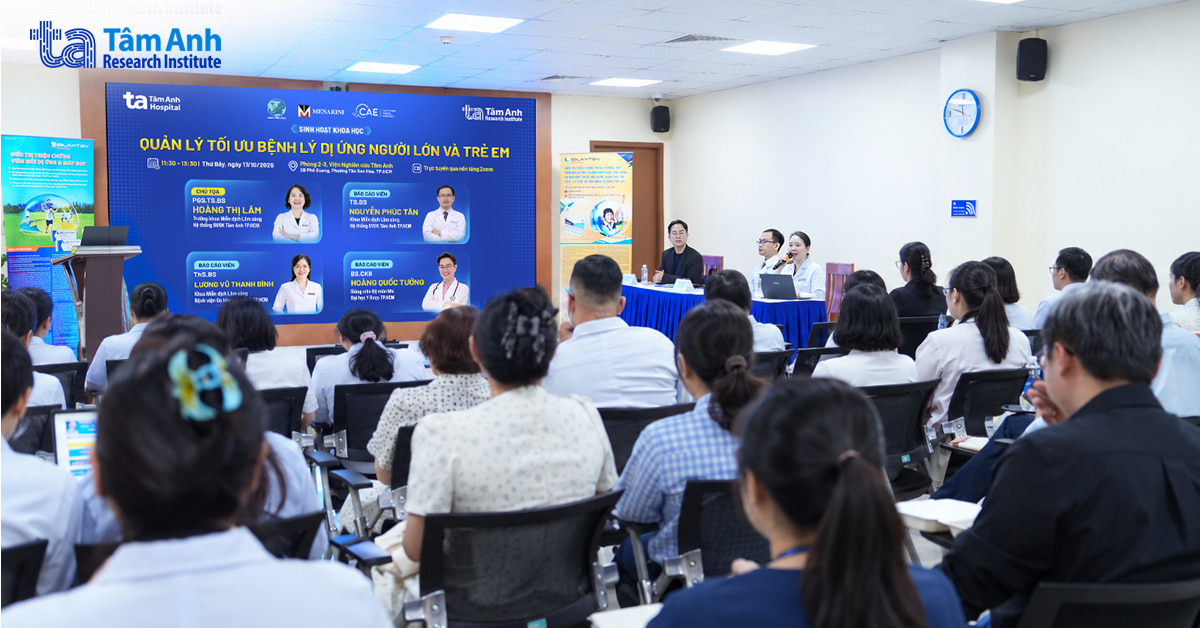
This information was presented and discussed by experts from Tam Anh General Hospital at the scientific seminar titled “Breakthroughs in the treatment of EGFR-mutated advanced non-small cell lung cancer,” held on August 15, 2026, at Tam Anh General Hospital, Ho Chi Minh City (HCMC)
In his opening remarks, Dr. Pham Xuan Dung, MD, PhD, Director of the Oncology Center at Tam Anh General Hospital Group, HCMC, emphasized that EGFR-mutated advanced non-small cell lung cancer remains a major challenge in clinical practice.
Although third-generation EGFR-TKI targeted therapies have marked a major advance in first-line treatment, disease progression due to acquired drug resistance over time remains a common challenge. Therefore, updating subsequent-line treatment strategies plays an important role in expanding treatment options, enabling more effective tumor control and maximizing patients’ overall survival.

Dr. Le Tan Dat presenting on “Advances in the treatment of NSCLC with common EGFR mutations after failure of third-generation EGFR-TKIs”
Opening the presentation session, Dr. Le Tan Dat, MD, PhD, Deputy Director of the Oncology Center at Tam Anh General Hospital Group, HCMC, discussed advances in the treatment of NSCLC with common EGFR mutations following failure of third-generation EGFR-TKIs.
Although third-generation targeted therapies, particularly osimertinib, have marked a major advance in first-line treatment, most patients still face drug resistance over time. The mechanisms underlying resistance are highly complex and may involve secondary mutations such as C797S, c-MET gene amplification, alterations in other signaling pathways, or histological transformation, such as transformation to small cell lung cancer.
When the disease progresses after failure of third-generation EGFR-TKIs, platinum-based doublet chemotherapy combined with pemetrexed and either carboplatin or cisplatin is typically used as the subsequent treatment. However, the efficacy of conventional chemotherapy remains modest.
In this context, the emergence of amivantamab, a bispecific antibody targeting both EGFR and MET receptors, represents a breakthrough treatment option. Combining amivantamab with chemotherapy not only enhances antitumor activity but also helps overcome complex mechanisms of EGFR-TKI resistance. As a result, this combination significantly improves progression-free survival compared with chemotherapy alone.
Data from major international studies such as MARIPOSA-2 show that combining amivantamab with chemotherapy increases the objective response rate to 64% and extends median progression-free survival (mPFS) to 6.3 months, compared with 4.2 months in the chemotherapy group. The regimen also demonstrated efficacy in controlling brain metastases, with an intracranial mPFS of 12.5 months versus 8.3 months. Real-world clinical experience has shown that this regimen can rapidly control tumors, reduce metastatic lesions, and significantly improve patients’ quality of life after developing resistance to third-generation EGFR-TKIs.

Dr. Ngo Tuan Phuc sharing clinical case experience and insights into managing NSCLC patients treated with amivantamab
From a clinical practice perspective, Dr. Ngo Tuan Phuc, MD, MSc, from the Department of Medical Oncology at Tam Anh General Hospital, HCMC, provided an in-depth analysis of the mechanism of action, medical evidence, and strategies for the safe management of amivantamab, a novel EGFR-MET bispecific antibody.
Unlike conventional approaches, amivantamab has a multifaceted mechanism of action: it blocks tumor proliferation signaling, promotes the elimination of EGFR/MET receptors, and recruits the body’s innate immune system to destroy cancer cells.
Alongside its high efficacy, early recognition and proactive management of adverse events are essential to ensuring safe and continuous treatment. Infusion-related reactions (IRRs) occur in approximately 6 – 67% of patients during the first infusion. Physicians should administer mandatory premedication, including corticosteroids, H1 antihistamines, and antipyretics, while dividing the infusion dose over the first two days and strictly adhering to the recommended infusion rates.
At the same time, skin and nail-related adverse events, such as acneiform rash, dry skin, pruritus, and paronychia, require early prevention and management. Proactive care strategies may include the use of alcohol-free moisturizers and broad-spectrum sunscreen, combined with topical corticosteroids or prophylactic oral antibiotics.
In addition, close monitoring of serum albumin levels and proactive prophylaxis with low-dose oral anticoagulants are recommended to prevent hypoalbuminemia and venous thromboembolic events.
Implementing preventive measures from the outset, closely monitoring patients throughout treatment, and promptly managing adverse events can help minimize unnecessary treatment interruptions and improve treatment tolerability.
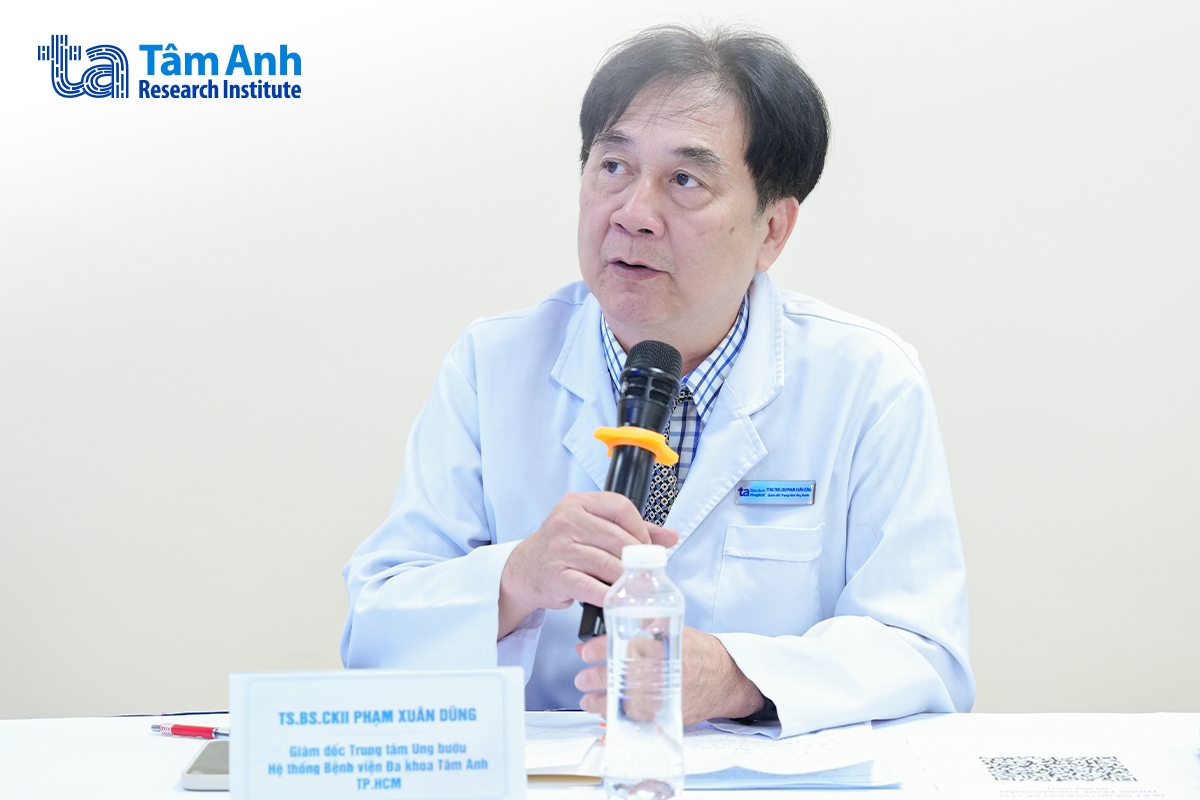
Dr. Pham Xuan Dung delivering closing remarks at the scientific seminar
In his concluding remarks, Dr. Pham Xuan Dung praised the valuable scientific insights shared during the seminar and affirmed that the emergence of new treatment regimens such as Amivantamab has brought renewed hope to patients with EGFR-mutated advanced non-small cell lung cancer after developing drug resistance.
Through this scientific seminar, Tam Anh General Hospital Group continues to reaffirm its commitment to updating advanced medical evidence, strengthening professional collaboration, and promoting the integration of international recommendations into clinical practice. These efforts help expand patient access to new therapies and advance personalized, safe, and comprehensive treatment strategies, contributing to improved quality of life and optimized treatment outcomes