Simultaneously managing blood pressure, blood glucose, lipid levels, and kidney function helps reduce the risk of adverse events in patients with Cardiovascular-Kidney-Metabolic (CKM) syndrome while improving their quality of life.
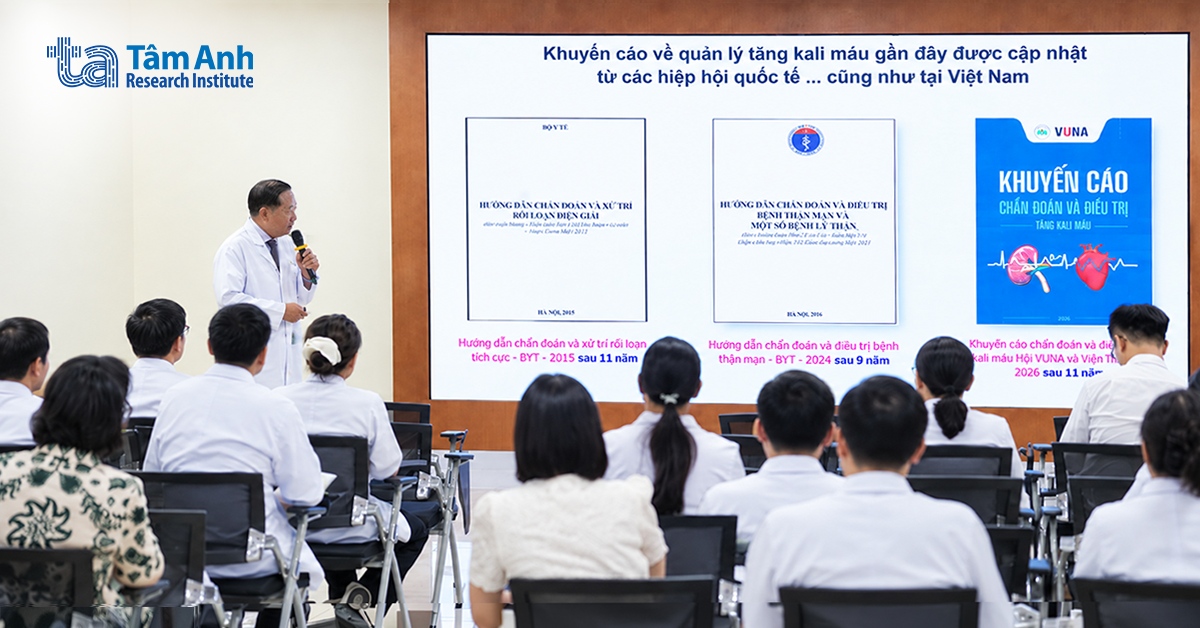
Assoc. Prof. Pham Nguyen Vinh, MD, PhD, Vice President of the Vietnam National Heart Association and Director of the Cardiovascular Center at Tam Anh General Hospital System in Ho Chi Minh City, along with other experts, shared these insights during the scientific symposium titled “Shifting from numerical targets to comprehensive protection: Fixed-dose Combination (FDC) strategies in the era of Cardiovascular – Kidney – Metabolic syndrome.” The event took place on September 11, 2026, at the Tam Anh Research Institute under the Tam Anh General Hospital Group and was streamed online via Zoom.
According to Assoc. Prof. Vinh, a person with hypertension may also have diabetes, dyslipidemia, obesity, or chronic kidney disease. Focusing solely on bringing a single parameter to its target level while overlooking other factors may allow damage to the heart, blood vessels, and kidneys to continue.
This forms the basis for the shift from “treating individual numbers” to comprehensive patient protection, with the goal of not only controlling blood pressure, blood glucose, or lipid levels but also reducing the risks of myocardial infarction, stroke, heart failure, kidney damage, and long-term adverse events.

Assoc. Prof. Pham Nguyen Vinh (center) with doctors and a sponsor representative at the scientific symposium on September 11.
Cardiovascular – Kidney – Metabolic (CKM) syndrome is a complex disorder encompassing cardiovascular disease, kidney disease, obesity, and type 2 diabetes. The interaction among these four conditions increases the risk of end-organ damage and premature mortality.
Assoc. Prof. Pham Nguyen Vinh noted that a person may have multiple conditions within CKM syndrome simultaneously because they are interconnected through the circulatory system. After food is digested, nutrients and energy are transported through the bloodstream to cells throughout the body. The heart and blood vessels circulate blood throughout the body, while the kidneys filter waste products from the blood. To maintain good health, all of these systems need to function effectively.
Having more than one condition within CKM syndrome increases the risk of developing other conditions in the syndrome. Therefore, shifting from treating individual diseases to early identification and integrated CKM management is an important strategy to provide maximum protection for patients.

Dr. Ta Phuong Dung, Deputy Director of the Center for Urology – Nephrology – Andrology and Head of the Department of Nephrology – Dialysis at Tam Anh General Hospital in Ho Chi Minh City, discusses with experts at the symposium.
Blood pressure management in patients with diabetes or chronic kidney disease
In her presentation, “From blood pressure stabilization to comprehensive end-organ protection: The Role of valsartan + amlodipine combination therapy in multifactorial risk management,” Pham Do Anh Thu, MD, MSc, Head of the Valvular Heart Disease Unit at the Cardiovascular Center, Tam Anh General Hospital Group in HCMC, emphasized that hypertension is not merely an isolated cardiovascular condition in the context of CKM syndrome. Diabetes can drive or exacerbate hypertension. Conversely, hypertension can damage the kidneys, thereby worsening the progression of chronic kidney disease. Therefore, treatment goals should extend beyond bringing blood pressure to an appropriate level to also providing long-term protection for the heart, kidneys, and vascular system.
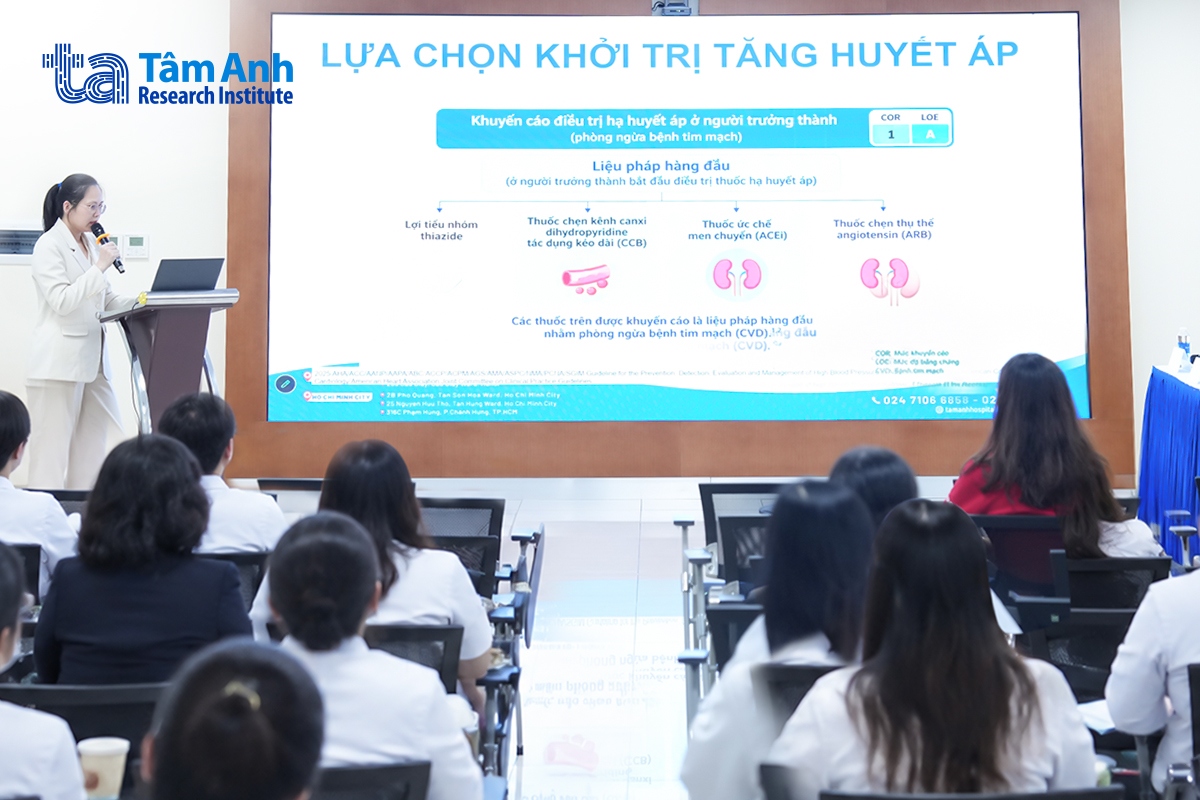
Dr. Pham Do Anh Thu recommends combination therapy for blood pressure management in patients with diabetes or chronic kidney disease.
The target blood pressure for patients with hypertension, diabetes, and chronic kidney disease should be 120/80 mmHg if well tolerated. For adults with Stage 2 hypertension (systolic blood pressure >140 mmHg and diastolic blood pressure >90 mmHg), the recommended approach is to use two first-line antihypertensive medications from two different classes, ideally as a fixed-dose combination (FDC) pill, to control blood pressure and improve treatment adherence. This approach also provides greater benefits for patients with hypertension and diabetes or chronic kidney disease by improving albuminuria and urinary protein excretion while reducing the risk of future cardiovascular events.
Lowering LDL-C to safe levels to reduce cardiovascular events
In her presentation, “Dyslipidemia management 2026: Prevention of atherosclerotic cardiovascular disease,” Huynh Thanh Kieu, MD, MSc, Head of Cardiology Department 1 at the Cardiovascular Center, Tam Anh General Hospital Group in HCMC, shared the case of a 50-year-old female patient who sought medical attention for atypical left-sided chest pain. Laboratory tests and coronary angiography confirmed dyslipidemia, coronary atherosclerosis, and prediabetes.
This case shows that multiple cardiovascular risk factors can coexist without the patient being aware of them. Dyslipidemia often causes no obvious symptoms, but over time, it can promote the formation of atherosclerotic plaques, increasing the risk of coronary artery disease, myocardial infarction, and stroke.

Dr. Huynh Thanh Kieu noted that patients at high risk of cardiovascular events need early and long-term LDL-C control.
The patient was started on a moderate-intensity statin, with the goal of reducing LDL-C (bad cholesterol) to <2.6 mmol/L from a pretreatment level of 2.9 mmol/L. Instead of using a high-intensity statin, a combination pill can be effective in maintaining treatment and improving adherence through a greater LDL-C-lowering effect.
“The earlier treatment is initiated and the longer it is maintained, the lower the LDL-C level and the lower the risk of cardiovascular events,” Dr. Kieu said.
According to Dr. Kieu, target lipid levels are not the same for everyone but depend on individual cardiovascular risk. Patients with atherosclerosis, diabetes, chronic kidney disease, or multiple risk factors often require closer monitoring. In addition to treatment as prescribed, maintaining a healthy diet, exercising, managing body weight, and quitting smoking can help reduce the risk of adverse events.
Importantly, experts emphasized that blood pressure, blood glucose, lipid levels, and kidney function should be managed in an integrated manner rather than separately.
“Close coordination in managing blood glucose, blood pressure, lipid levels, and chronic kidney disease serves as a ‘protective shield’ to preserve end organs, reduce hospitalization rates, and improve long-term survival outcomes for patients with Cardiovascular – Kidney – Metabolic syndrome,” Assoc. Prof. Pham Nguyen Vinh emphasized.
At Tam Anh General Hospital Group, patients with multiple concurrent conditions undergo evaluation and management through multidisciplinary collaboration among Cardiology, Endocrinology – Diabetes, Nephrology, Nutrition, and other relevant specialties. Risk factors, the extent of organ damage, and comorbidities are assessed simultaneously to develop appropriate treatment and monitoring plans for each patient.