
A total of 50,372 dengue cases were recorded in the first five months of 2026 alone, double the figure reported for the same period last year, while in 2025 Vietnam recorded the highest number of dengue cases in the Asia-Pacific region, with 184,903 cases. Experts affirm that dengue is no longer a seasonal disease or one that occurs only in children; it is now spreading year-round, adults account for the majority of severe cases, and people with underlying medical conditions face a significantly higher risk of death. Given the absence of a specific treatment and the fact that mortality among severe cases can reach 20%, experts warn that the public should not wait until the epidemic season to begin preventive measures.
These were the key messages emphasized by leading experts and physicians in epidemiology, pediatrics, preventive medicine, and vaccination during the Continuing Medical Education (CME) program entitled “Preventing Dengue Fever Before the Nationwide Peak Season – Latest Vaccine Data Updates and Practical Applications,” organized by Tam Anh Research Institute in collaboration with Tam Anh General Hospital Group and VNVC Vaccination Center System, with the participation of Takeda Vietnam, on June 11, 2026. The program brought together more than 15,000 healthcare professionals across over 30 locations nationwide.
Vietnam Among the Countries with the Highest Dengue Burden in the Region
Dengue fever (DF) is no longer a disease that occurs only seasonally or a concern limited to children. The disease is increasingly circulating year-round, expanding into new geographic areas and imposing an ever-greater burden on all age groups, from children and adults to older adults.
According to Prof. Vu Sinh Nam, Senior Advisor on Dengue Fever at the National Institute of Hygiene and Epidemiology (NIHE) and former Deputy Director of the Department of Preventive Medicine under the Ministry of Health, the epidemiological pattern of dengue fever in Vietnam has changed significantly in recent years, requiring the public to shift from a reactive response during outbreaks to proactive early prevention.
According to the World Health Organization (WHO), dengue is the fastest-growing mosquito-borne disease in the world, with approximately 100–400 million infections each year. Under the impact of climate change, particularly strong El Niño episodes, rapid urbanization, increased population mobility, and the strong adaptability of the Aedes mosquito, dengue is now appearing in an increasing number of areas beyond its traditional endemic zones.
In Vietnam, 184,903 dengue cases were reported in 2025, the highest number in the Asia-Pacific region, surpassing many countries such as the Philippines (123,431 cases), Indonesia (122,110 cases), and Bangladesh (102,562 cases). It ranks among the leading infectious diseases in incidence and case numbers, while ranking second in mortality. As of the first five months of 2026, the country had recorded 50,372 cases and 5 deaths, double the figure for the same period in 2025.
Whereas dengue outbreaks were once largely concentrated during the rainy season, cases are now being recorded throughout most months of the year. Even during the dry season, Ho Chi Minh City continues to report thousands of cases. Hanoi, Hai Phong, Da Nang, as well as many northern mountainous provinces such as Son La, Yen Bai, Phu Tho, Tuyen Quang, and Bac Giang, have also recorded recurrent increases in dengue cases in recent years.
| Hanoi (2023) | Hai Phong (2024) | Da Nang (2025) | Ho Chi Minh City
(Jan-Feb 2025) |
| >40,530 cases, a 2-fold increase over 2022 and a 6-fold increase over 2021 | >22,420 cases, an 11.1-fold increase over 2023 | >4,176 cases, a 1.8-fold increase over 2024 | >4,213 cases in just two dry-season months, a 1.3-fold increase over the same period in 2024 |
Dengue outbreaks have also spread to peri-urban and suburban areas, as well as northern mountainous provinces. Tuyen Quang recorded a major dengue outbreak with 1,274 cases in 2022; Son La has recorded successive dengue outbreaks since 2017 despite having no previous outbreak history; Phu Tho recorded an outbreak in 2023; and Yen Bai, Bac Giang, Hung Yen, Nam Dinh, and Thai Binh have also recorded dengue clusters from 2024 to the present.
Prof. Vu Sinh Nam noted that dengue is gradually shifting from a seasonal epidemic pattern to a persistent health threat with outbreaks that are harder to predict than before. The risk of infection rises sharply among people living in poor-quality housing and sanitation conditions; for instance, living in rented housing or lodgings increases the risk of dengue by 2.2 times compared with living in one’s own home. For those living in crowded areas with poor sanitation, the risk can rise to 3.4–4.3 times. Habits such as storing water in tanks, jars, tires, and waste items left outdoors, as well as standing water created by storms and flooding, are also ideal breeding grounds for mosquitoes.

Prof. Vu Sinh Nam emphasized that prevention should not wait until an outbreak occurs. Dengue is no longer a seasonal disease but has become a year-round threat with an unpredictable outbreak pattern.
Not Only Children: Adults and Older Adults Also Face Serious Dengue Risks
Dengue fever is creating a multifaceted disease burden on all age groups, from disrupted schooling in children and lost working capacity in adults to a high risk of death in older adults. Dr. Nguyen Thi Hanh Le, Specialist Level II, Head of Pediatrics at Tam Anh District 7 General Clinic, emphasized that dengue is no longer a “childhood disease” but has become a threat to the entire population — indeed, adults have even accounted for a high proportion of recent dengue-related deaths. People with underlying conditions such as diabetes, cardiovascular disease, and chronic heart or kidney disease face up to an 11-fold higher risk of death. Mortality among severe cases may reach 20% if timely treatment is not provided.
According to surveillance reports from the Ministry of Health and disease control centers, dengue continues to record high case numbers, with an increasing trend among adults. In southern Vietnam, the proportion of cases among people aged over 15 years has risen considerably over the years, from about 18–32% in 1999–2000 to substantially higher levels in the recent period.
In children, the disease progresses rapidly, carries a high risk of shock, and places a substantial burden on families, particularly among those aged 4–16 years. A meta-analysis showed that children are nearly twice as likely as adults to develop severe dengue. For every 4–5 children hospitalized due to dengue, one may experience life-threatening shock complications.
Typical clinical cases at Tam Anh General Hospital, where Dr. Hanh Le works, show that the disease can turn severe within just a few hours due to the greater fragility of children’s capillaries, leading to massive plasma leakage, recurrent shock, respiratory failure, coagulation disorders, heart failure, and kidney failure. Many school-age children have had their education interrupted, with 55% of severe cases falling in the 10–19 age group and 86% of those experiencing plasma leakage or shock.
The burden extends beyond health outcomes. A single dengue hospitalization results in an average loss of 21.51 working days for patients and caregivers, with direct and indirect costs accounting for up to 77.29% of a household’s monthly income. In Ho Chi Minh City, in just the two months of April–May 2026, Tam Anh District 7 General Clinic recorded 10 dengue cases, 60% of which were severe cases requiring hospitalization or emergency care.
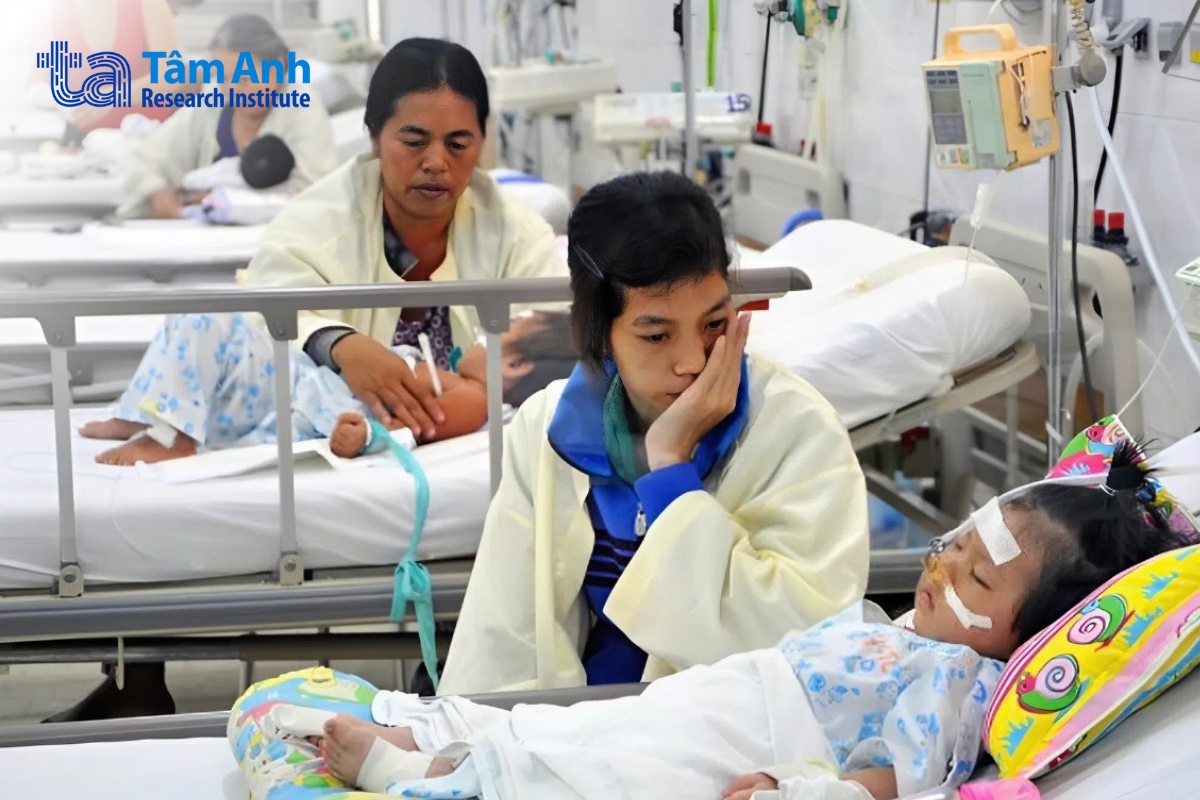
Dengue in children often progresses more rapidly because of the vulnerability of their vascular systems, making the risk of severe dengue nearly twice as high as in adults.
Dr. Nguyen Thi Hanh Le further explained that the dengue virus has four serotypes, meaning that a person can contract the disease up to four times. The reinfection rate among hospitalized adults ranges from 68% to 77% across epidemic seasons. Notably, adults’ immune systems may mount an excessive response, resulting in thrombocytopenia, coagulation disorders, and multi-organ damage. In Vietnam, among 891 hospitalized cases, 22% experienced liver injury. People with diabetes accompanied by cardiovascular disease face up to an 8.02-fold higher risk of severe dengue.
The disease also causes serious work disruption, with patients losing an average of 7.8 days in hospital and caregivers losing 7.6 working days. Indirect costs are around VND 1.6 million and direct costs around VND 370,000 per episode, while actual informal caregiving costs can reach hundreds of millions of Vietnamese dong. A severe case may cost as much as VND 720 million.
Among older adults, dengue often presents atypically, with 41.9% of cases manifesting only as fever, leading to delayed diagnosis. Meanwhile, late hospitalization (from day five onward) can raise the risk of multi-organ damage by 2.1 times. Mortality among individuals aged 65 years and older may reach 18%, compared with only 2.7% among those aged 20–64 years. Common complications include acute kidney injury, severe hepatitis, respiratory failure, and sepsis. Multi-organ failure syndrome associated with dengue carries a mortality rate of up to 43.5%.
Currently, dengue still has no specific treatment. The case fatality rate can remain below 1% when cases are detected early and managed appropriately, but may rise to 20% in severe cases that do not receive timely treatment. Delayed diagnosis and overburdened healthcare systems, including workforce shortages and overwhelmed intensive care units, further increase patient risk.
Experts from Bach Mai Hospital, the Pasteur Institute in Ho Chi Minh City, the Ho Chi Minh City Center for Disease Control (HCDC), and international reports (from WHO, CDC) recommend that people proactively eliminate mosquito breeding sites, maintain environmental hygiene, monitor early symptoms such as fever, headache, and bleeding manifestations, and seek medical care immediately when dengue is suspected. When vector control alone is insufficient, combining it with proactive preventive measures, including appropriate vaccination, is necessary to reduce the disease burden.

Dengue affects every member of the family, from children’s education and parents’ work to the health of grandparents. Every family should take action today to help protect community health.
New Data Reinforce the Long-Term Protective Effectiveness of the TAK-003 Vaccine
Dr. Bach Thi Chinh, Specialist Level I, Medical Director of the VNVC Vaccination Center System, stated that as dengue continues to be one of the most dangerous infectious diseases in tropical and subtropical regions, newly published research findings provide important additional scientific evidence supporting proactive disease prevention through vaccination. One of the most notable updates is the availability of long-term follow-up data extending up to seven years for the dengue vaccine TAK-003.
This represents one of the largest dengue vaccine research programs ever conducted, involving more than 20,000 children and adolescents aged 4–16 years across eight dengue-endemic countries: Brazil, Colombia, Panama, the Dominican Republic, Nicaragua, the Philippines, Thailand, and Sri Lanka. Results from the Phase III study demonstrated vaccine efficacy of 80.2% against virologically confirmed dengue during the first year after completion of the vaccination schedule. Notably, efficacy against dengue-related hospitalization reached 90.4% after 18 months of follow-up.
More importantly, updated data through year seven showed that protection against hospitalization remained high over time. Researchers identified no new safety signals throughout the extended follow-up period.
In addition to effectiveness, safety remains one of the public’s foremost concerns when considering vaccination. According to the latest aggregated data, as of May 2026, TAK-003 had been approved in 42 countries, including Vietnam, with more than 24 million doses distributed globally. Beyond clinical trials, the vaccine’s safety profile has also been assessed through multiple real-world studies in countries with high dengue prevalence.
In Argentina, a surveillance study involving more than 112,000 individuals aged 4–102 years found a very low rate of adverse events following vaccination. Most reported reactions were mild and transient, and 95.1% of reported cases were classified as non-serious. Similarly, data from more than 90,000 individuals in Brazil and more than 50,000 individuals in Germany continued to demonstrate a safety profile consistent with previous clinical trial findings.
Notably, a global safety analysis following the administration of more than 12.3 million doses in real-world settings showed that approximately 91% of reported post-vaccination adverse events were non-serious, further reinforcing the vaccine’s favorable benefit-risk profile.

Individuals receiving dengue vaccination at VNVC amid the early resurgence of dengue outbreaks in Ho Chi Minh City and many provinces and cities nationwide.
While clinical trials reflect vaccine performance under tightly controlled research conditions, real-world data demonstrate vaccine effectiveness when deployed in community settings. An independent study published in The Lancet Infectious Diseases in 2025 evaluated the effectiveness of TAK-003 during the major dengue outbreak in São Paulo State, Brazil, in 2024. During that year, São Paulo recorded approximately 2.1 million dengue cases, while Brazil reported nearly 10 million cases nationwide.
The study involved adolescents aged 10–14 years and analyzed nearly 690,000 vaccine doses administered across 392 municipalities. Results showed that after completion of the two-dose regimen, the vaccine significantly reduced the risk of symptomatic dengue. Protection began to emerge approximately eight days after vaccination and continued to increase over subsequent days as the immune response developed.
Regarding hospitalization risk, the data also demonstrated substantial protection, helping reduce treatment burdens during a large-scale outbreak.

Dr. Chinh emphasized that these real-world findings are particularly valuable because they accurately reflect vaccine effectiveness under actual community implementation conditions, where populations vary widely in age, immune status, and dengue transmission intensity.
No Specific Treatment Exists; Early Prevention Is Essential
Given the increasingly complex epidemiological situation, Dr. Le Thi Truc Phuong, Specialist Level I, Medical Specialist at the VNVC Vaccination Center System, recommends that the public proactively implement comprehensive preventive measures, including eliminating mosquito breeding sites, avoiding mosquito bites, maintaining environmental hygiene, and improving community awareness. In particular, alongside vector-control measures, vaccination offers an additional opportunity for proactive protection against dengue.
The dengue vaccine TAK-003 is currently available in Vietnam and is being supplied at hundreds of VNVC Vaccination Centers and Tam Anh General Hospitals nationwide for children aged 4 years and older and adults, administered as a two-dose schedule with a three-month interval between doses.
People are encouraged to review their own and their family members’ vaccination histories, particularly for children and those who live, study, or work in areas at risk of dengue transmission. Completing the full vaccination schedule before the peak season not only allows sufficient time for protective immunity to develop but also helps reduce the risks of infection, hospitalization, and severe dengue-related complications.

The public should proactively implement preventive measures early, including controlling mosquito larvae, eliminating mosquito breeding sites, preventing mosquito bites, and completing recommended vaccination before the peak season.
Concluding the symposium, the experts agreed that dengue is no longer a seasonal disease, nor is it confined to children or traditional endemic areas. It has become a year-round public health challenge. As case numbers continue to rise, epidemiological patterns become increasingly unpredictable, and no specific treatment is available, early proactive prevention through mosquito-control measures combined with vaccination is considered a sustainable strategy for reducing the risks of infection, hospitalization, and death.
The new scientific data presented at the symposium not only further strengthen the evidence supporting the effectiveness and safety of dengue vaccination but also contribute to raising public awareness, advancing the goal of protecting communities against a disease that is becoming increasingly complex worldwide.
Tam Anh Research Institute
- Ha Noi:
- 108 Hoang Nhu Tiep, Bo De Ward, Ha Noi
- Hotline: 024 3872 3872 – 024 7106 6858
- TP.HCM:
- 2B Pho Quang Street, Ward Tan Son Hoa, Ho Chi Minh City
- Hotline: 093 180 6858 – 0287 102 6789
- Fanpage: https://www.facebook.com/ViennghiencuuTamAnh.TAMRI
- Website: tamri.vn