Obesity is a global health crisis of the new era. Its complications affect all parts of the body, necessitating early intervention and comprehensive multidisciplinary management for effective treatment.

Experts highlighted these points during the seminar at Tam Anh General Hospital, Ho Chi Minh City (HCMC), on the afternoon of September 6th.
Assoc. Prof. Dr. Tran Quang Binh, Chief Medical Officer of Tam Anh General Hospital Group, stated that about 1 billion people worldwide face obesity-related problems. In Vietnam, around 18% of the population is obese. Obesity complications impact various body systems, including metabolic disorders (diabetes, cardiovascular disease, lipid metabolism, coronary artery disease, stroke, fatty liver, gallstones, coagulation disorders), mechanical issues (musculoskeletal system, bone fractures, reproductive system), and mental health (depression), among others.
Obesity is caused by multiple factors such as genetics, lifestyle habits, environmental influences, and medications. Therefore, effective obesity treatment requires a multidisciplinary, multimodal approach.
Regarding the burden of obesity-related diseases, Dr. Ngo Thi Binh Lua, MD, MSc from the Obstetrics and Gynecology Center at Tam Anh Hospital noted that obesity most notably affects ovulation. Excess fat tissue disrupts the hypothalamic-pituitary axis, interfering with the normal follicular development cycle, directly inhibiting ovarian function, and causing ovulation disturbances.

Dr. Ngo Thi Binh Lua, MD, MSc discusses the impact of obesity on reproductive health.
Obesity in women of reproductive age is a growing health concern with profound impacts on pregnancy, maternal health, and long-term outcomes. In pregnant women, obesity increases risks for both the fetus and the newborn, including congenital malformations, macrosomia, stillbirth, gestational diabetes, and a higher likelihood of diabetes later in life. It is also the strongest risk factor for endometrial cancer and is associated with increased surgical complications and mortality.
Regarding polycystic ovary syndrome (PCOS), obesity significantly worsens symptoms. Studies show that even a 5% weight loss can reduce ovarian volume, decrease the number of small follicles, and improve menstrual regularity.
Management of obesity requires a long-term, multidisciplinary approach—starting before pregnancy, continuing throughout gestation, and extending into the postpartum period. Specialties such as Obstetrics & Gynecology, Nutrition, and Endocrinology should be involved. All women of reproductive age should receive weight and lifestyle counseling. Women with a BMI ≥30 kg/m² are advised to take 5 mg of folic acid daily, beginning at least one month prior to conception and continuing through the first trimester.
After childbirth, obese women are encouraged to lose weight promptly to reduce the risk of venous thrombosis. Maintaining a healthy weight between pregnancies is essential to lower the risk of complications in subsequent pregnancies. Particular attention should be given to the “fourth trimester” (the first three months postpartum) to promote recovery, minimize risks in future pregnancies, and support long-term maternal health.

Dr. Huynh Thanh Kieu highlights the effects of obesity on cardiovascular disease and the role of weight loss in treatment.
Huynh Thanh Kieu, MD, MSc, Head of Cardiology Unit 1 and the Heart Failure Unit at Tam Anh General Hospital in HCMC, noted that visceral fat accumulation negatively affects the organs it surrounds. Obesity contributes to cardiometabolic conditions such as coronary artery disease, type 2 diabetes, dyslipidemia, hypertension, stroke, and vascular dysfunction. Individuals with a BMI of 25–29.9 kg/m² face a threefold higher risk of hypertension compared to those with a normal BMI.
Obesity increases the risk of both heart failure and cardiovascular mortality. Evidence shows that weight loss significantly improves health outcomes: Losing 5% of body weight lowers blood pressure and blood glucose levels. A 5–10% reduction improves PCOS symptoms, fatty liver, and dyslipidemia. A weight loss of 15% or more reduces cardiovascular mortality, improves fatty liver, and helps achieve stable control of type 2 diabetes.
Most expert consensus guidelines recommend a multimodal approach, combining lifestyle changes (diet, exercise, behavioral therapy), pharmacological therapy, and, when necessary, bariatric surgery.
Among pharmacologic options, Liraglutide has been proven effective in obesity treatment, reducing cardiovascular risk, lowering all-cause mortality by 15%, and decreasing cardiovascular mortality by 22%.
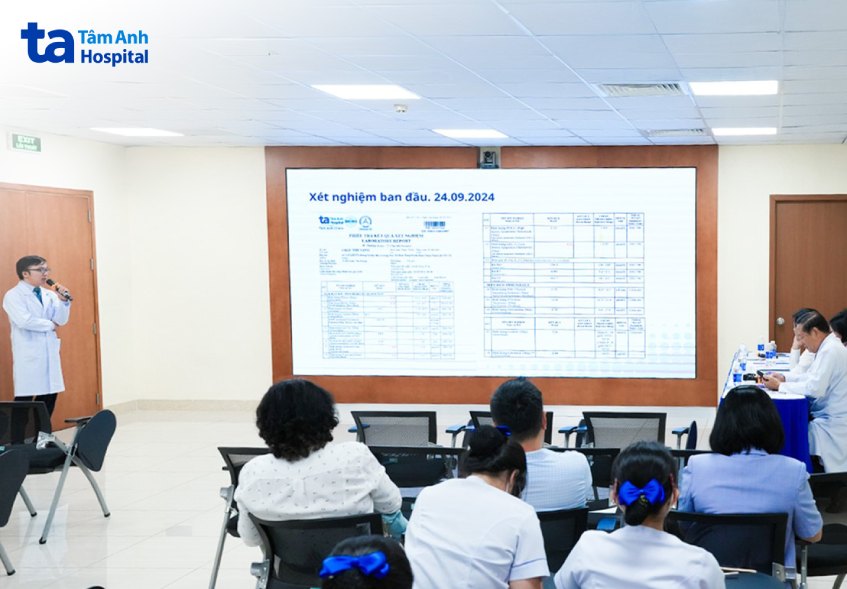
Dr. Do Tien Vu explains the importance of weight loss in reducing disease, citing typical patient cases.
Do Tien Vu, MD from the Endocrinology & Diabetes Department at Tam Anh General Hospital in HCMC, emphasized that for overweight or obese patients with type 2 diabetes, weight management should be a primary therapeutic goal alongside glycemic control. Even a modest 3–7% weight reduction can improve blood glucose, lower cardiovascular risk factors, enhance PCOS outcomes, and restore menstrual regularity—highlighting the importance of combining weight loss medication with nutritional and lifestyle interventions.
Tam Anh Research Institute

15/03/2025
View more