
Infection control and promotion of healing play pivotal roles in wound care, directly determining recovery rate, risk of complications, and patients’ quality of life. This is particularly critical for patients with diabetes or those recovering from surgery.

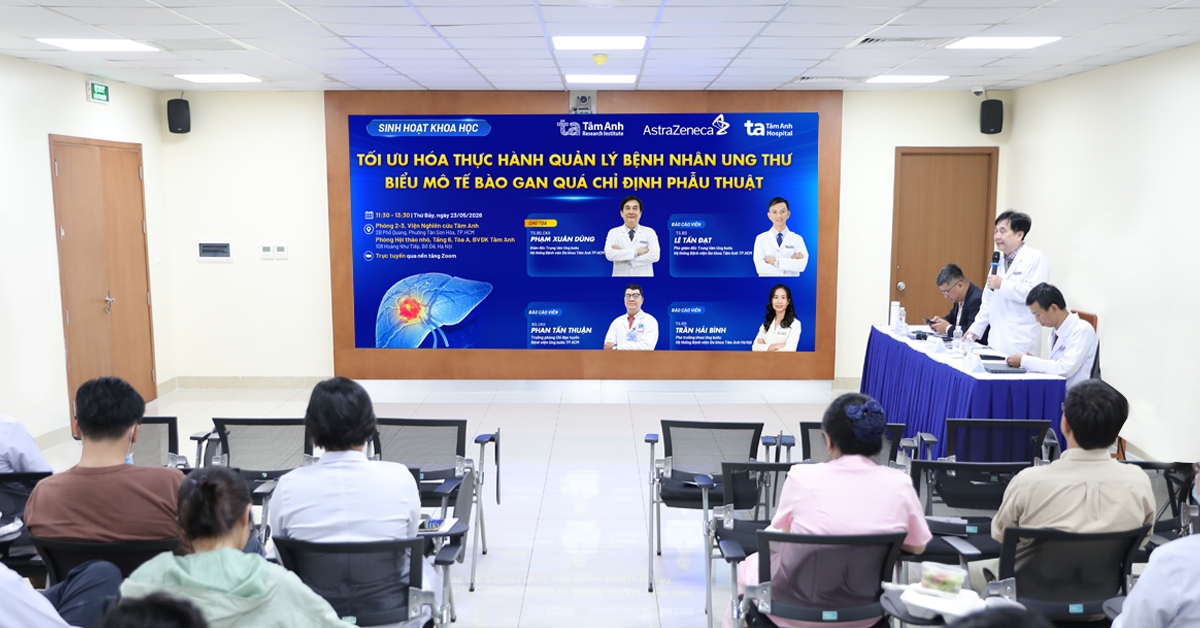
At the scientific seminar ‘Advances in Infection Control, Wound Care, and Promotion of Healing for Acute and Chronic Wounds,’ organized by Tam Anh General Hospital and Tam Anh Research Institute (TAMRI) in collaboration with B.BRAUN, medical experts shared the aforementioned information. The seminar focused on the latest evidence and standardized practical procedures, helping medical teams enhance treatment effectiveness, shorten healing time, reduce complications, and optimize wound care costs for patients.
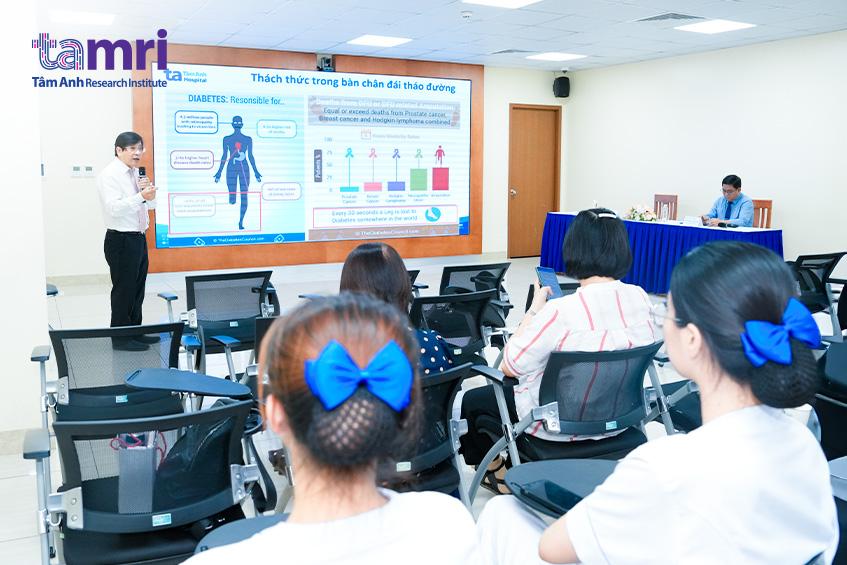
Dr. Lam Van Hoang, MD, PhD, discussing challenges in diabetic foot ulcer care. Photo: Tam Anh General Hospital.
Dr. Lam Van Hoang, MD, PhD, Head of Endocrinology and Diabetes, presented numerous challenges in caring for chronic wounds in diabetic patients, particularly foot ulcers that pose a high risk of amputation. Surveys indicate that approximately 60% of patients with foot ulcers require amputation due to infected lesions, and the mortality rate within five years following amputation ranges from 50% to 60%.
The main causes leading to this condition include poorly controlled blood glucose levels that delay wound healing and increase the risk of infection. Moreover, many patients are unaware of the severity of the disease, perform improper care, or are hospitalized too late.
By the time they arrive at the hospital, their wounds have often become severe, prolonging treatment duration, and increasing the risk of secondary infection. This not only increases treatment costs and burdens but also causes permanent physical and psychological disabilities, and can even be life-threatening.
Approximately 90% of chronic diabetic wounds are found to contain biofilm. This biofilm is a complex biological layer produced by bacteria, consisting of a microbial community that covers the wound surface, turning an acute wound into a chronic one.
This layer increases bacterial resistance to antiseptics, hinders the penetration of disinfectants and antibiotics, and causes antibiotic resistance. Biofilm is difficult to remove and rapidly regenerates (within 24 hours), increasing the risk of tissue damage and infection. Furthermore, genetic alterations among bacteria within the biofilm generate more virulent bacterial strains.
Therefore, it is necessary to disrupt the biofilm layer with a specialized cleansing solution capable of effectively eliminating bacteria, debris, and necrotic tissue, thereby supporting the healing process.

Meritorious Physician Dr. Le Van Tuan, MD, PhD, Specialist Level II, outlining principles in wound care and closure for diabetic patients. Photo: Tam Anh General Hospital.
Meritorious Physician Dr. Le Van Tuan, MD, PhD, Specialist Level II, Director of the Orthopedic Trauma Center at Tam Anh General Hospital (HCMC), noted that for acute wounds (such as those following surgery or orthopedic trauma), physicians assess whether infection is superficial or deep based on specific indicators, such as non-reduction in wound size, increased exudate, fragile bright red granulation tissue prone to bleeding, necrotic tissue (yellow or black), and malodor from the wound.
The principle for wound closure is to remove devitalized and necrotic tissue to ensure a healthy granulation base; reduce bacterial load, control prolonged inflammatory response; and ensure the wound is neither excessively dry nor overly moist, to prevent delayed healing.
Dr. Tuan asserted that proper wound care at each stage shortens the healing process and minimizes infection risk. The prerequisite for wound closure is a clean, non-infected wound with good blood circulation. Tam Anh General Hospital selectively and flexibly applies technologies and solutions to accelerate wound healing, minimize complications, and achieve optimal aesthetic results.

The seminar attracts a large number of healthcare professionals from Tam Anh General Hospital in HCMC. Photo: Tam Anh General Hospital.
Experts emphasized that infection control and promotion of wound healing play a crucial role in wound care, directly determining recovery rate, risk of complications, and patients’ quality of life. Proper infection control helps reduce microbial load, limit antibiotic resistance, and prevent infection spread, which is particularly critical among patients with diabetes, the elderly, or those recovering from surgery or orthopedic trauma.
Simultaneously, strategies to promote healing — including optimizing perfusion, controlling blood glucose and nutritional status, performing conservative debridement, selecting appropriate dressings and antiseptic solutions, managing exudate, and protecting wound edges — help shorten healing time, reduce pain, decrease readmission rates, and minimize treatment costs.
When implemented through standardized and multidisciplinary protocols, these two pillars not only improve clinical outcomes but also enhance patient safety and the efficient utilization of healthcare resources.
Tam Anh Research Institute
- Ha Noi:
- 108 Hoang Nhu Tiep, Bo De Ward, Ha Noi
- Hotline: 024 3872 3872 – 024 7106 6858
- TP.HCM:
- 2B Pho Quang Street, Ward Tan Son Hoa, Ho Chi Minh City
- Hotline: 093 180 6858 – 0287 102 6789
- Fanpage: https://www.facebook.com/ViennghiencuuTamAnh.TAMRI
- Website: tamri.vn