Chronic allergic diseases rarely occur in isolation. They often coexist with other allergic conditions, tend to persist, and frequently recur. Experts recommend screening for comorbidities, following prescribed medication regimens, and providing comprehensive, individualized treatment based on each patient’s age and disease severity.
These recommendations were shared by medical experts at the scientific seminar “Optimizing the Management of Allergic Diseases in Adults and Children,” held at Tam Anh General Hospital in Ho Chi Minh City at noon on October 17.
Assoc. Prof. Hoang Thi Lam, MD, PhD, Head of the Department of Clinical Immunology at Tam Anh General Hospital Group in HCMC, explained that allergic diseases are complex conditions that often follow a chronic course and require a multidisciplinary approach involving Clinical Immunology, Pediatrics, Internal Medicine, and Dermatology and Cosmetic Dermatology. The goal is not only to control acute symptoms but also to manage the disease comprehensively and tailor treatment to each patient.
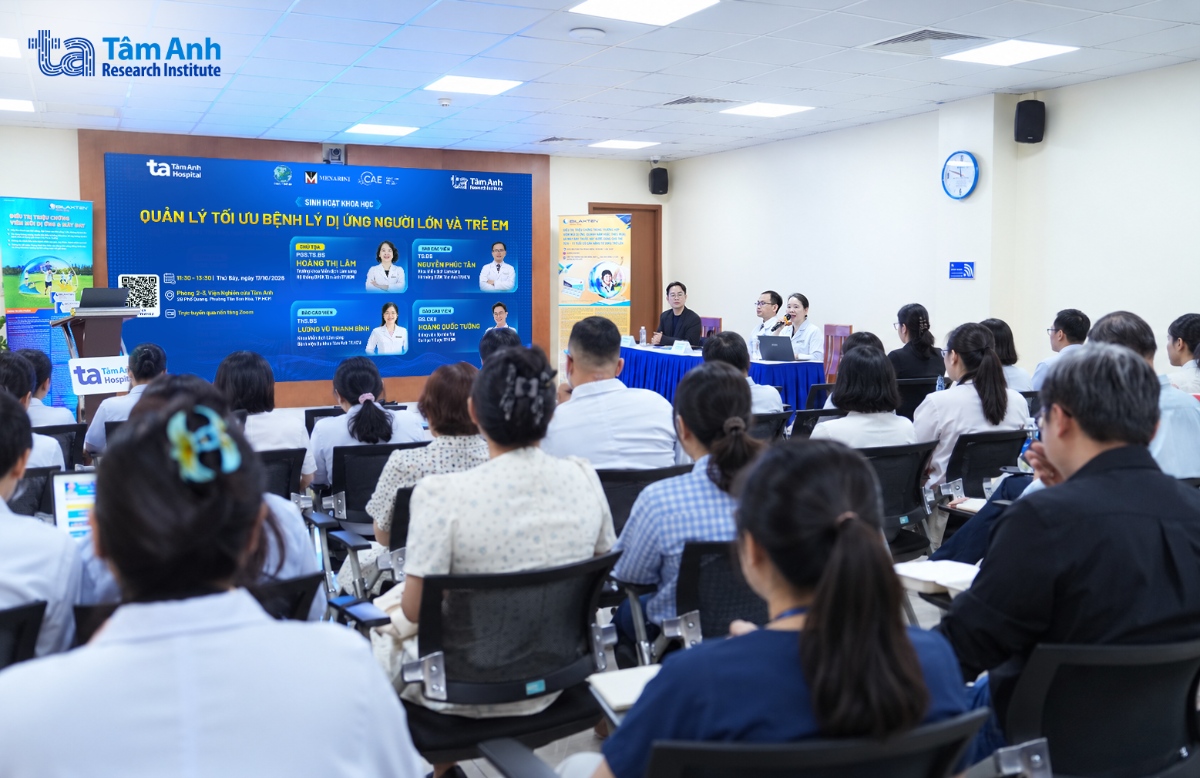
Assoc. Prof. Hoang Thi Lam, MD, PhD, discussing approaches to managing allergic conditions in children and adults.
Managing allergic rhinitis with comorbidities
According to Nguyen Phuc Tan, MD, PhD, of the Department of Clinical Immunology at Tam Anh General Hospital Group in HCMC, allergic rhinitis rarely occurs alone and may coexist with bronchial asthma, allergic conjunctivitis, sinusitis, or atopic dermatitis.
Dr. Tan noted that some studies have reported rates of coexisting bronchial asthma exceeding 80% in certain groups of patients with allergic rhinitis. When these conditions are not managed concurrently, patients may experience nasal congestion, coughing, and nighttime shortness of breath, which can disrupt sleep and affect their studies, work, and daily activities.
“Treatment should therefore begin with a detailed assessment of symptoms, screening for comorbidities, and identification of triggering factors,” Dr. Tan said. Second-generation H1 antihistamines can help relieve allergic symptoms while generally causing less drowsiness than first-generation agents. Intranasal corticosteroids are also an important treatment option for controlling inflammation of the nasal mucosa, particularly when symptoms persist. Medication selection should be based on disease severity and each patient’s individual characteristics.
In addition to medication, identifying allergens such as house dust mites, animal fur, and dander enables patients to minimize exposure and reduce the risk of triggering symptoms. Depending on the individual case, physicians may recommend skin prick testing or other appropriate tests to identify specific allergens. For selected patients, allergen-specific immunotherapy may be prescribed to gradually reduce the body’s sensitivity to allergens, helping achieve long-term disease control and reduce the need for medication.
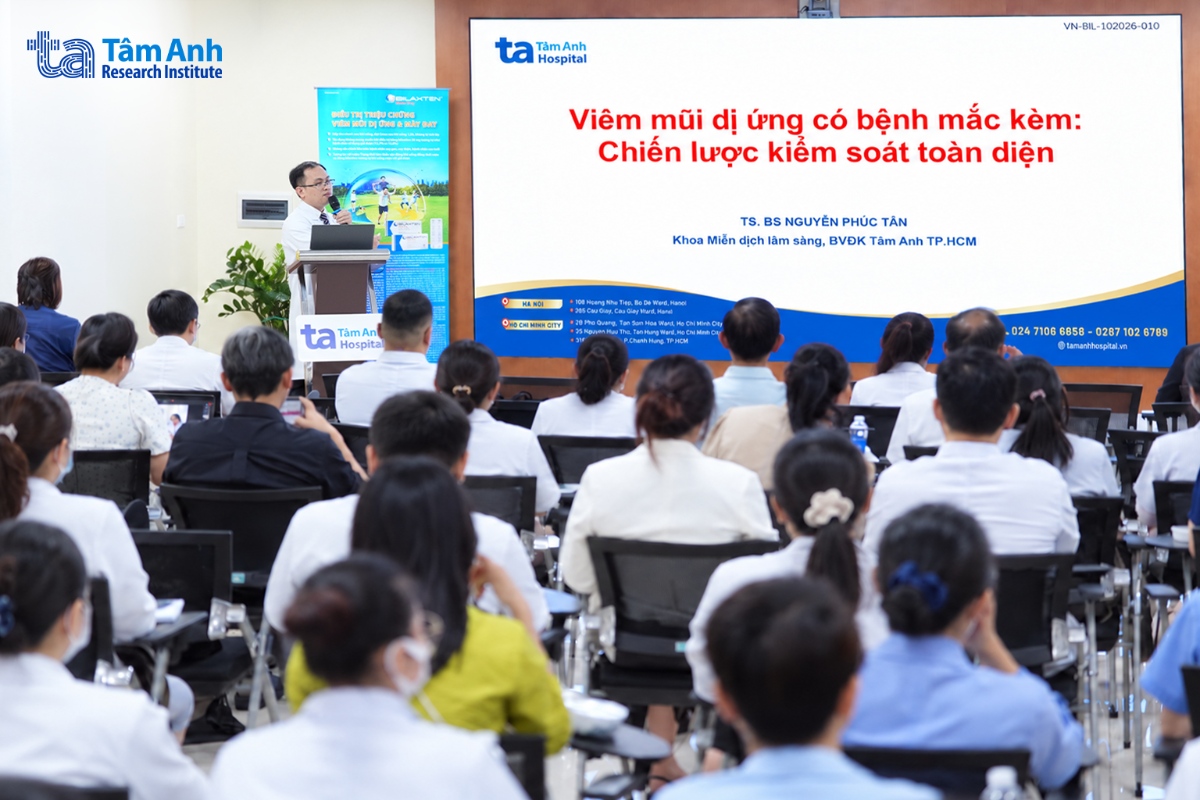
Dr. Nguyen Phuc Tan discussing strategies for managing allergic rhinitis with comorbidities.
Treating chronic urticaria based on treatment response
Regarding allergic skin conditions, Luong Vu Thanh Binh, MD, MSc, of the Department of Clinical Immunology at Tam Anh General Hospital in HCMC, presented the latest updates on the diagnosis and treatment of chronic urticaria. Urticaria is characterized by raised wheals or plaques on the skin that cause itching and may sometimes be accompanied by a burning sensation. Individual lesions typically resolve spontaneously within 24 hours but may reappear in other areas of the body. When the condition persists or recurs for more than six weeks, it is classified as chronic urticaria.
Chronic urticaria causes more than itching and discomfort. It can also lead to sleep disturbances and stress, affecting patients’ daily activities and work. Effective treatment requires an accurate diagnosis, identification of potential triggers and factors that may prolong symptoms, and differentiation from conditions with similar presentations, such as urticarial vasculitis. The goal is to achieve long-term symptom control and help patients carry on with their daily activities normally, rather than simply providing temporary relief from itching during flare-ups.
According to Dr. Binh, second-generation H1 antihistamines are the first-line treatment and are generally taken daily to maintain symptom control. If symptoms remain inadequately controlled after a period of treatment, physicians may consider increasing the antihistamine dose to as much as four times the standard dose, depending on the individual case. For patients whose symptoms remain uncontrolled, subsequent treatment options may include biologic agents or immunosuppressive medications. Oral corticosteroids may be considered for short-term use during certain disease flare-ups because prolonged use carries a risk of adverse effects.
Treatment regimens should be adjusted according to disease severity and each patient’s response. Patients should not increase their medication doses, discontinue treatment, or switch medications on their own when symptoms recur. Instead, they should attend follow-up appointments so that physicians can reassess their condition and determine the appropriate next steps in treatment.
Treating allergies in children: Choosing the right medication and dose
For children, Hoang Quoc Tuong, MD, a lecturer in Pediatrics at the University of Medicine and Pharmacy at HCMC, emphasized the importance of balancing treatment efficacy and safety when selecting medications. Diagnosing allergic diseases in children can be challenging because symptoms may change over time, different conditions can have similar clinical presentations, and comorbidities are common. Meanwhile, parents may be concerned about long-term treatment, sometimes leading them to discontinue their children’s medication prematurely or use medications incorrectly or contrary to medical instructions.

Dr. Hoang Quoc Tuong highlighting important considerations for medication use in treating allergic diseases in children.
Common allergic conditions in children include anaphylaxis, atopic dermatitis, urticaria, allergic rhinitis, food allergies, and bronchial asthma. These conditions may be associated with dysregulated immune responses and impaired barrier function in the skin, respiratory tract, or gastrointestinal tract. Treatment should therefore be tailored to the underlying disease mechanisms, the child’s age, disease severity, and triggering factors rather than following a single regimen for all children.
Second-generation H1 antihistamines are generally preferred for treating many allergic conditions in children because they are less likely to cause drowsiness than first-generation agents. However, doses must be appropriate for the child’s age and body weight, and medications must be administered according to the physician’s instructions. In severe or difficult-to-control cases, physicians should reassess the diagnosis and investigate factors that may be prolonging the disease, such as infections or ongoing allergen exposure, before considering dose adjustments or advanced therapies.
Experts recommend that effective management of allergic diseases requires accurate diagnosis, control of comorbidities, adherence to prescribed treatment regimens, and regular monitoring of treatment response. For children, close collaboration between physicians and families is particularly important to ensure appropriate treatment, minimize adverse effects, and maintain long-term disease control.