Experts say that the treatment of asthma and chronic obstructive pulmonary disease (COPD) is entering a new era, with personalized care based on disease mechanisms, the use of biologic therapies, and modern treatment strategies aimed at achieving comprehensive disease control, reducing exacerbations, and improving patients’ quality of life.
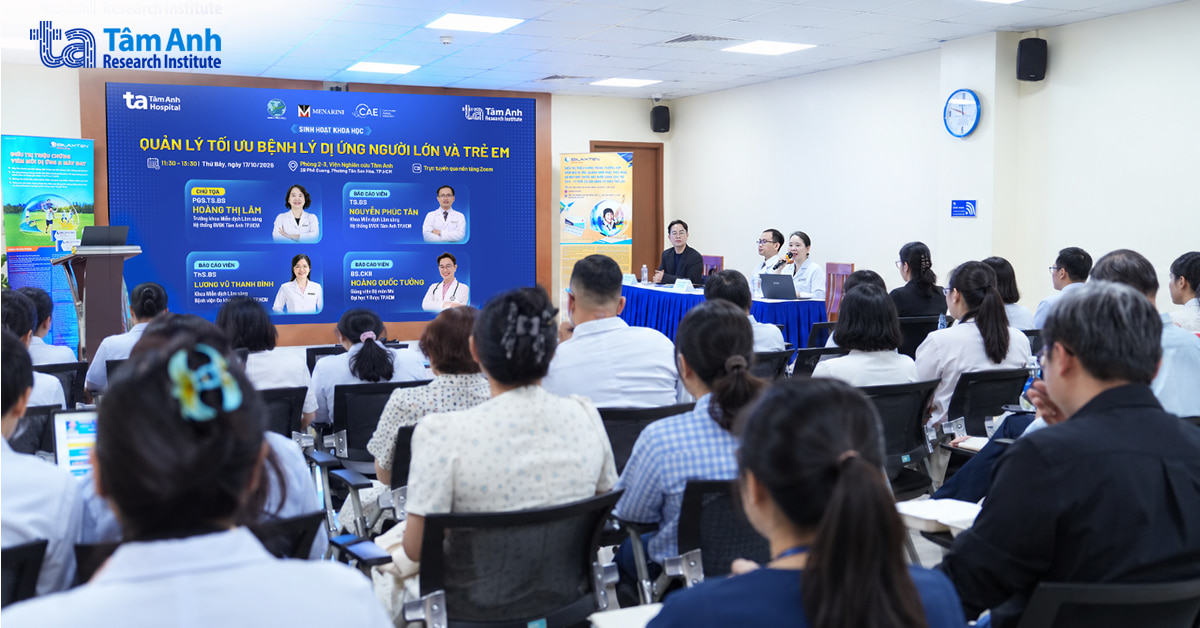
The updates were presented at the scientific seminar, “A new era in asthma and COPD treatment,” held at the Tam Anh Research Institute on July 4.
From symptom control to pathogenesis-based asthma management
Assoc. Prof. Hoang Thi Lam, MD, PhD, Head of the Department of Clinical Immunology at the Tam Anh General Hospital Group in Ho Chi Minh City, said that asthma is no longer considered a single disease but rather a syndrome comprising multiple phenotypes and distinct underlying disease mechanisms. As a result, treatment is no longer based solely on symptom severity but also on identifying each patient’s specific immune pathway to select the most appropriate treatment strategy.
According to Dr. Lam, approximately 80% of severe asthma cases are associated with type 2 inflammation, in which the immune system overreacts to triggers such as airborne allergens, viral infections, or environmental pollutants. This persistent inflammatory response keeps the airways inflamed, hyperresponsive, and narrowed, causing recurrent shortness of breath, asthma attacks, and an increased risk of exacerbations.

Assoc. Prof. Hoang Thi Lam, MD, PhD, discusses current advances in asthma treatment strategies with physicians and healthcare professionals from the Tam Anh General Hospital Group during the scientific seminar.
Identifying the underlying mechanism of asthma requires more than evaluating clinical symptoms. Physicians also rely on biomarkers and diagnostic tests, including blood eosinophil counts, fractional exhaled nitric oxide (FeNO), serum IgE levels, and assessments of sensitization to airborne allergens. These findings help classify asthma phenotypes and enable clinicians to develop personalized treatment plans for each patient.
Based on this approach, the latest GINA recommendations prioritize the use of combination inhalers containing an inhaled corticosteroid (ICS) and formoterol instead of relying solely on short-acting beta₂-agonists (SABAs) for symptom relief. This combination not only provides rapid relief of breathing difficulties but also controls airway inflammation, the underlying cause of asthma.
For patients with severe asthma that remains uncontrolled despite optimized treatment, biologic therapies are opening new therapeutic opportunities by directly targeting key pathways involved in type 2 inflammation. These therapies help reduce exacerbations, decrease dependence on corticosteroids, and improve patients’ quality of life.
Managing COPD alongside cardiovascular risk
For patients with COPD, treatment now extends beyond improving respiratory function to include the assessment and management of coexisting cardiovascular diseases.
Vu Tran Thien Quan, MD, MSc, from the Department of Functional Diagnostics at the University of Medicine and Pharmacy at Ho Chi Minh City, explained that COPD and cardiovascular disease are closely interconnected. In addition to impaired lung function, patients face a significantly increased risk of hypertension, heart failure, coronary artery disease, and stroke.

Dr. Vu Tran Thien Quan discusses the importance of cardiopulmonary risk management in patients with COPD.
Following each COPD exacerbation, the risk of cardiovascular events rises substantially due to systemic inflammation, hypoxia, and increased strain on the cardiovascular system. This critical period requires close monitoring and proactive management to reduce the risk of hospital readmission and mortality.
Optimizing COPD treatment with triple therapy
Ma Thanh Phong, MD, Head of the Respiratory Unit, Department of General Internal Medicine, Tam Anh General Hospital in Ho Chi Minh City, said that the goals of COPD treatment today extend beyond relieving breathlessness to preventing exacerbations and reducing mortality.
For patients whose COPD remains inadequately controlled with conventional inhaled medications, physicians may prescribe triple therapy, which combines three classes of medications, an inhaled corticosteroid (ICS), a long-acting beta₂-agonist (LABA), and a long-acting muscarinic antagonist (LAMA), into a single inhaler. This combination helps improve lung function, reduce exacerbations, and lower the risk of hospitalization.

Dr. Ma Thanh Phong discusses strategies for preventing COPD exacerbations.
Combining three active medications into a single inhaler simplifies treatment, improves patient adherence, helps preserve lung function, reduces hospital admissions, and lowers the risk of cardiovascular complications associated with COPD exacerbations.
Experts concluded that advances in medical science, together with the growing use of biomarkers and targeted therapies, are transforming the management of asthma and COPD. Rather than simply treating symptoms during flare-ups, modern care focuses on controlling the underlying disease mechanisms, personalizing treatment, reducing exacerbations, and providing long-term protection of respiratory function while improving patients’ quality of life.