Multidrug-resistant (MDR) bacteria are making the treatment of severe infections increasingly challenging, particularly in Intensive Care Units (ICUs). In this race against time, early identification of pathogens and their resistance mechanisms, selecting the appropriate antibiotics, optimizing dosage, and initiating treatment promptly are critical factors that improve the likelihood of controlling infections while helping curb the continued emergence of antimicrobial resistance.
These issues were highlighted by Vietnamese and international experts during the scientific seminar, “Navigating the challenges of multidrug-resistant bacteria: From rapid diagnosis to treatment optimization,” held at the Tam Anh Research Institute at noon on July 27.
In his opening remarks, Assoc. Prof. Tran Quang Binh, MD, PhD, Chief Medical Officer of the Tam Anh General Hospital Group in Ho Chi Minh City, noted that drug-resistant bacteria first emerged in the early 2000s, although resistance levels were still relatively limited at that time. Over the following years, the situation became increasingly complex with the emergence and spread of multiple antimicrobial resistance mechanisms, particularly metallo-beta-lactamase (MBL)-producing bacteria carrying resistance genes such as NDM, VIM, and IMP. These mechanisms have rendered many critical antibiotics ineffective, leaving clinicians with progressively fewer treatment options.

Assoc. Prof. Tran Quang Binh, MD, PhD (far right), together with the speakers, discussing strategies to address the challenges posed by multidrug-resistant bacteria
According to Assoc. Prof. Tran Quang Binh, this growing threat presents challenges not only in saving patients’ lives but also in terms of treatment costs, drug toxicity, and complications associated with antibiotic use. The seminar therefore aimed to examine multidrug-resistant infections from the perspective of Vietnam’s clinical practice, identify existing limitations, and explore practical solutions for improvement. During the session, Dr. Vuong My Dung – Deputy Head of the Intensive Care Unit (ICU), Tam Anh General Hospital HCMC (Tan Son Hoa Ward campus, formerly Tan Binh District), presented an overview of the hospital’s microbiological landscape, the challenges of antibiotic selection and optimization in the ICU, and practical treatment strategies. Assoc. Prof. Patrick Harris, MD, PhD | Department of Infectious Diseases, Royal Brisbane and Women’s Hospital (Australia), and Research Fellow at the UQ Centre for Clinical Research, The University of Queensland, shared Australia’s clinical experience through real-world cases, covering topics ranging from identifying antimicrobial resistance mechanisms through microbiological testing to selecting and using appropriate antibiotics.
Drawing on these perspectives, the experts discussed how international evidence and clinical experience could be adapted to routine practice within Vietnam’s healthcare system, considering local resources and access to antimicrobial agents.

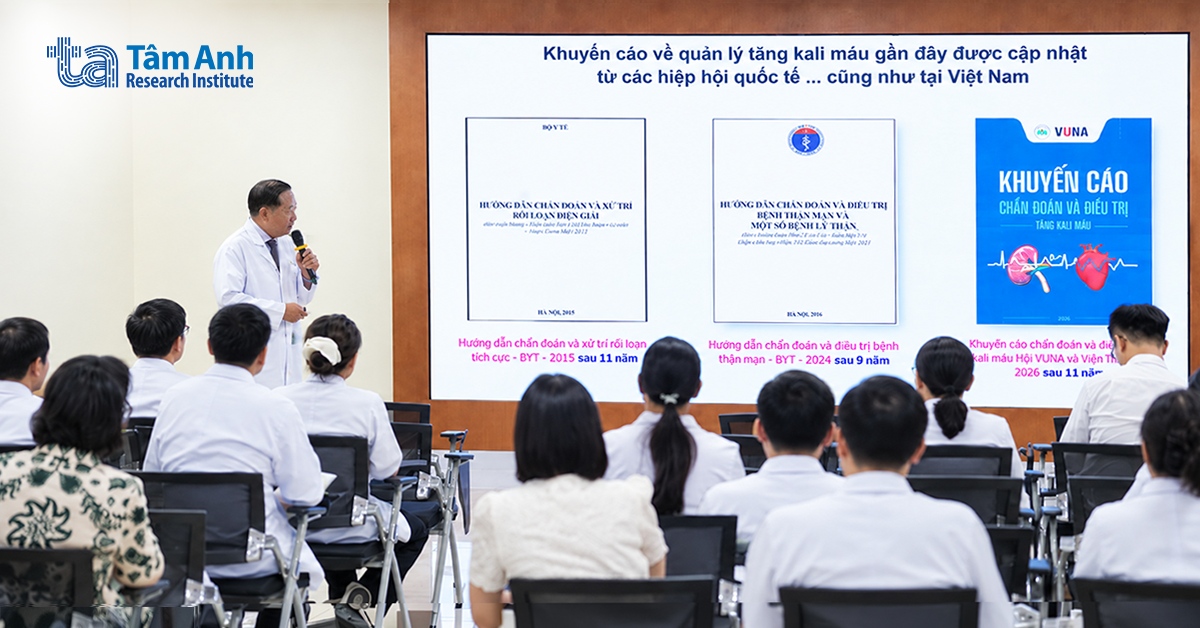
Dr. Vuong My Dung presents the current situation of multidrug-resistant bacteria in the ICU, challenges in antibiotic selection, and treatment optimization strategies based on resistance mechanisms
Immediately following the opening session, Dr. Vuong My Dung presented an alarming overview of antimicrobial resistance (AMR). In 2019, AMR was associated with approximately 4.95 million deaths worldwide, including 1.27 million deaths directly attributable to antimicrobial resistance. Notably, nearly 80% of this burden occurred in three infection syndromes commonly encountered in ICUs: lower respiratory tract infections, bloodstream infections, and intra-abdominal infections.
In Vietnam, surveillance data indicate particularly high levels of resistance among Gram-negative bacteria. Reports show that carbapenem resistance in Acinetobacter baumannii reached 87.8% in major hospitals, while the proportion of imipenem-resistant Klebsiella pneumoniae increased from 18% during 2012 – 2013 to 46.1% in 2020. Microbiological surveillance data collected at Tam Anh General Hospital HCMC in 2025 also identified K. pneumoniae as the most frequently isolated pathogen in the ICU, accounting for 18.8% of all isolates.
According to Dr. Dung, one of the most important changes in managing multidrug-resistant infections today is moving beyond simply identifying carbapenem-resistant bacteria to determining the underlying resistance mechanisms. Bacterial strains carrying resistance genes such as KPC, NDM, VIM, IMP, or OXA-48 exhibit different resistance mechanisms, which may require entirely different antibiotic treatment strategies. Therefore, resistance patterns observed on conventional antibiograms alone are no longer sufficient for determining the optimal therapeutic approach.
In this context, rapid diagnostic tests capable of detecting carbapenemases or resistance genes can dramatically reduce the time required to identify resistance mechanisms, from several days to only a few hours, or even less with certain technologies. However, the presentation emphasized that rapid diagnostics provide meaningful clinical benefits only when integrated into an Antimicrobial Stewardship Program (ASP) and supported by efficient systems that rapidly communicate test results to treating physicians. The goal is not merely obtaining results earlier, but translating those findings into timely treatment decisions.
Building on this topic, Assoc. Prof. Patrick Harris shared clinical experience from Australia, focusing on three key determinants of successful treatment: diagnostics, dosing, and timing. For bacteria producing metallo-beta-lactamases such as NDM, VIM, and IMP, understanding the specific resistance mechanism enables clinicians to select the most appropriate therapeutic strategy rather than relying solely on the antibacterial spectrum of individual antibiotics.
Assoc. Prof. Patrick Harris emphasized that treatment optimization does not simply mean prescribing more antibiotics. Factors such as loading doses, prolonged beta-lactam infusion, dose adjustment according to volume of distribution and renal clearance, source control, and shortening treatment duration when clinically appropriate all significantly influence patient outcomes. Combination antibiotic therapy should be guided by resistance mechanisms and clinical evidence rather than the misconception that “the more antibiotics used, the better.”
Through the presentations and panel discussions, the seminar underscored that effective management of multidrug-resistant infections requires close collaboration among microbiology, molecular diagnostics, clinical pharmacy, and frontline clinical practice. The experts agreed that accurately identifying pathogens and resistance mechanisms, translating laboratory findings into timely clinical decisions, and administering the right antibiotic, at the right dose, by the right route, and for the appropriate duration are essential steps to improving treatment outcomes while reducing the selection pressure that drives antimicrobial resistance.