
Obesity rates are surging globally and regionally, evolving into a dangerous chronic condition. Current treatment strategies have shifted toward a comprehensive, personalized approach aimed at optimizing weight loss outcomes and mitigating complications.
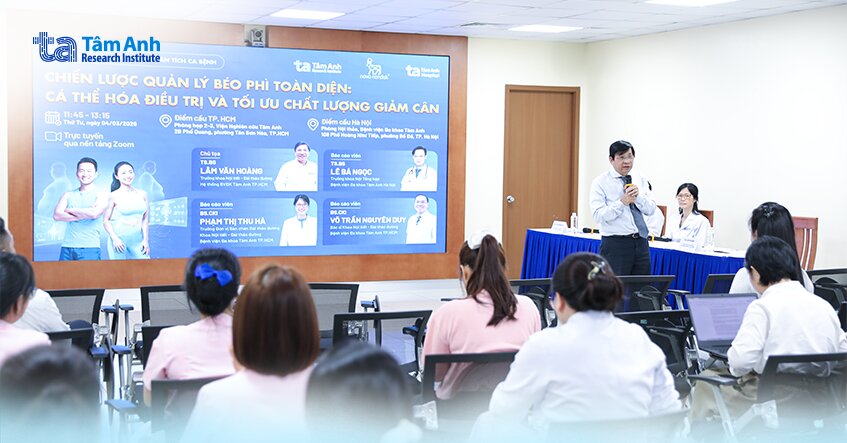
These insights were shared during the scientific seminar “Comprehensive Obesity Management Strategy: Individualizing Treatment and Optimizing Weight Loss Outcomes,” held at Tam Anh General Hospital in Ho Chi Minh City on the afternoon of March 4.
Obesity has reached pandemic proportions. According to the World Health Organization (WHO), at least 2.8 million people die annually due to being overweight or obese. It is estimated that 35.8 million people (2.3% of the global disease burden) are attributed to being overweight and obese. Obesity is a primary driver of over 200 different diseases, including cardiovascular disease, stroke, diabetes, osteoarthritis, fatty liver, and various cancers—particularly those of the digestive tract.

Le Ba Ngoc, MD, PhD, discusses obesity treatment strategies at Tam Anh General Hospital (Hanoi). Photo: Tam Anh General Hospital
Le Ba Ngoc, MD, PhD – Head of General Internal Medicine at Tam Anh General Hospital (Hanoi), emphasized that weight management strategies must prioritize fat reduction rather than just focusing on total weight. Body weight tends to increase with age until 65 and then decline; however, body fat mass can continue to rise even if the scale remains steady. Two individuals with the same body weight may have significantly different fat compositions. Visceral fat, in particular, is a major driver of dangerous health conditions.
Consequently, assessing overweight and obesity now goes beyond Body Mass Index (BMI). Waist circumference is increasingly recognized as a vital measure of obesity risk. A critical goal in modern treatment is preserving muscle mass during weight loss. Integrating next-generation obesity medications with high-protein diets and resistance training is essential for optimizing body composition.

Dr. Pham Thi Thu Ha presenting on the health impacts of obesity. Photo: Tam Anh General Hospital
Clarifying why BMI is no longer the sole determinant, Dr. Pham Thi Thu Ha, Head of the Diabetic Foot Unit (Department of Endocrinology and Diabetes, Tam Anh General Hospital Group, HCMC), explained that BMI fails to measure body fat mass. For instance, individuals with a high BMI due to muscle mass rather than excess fat are not considered obese under new assessment standards.
Modern definitions categorize obesity into two stages: Preclinical obesity: Characterized by excess fat where organs remain unaffected and health is preserved. Clinical obesity: Defined as a progressive disease where excess fat alters organ functions. This distinction guides clinicians in determining the appropriate level of intervention and treatment strategy to improve patient health and reduce complications.

Dr. Vo Tran Nguyen Duy analyzes the current state of obesity treatment through a clinical case study. Photo: Tam Anh General Hospital
Discussing a specific clinical case, Dr. Vo Tran Nguyen Duy (Department of Endocrinology and Diabetes, Tam Anh General Hospital Group, HCMC) analyzed the complexities of treatment. In many cases, medication alone may have limited efficacy or fail to achieve target weight loss. Success often requires a combination of therapies, medication adjustments, and proactive patient commitment to nutrition and physical activity.
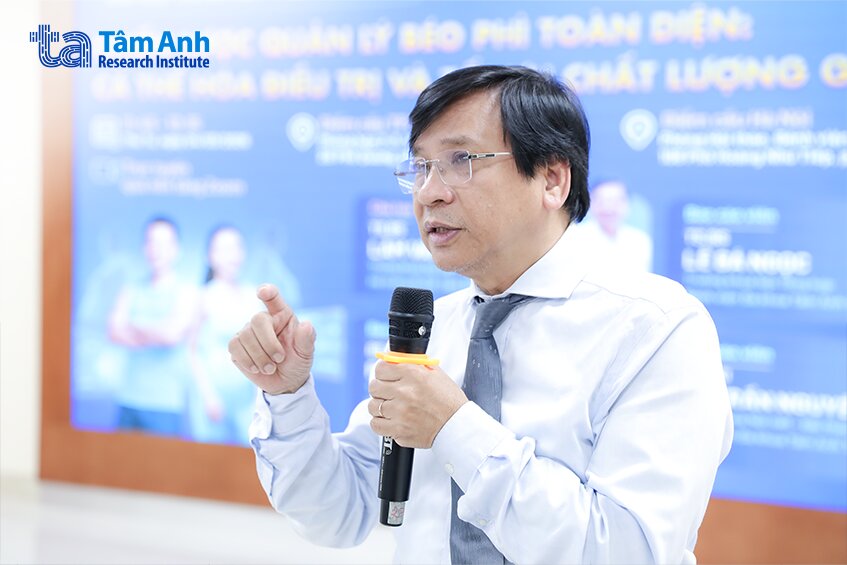
Lam Van Hoang, MD, PhD addressing various inquiries from physicians during the seminar. Photo: Tam Anh General Hospital
Lam Van Hoang, MD, PhD – Head of the Department of Endocrinology and Diabetes (Tam Anh General Hospital Group, HCMC), concluded that obesity is a chronic illness requiring early and sustained intervention. Reducing body weight by 10%–15% within a six-month period has been proven to provide significant health benefits, prevent obesity-related complications, and improve or reduce comorbidities.
Tam Anh Research Institute
- Ha Noi:
- 108 Hoang Nhu Tiep, Bo De Ward, Ha Noi
- Hotline: 024 3872 3872 – 024 7106 6858
- TP.HCM:
- 2B Pho Quang Street, Ward Tan Son Hoa, Ho Chi Minh City
- Hotline: 093 180 6858 – 0287 102 6789
- Fanpage: https://www.facebook.com/ViennghiencuuTamAnh.TAMRI
- Website: tamri.vn