
Respiratory Syncytial Virus (RSV) is the most common cause of lower respiratory tract infections in infants and young children in Vietnam. It is a major contributor to serious illnesses and can even lead to death. The disease can be prevented through the use of monoclonal antibodies.
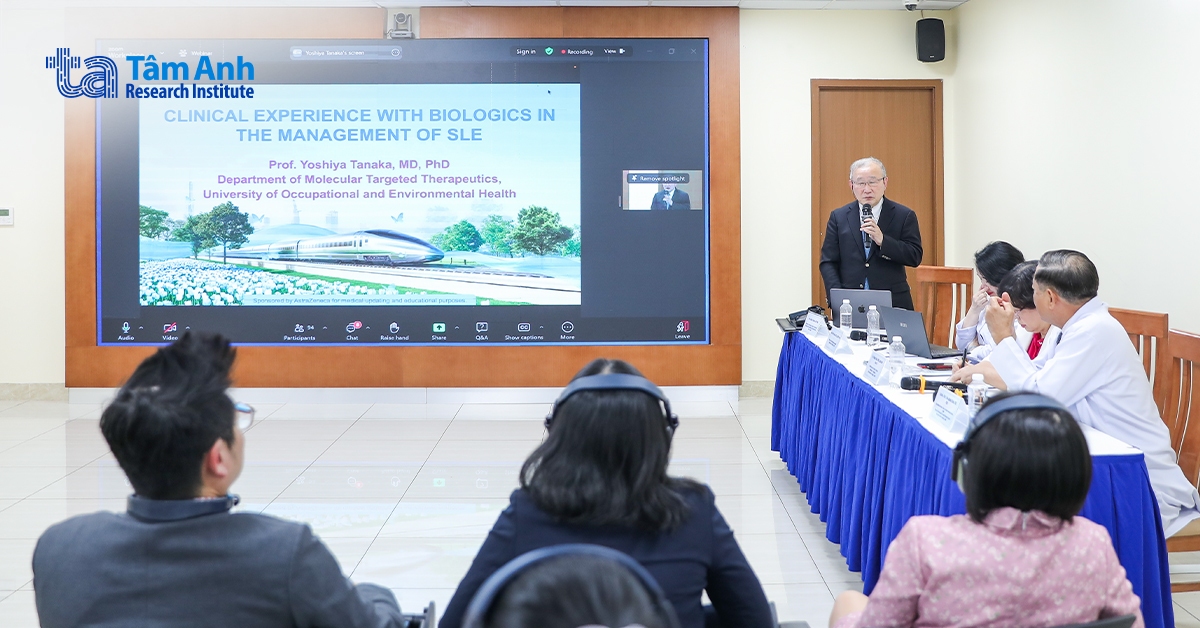
This information was shared at the “RSV Prevention for High-Risk Infants and Young Children” conference on March 14 at the Tam Anh Research Institute (TAMRI), part of Tam Anh HCMC General Hospital. The event brought together more than 50 doctors, specialists, and healthcare professionals to exchange experiences and discuss the impact of RSV on children, while emphasizing the role of RSV prevention through monoclonal antibody therapy.

The conference attracted many doctors and healthcare professionals.
The Disease Burden of RSV and Risk Factors in Infants and Young Children
At the conference, Dr. Cam Ngoc Phuong, PhD, Director of the Neonatology Center at Tam Anh HCMC General Hospital, shared that RSV is responsible for 50–90% of bronchiolitis cases and 5–40% of pneumonia cases in children. Up to 75–90% of infants are infected with RSV within their first year of life, and 85–100% are infected within the following two years, with 0.5–2% of cases requiring hospitalization. In Vietnam, according to estimates by the World Health Organization (WHO), in 2010 there were 498,411 new RSV infections among children aged 0–4, including 57,086 severe cases. Notably, even after treatment, children remain at risk of reinfection.
In Vietnam’s southern region, including Ho Chi Minh City, the RSV season occurs between May and November each year. During this period, high-risk groups, such as premature infants and children under 24 months with bronchopulmonary dysplasia or congenital heart disease, face an increased risk of infection and mortality.

Dr. Cam Ngoc Phuong, PhD, presented a report titled “The Disease Burden of RSV and Risk Factors in Infants and Young Children”.
Dr. Phuong emphasized that the younger the child, especially premature infants or those with underlying health conditions, the higher the risk of hospitalization due to RSV-related illness. This is because newborns have an immature immune system and narrow airways that are easily obstructed by mucus and inflammation. In premature babies, the risk is greater due to lower levels of maternal antibody transfer and underdeveloped lung structure and function. In addition, children with conditions such as congenital heart disease or bronchopulmonary dysplasia are at higher risk of severe complications following RSV infection.
The severity of RSV symptoms varies depending on the child’s age, underlying health conditions, and history of prior infections. In healthy children, symptoms may resemble a mild cold, including nasal congestion, runny nose, dry cough, low-grade fever, and sore throat. In infants under 6 weeks old, symptoms often include fussiness, poor feeding, fatigue, or difficulty breathing. In high-risk children, symptoms are more severe, such as high fever, persistent cough, wheezing, labored breathing, refusal to feed, bluish skin, or episodes of apnea.
RSV can cause respiratory symptoms ranging from mild upper respiratory tract infections to severe conditions such as bronchiolitis and pneumonia, which can be life-threatening for children. If not treated promptly, the illness may lead to serious complications, including acute respiratory failure, lung collapse, secondary bacterial infections, pneumothorax, dehydration, irregular heart rhythms, apnea, and even death in severe cases.
Several factors can increase the risk of acute lower respiratory tract infections caused by RSV in infants. These include malnutrition, a family history of allergies or asthma, being male, maternal smoking or exposure to secondhand smoke in the household, overcrowded living conditions, having siblings, or attending daycare.
RSV spreads easily, much like the common cold virus, through the eyes, nose, mouth, saliva, mucus, or nasal discharge through kissing, close contact, or sharing cups and eating utensils. The virus can survive for up to 6 hours on surfaces such as toys, keyboards, and door handles, and for up to 25 minutes on contaminated skin surfaces like hands. Therefore, it is important to disinfect surfaces and objects that children come into contact with, using alcohol-based disinfectants, wash hands with soap, wear masks when going out, and avoid handshakes or kissing young children.
The Role of RSV Prevention Therapy in High-Risk Children Using Monoclonal Antibodies
Given the threats RSV poses to children’s health, Assoc. Prof. Dr. Vy Huy Tru, Head of the Pediatrics Department at Tam Anh HCMC General Hospital, stated that in addition to personal hygiene measures, immunization is essential to help reduce the impact of RSV, especially in high-risk groups of children.
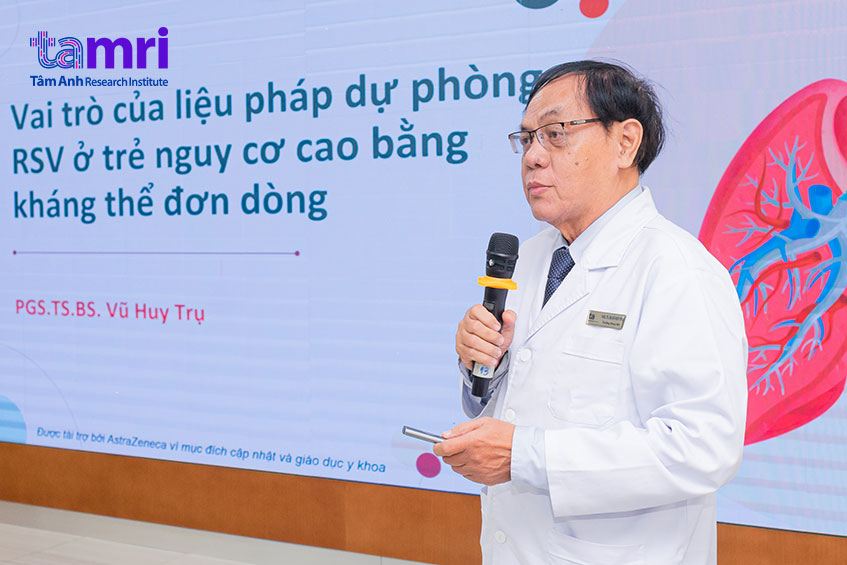
Assoc. Prof. Dr. Vu Huy Tru emphasized the importance of RSV prevention therapy in high-risk children through the use of monoclonal antibodies.
In the 1960s, medical literature recorded the first attempts at active immunization against RSV using a formalin-inactivated RSV vaccine. However, this approach failed to provide protective immunity and instead worsened the severity of natural RSV infections, triggering exaggerated immune responses. Currently, there are 38 RSV vaccine candidates under development, including 19 in clinical trials. However, no specific vaccine has yet been approved for RSV prevention in children.
In addition, passive immunization using RSV-IVIG gammaglobulin was also introduced and approved by the FDA in 1996. However, this method has been discontinued due to certain studies showing disadvantages such as the need for hospitalization, prolonged infusion times, high-dose fluid administration, episodes of sudden cyanosis, and the requirement to avoid live attenuated vaccines for at least 9 months following RSV-IVIG treatment.
To date, no specific vaccine has been approved for RSV prevention in children. However, Palivizumab, a monoclonal antibody for RSV prevention, was approved by the FDA in 1998 and has been clinically proven over the past 25 years, showing significant effectiveness in reducing hospitalization rates, length of hospital stays, and the number of days requiring supplemental oxygen due to RSV infection.
Palivizumab is a humanized monoclonal antibody (IgG1κ) produced using recombinant DNA technology, consisting of human (95%) and murine (5%) antibody sequences. This antibody works by blocking the membrane fusion process, inhibiting RSV replication, and reducing viral proliferation. As a result, it prevents the spread of RSV to other susceptible host cells, stopping further infection.

Doctors and specialists took photos with the conference’s organizing team.
Palivizumab is approved for the prevention of severe lower respiratory tract infections requiring hospitalization due to RSV in preterm infants (≤35 weeks gestational age and <6 months old at the start of RSV season), children under 2 years old who have received treatment for bronchopulmonary dysplasia within the past 6 months, and children with congenital heart disease. Dr. Tru recommended that children in these groups should receive their first dose at the beginning of the RSV season, followed by 5 monthly doses throughout the season.
“Preventing RSV-related illnesses is not a new concept, but with advances in modern medicine, early prevention serves as a protective shield, helping reduce the disease burden and improve quality of life for children”, shared People’s Physician, Assoc. Prof. Dr. Tran Quang Binh, Medical Director of Tam Anh HCMC General Hospital.
The scientific workshop received active contributions and lively discussions from Pediatric – Neonatal doctors, aiming toward the goal of reducing hospitalization rates and severe complications caused by RSV.
Tam Anh Research Institute
- Ha Noi:
- 108 Hoang Nhu Tiep, Bo De Ward, Ha Noi
- Hotline: 024 3872 3872 – 024 7106 6858
- TP.HCM:
- 2B Pho Quang Street, Ward Tan Son Hoa, Ho Chi Minh City
- Hotline: 093 180 6858 – 0287 102 6789
- Fanpage: https://www.facebook.com/ViennghiencuuTamAnh.TAMRI
- Website: tamri.vn